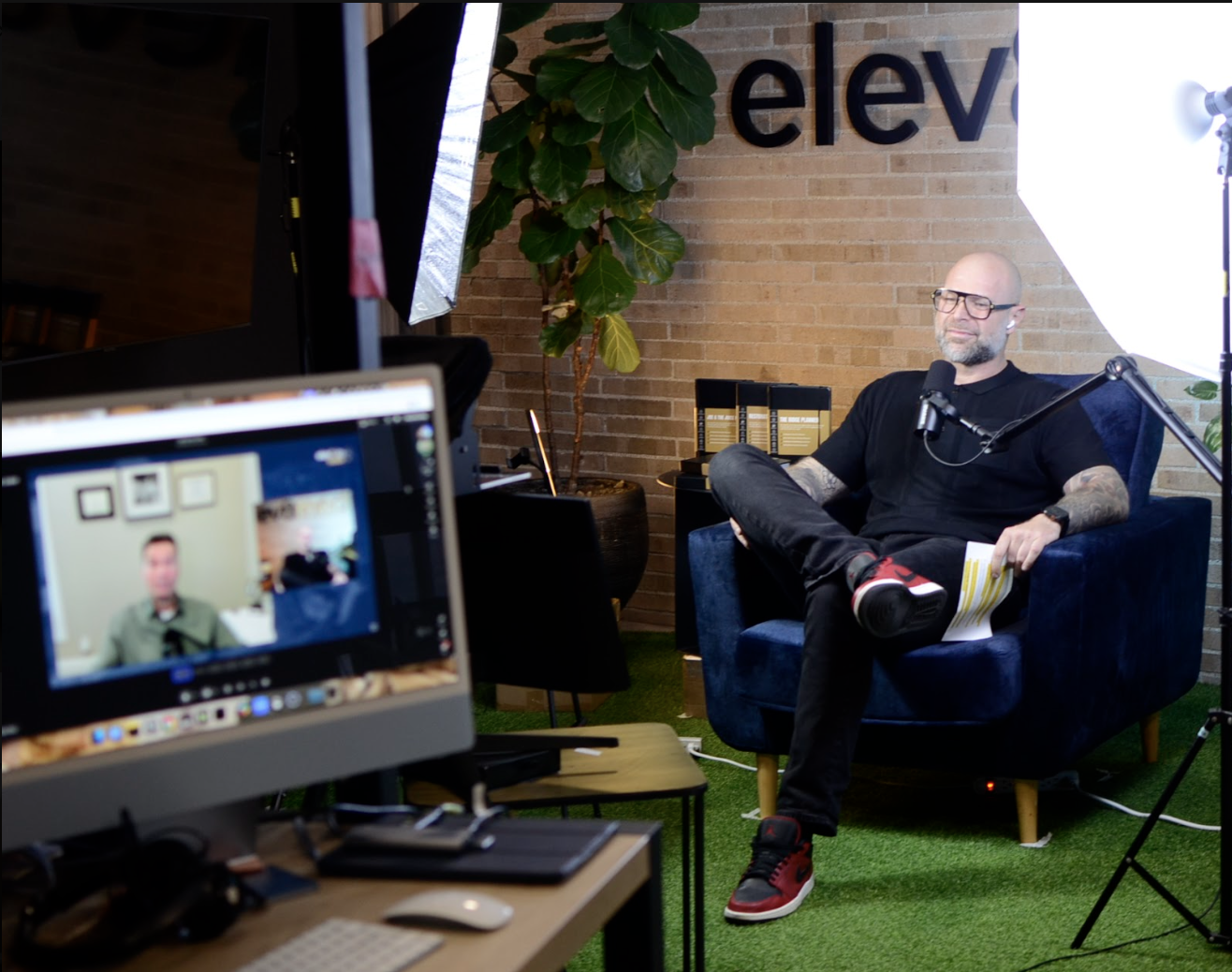
The Patient Acquisition Pyramid: Proven Strategies to Cut CPA and Achieve Full Census
Most behavioral health centers are spending $7,500–$10,000+ per admission on Google Ads before locking in the lower-cost foundation that can fill 60–65% of census at a fraction of the cost — alumni referrals, local SEO, and business development built in the right order.
In this 6-minute episode, Gary Garth walks through the elev8.io Patient Acquisition Hierarchy — a proven framework that shows why building the right channels in the right order can reduce cost per admit by 70% or more before a single dollar goes to paid ads.
Key Takeaways
- Build the base first. Most centers start with Google Ads ($7,500+ per admit) before securing their low-cost foundation. That's backwards — the pyramid goes bottom-up, not top-down.
- Alumni & Referrals (base of pyramid) — the most credible, cost-effective acquisition source. Can cover up to 30% of census when nurtured consistently at no material ad spend.
- Local SEO (second tier) — owning "rehab near me" searches delivers admits for under $2,000. One partner facility was closing admits at $1,600 through local SEO vs. $7,500 through paid search.
- Business Development (third tier) — strategic referral partnerships can drive up to 35% of census when relationships are built and maintained consistently.
- Directories like Recovery.com (fourth tier) — add trusted visibility and reach; use them before scaling into high-cost paid media.
- Google & Microsoft Ads (top of pyramid) — effective but expensive. Layer in only after your lower-cost foundation is stable and scalable.
- Use the Growth Calculator. Plug in your census, channels, and budget at our ROI Calculator to pinpoint exactly where your CPA is bleeding and which channel can unlock the most cost-effective growth.
“Are you climbing the pyramid in the right order, or are you burning your budget at the top before you've secured your base?”— Gary Garth, Host — The elev8.io Podcast
Episode Chapters
- 00:00Introducing the elev8.io Patient Acquisition Hierarchy
- 01:00Why chasing high-cost channels first backfires
- 02:00Base tier: alumni & referrals — the lowest-cost admits
- 03:00Second tier: local SEO — "rehab near me" at $1,500/admit
- 04:00Third tier: business development & referral partnerships
- 05:00When to layer in Google & Microsoft Ads
- 06:00Using the Growth Calculator to find your CPA leaks
Frequently Asked Questions
What is the Patient Acquisition Pyramid?
The Patient Acquisition Pyramid is a framework developed by elev8.io that maps acquisition channels from lowest to highest cost per admission — alumni referrals at the base, local SEO next, then business development, directories, and finally paid search at the top. Building from the bottom up can reduce cost per admission by 70% or more before a single dollar goes to Google Ads.
Why should treatment centers build the base before investing in Google Ads?
Google Ads in behavioral health cost $100–$200 per click and $7,500–$10,000+ per admission. Alumni referrals cost almost nothing and local SEO can deliver admits for under $2,000. Facilities that skip the foundation and go straight to paid media are paying a premium for patients they could have acquired at a fraction of the cost.
What cost per admission is achievable through local SEO vs. paid search?
elev8.io partner facilities have closed admissions at approximately $1,500–$2,000 through local SEO (Google Business Profile, 'rehab near me' optimization) compared to $7,500+ through paid Google Search. The same patient — acquired for 80% less.
How do I know which channels are most cost-effective for my facility?
Use the elev8.io Growth Calculator at ROI Calculator. Plug in your current census, marketing channels, budget, and performance metrics — it shows exactly where your CPA is bleeding, which channels are underperforming, and how you compare against industry benchmarks.
Full Transcript
Cleaned and speaker-labeled. Jump to any moment via the chapters above, or open the complete transcript below.
Read the full transcript7 chapters · ~6 min
Introducing the elev8.io Patient Acquisition Hierarchy00:00
Gary Garth: Welcome back to the elev8.io Podcast. I'm your host, Gary Garth, and today we're diving into one of the most powerful frameworks we've developed for treatment center growth — the elev8.io Hierarchy of Patient Acquisitions.
Gary Garth: Now, if you're a behavioral health executive, a treatment center owner, or a healthcare leader, you probably felt the financial constraints of patient acquisitions — sometimes ranging between $10,000 and $15,000 — and that could crush your margins. It will limit your growth and create a constant pressure on your team.
Why chasing high-cost channels first backfires01:00
Gary Garth: That's why we adapted one of psychology's most recognized models — the Maslow Hierarchy of Needs. We transformed it into a pyramid, a structure for patient acquisitions. And I promise you, once you understand this framework, once you apply it, you'll never look at patient acquisition and admissions the same way.
Gary Garth: I remember being on a status call with one of our partner facilities not too long ago. We were looking at our multi-channel marketing dashboards, and at the top they were spending upwards of $7,000–$10,000 per admit. Really high for that facility and the policies they took. But then when we dug into the lower parts of the pyramid — the business development, the local SEO, the alumni referrals — the numbers blew everyone away. Local SEO was delivering admissions at about $1,500. Alumni referrals? Practically no cost, but contributing 30% of the census.
Gary Garth: And that moment hit me like a brick. We've been telling centers for years that chasing the high-cost channels first was backwards. What we really needed was to apply this hierarchy and prioritize, stabilize, and then scale. Just like Maslow explained in human psychology.
Base tier: alumni & referrals — the lowest-cost admits02:00
Gary Garth: So here's the core idea — not all patient acquisition channels are created equal. At the base of the pyramid, this is where you've got your alumni and your referrals, which should cover 30–40% of your census if nurtured properly. If you have an alumni app, you have a community and you're staying in touch — and then afterwards comes local SEO, where you're ranking high on Google Business Profile terms like "rehab near me" and pulling in cost-effective admissions.
Gary Garth: Move up to the next layer — you've got business development. A critical piece that I've seen sometimes drive 50, 70% of census. And you can really maximize that with reciprocal and non-reciprocal partnerships before you start dumping tens of thousands of dollars into either Google or Microsoft Ads.
Second tier: local SEO — "rehab near me" at $1,500/admit03:00
Gary Garth: This hierarchy is strategic, right? You want to optimize your cost per admission. Why spend $8,000–$10,000 on an admission when you can acquire that very same patient through another channel for just a fraction of that cost? So let me ask you — are you climbing the pyramid in the right order? Are you burning your budget at the top before you've built the foundation?
Gary Garth: Now let's translate this for what it actually means for your facility. If your admissions team's performance is inconsistent, fluctuating, you probably don't have a strong foundation in alumni, referrals, and local SEO. And that's maybe where you want to take a look at our ROI Calculator. You can plug in your current census, the marketing channels you use, your marketing budget, your performance metrics, and it will show you exactly where you're bleeding and where the opportunities are — and how you're performing against industry benchmarks.
Gary Garth: So if you're already filling your base, then it's time to layer in these mid-pyramid strategies — the business development, the reciprocal partnerships, the non-reciprocal partnerships, build strong referral pipelines, establish directories that boost not only your visibility but help your organic presence and SEO.
Third tier: business development & referral partnerships04:00
Gary Garth: And finally, once your foundation is strong, you can start climbing into Google and Microsoft Ads and allocate small portions of money in a structured, strategic way so you don't waste your ad budget. We've applied this to hundreds of facilities, saving them millions in wasted ad spend and, most importantly, helping patients get the access to the care they need.
Gary Garth: At elev8.io, our mission is to help behavioral health organizations reach full census while driving sustainable growth. That's how we make an impact. Imagine an industry where centers aren't shutting down because they can't acquire patients at a favorable cost — thriving, with a profitable acquisition channel that is fully optimized, predictable, consistent, and cost effective. That's how you scale. And that's the ripple effect we're striving for — more stability for centers, more sustainability for providers, and more lives saved.
When to layer in Google & Microsoft Ads05:00
Gary Garth: So here's the takeaway — patient acquisition shouldn't be a guessing game. It's strategy with clinical precision. You've got to start with the referrals — professional referrals, non-reciprocal referrals. Work your community. Then build on local SEO, and layer in business development where it fits and makes the most impact. And then, at that point, that's when you start investing in ads.
Gary Garth: If you'd like to see how this proven marketing framework — developed at elev8.io over the last couple of years and scaled across 40+ facilities — applies to your center, give us a call. We'll put your data, your metrics, your census, your marketing channels, everything, into our Growth Calculator. It will show you how you're performing, how you stack up against industry benchmarks, and — most importantly — reveal which channels can unlock the most cost-effective admissions growth for your center.
Gary Garth: This is Gary Garth with the elev8.io Podcast. Thanks for tuning in. Please don't forget to subscribe, and share this episode with someone who needs to hear it — a colleague, a friend, your boss. Together, let's elevate behavioral health. Until next time — stay focused, stay inspired, and keep climbing upwards.
About the Host

Gary Garth
Founder & CEO, elev8.io
Gary Garth is the Founder & CEO of elev8.io, where he helps behavioral health organizations achieve full census through integrated marketing, admissions, and technology-driven growth systems. With more than a decade of experience working alongside Google, Microsoft, and high-growth technology companies, Gary has built and implemented scalable growth frameworks now used by 55+ treatment centers across the United States to drive admissions and operational efficiency. Read more
Connect on LinkedInRelated from elev8.io
Curious what your true cost per admission is?
Run your numbers with our Behavioral Health Growth Calculator,
or talk strategy with our team.