Behavioral Health Marketing Attribution: What Actually Drives Admissions (with CTM)
In today's behavioral health landscape, patient acquisition costs continue to rise — often reaching $3,000 to $10,000 per admission — yet many treatment centers still lack clear visibility into what's actually driving those admissions. The result? Decisions get made on assumptions, not data.
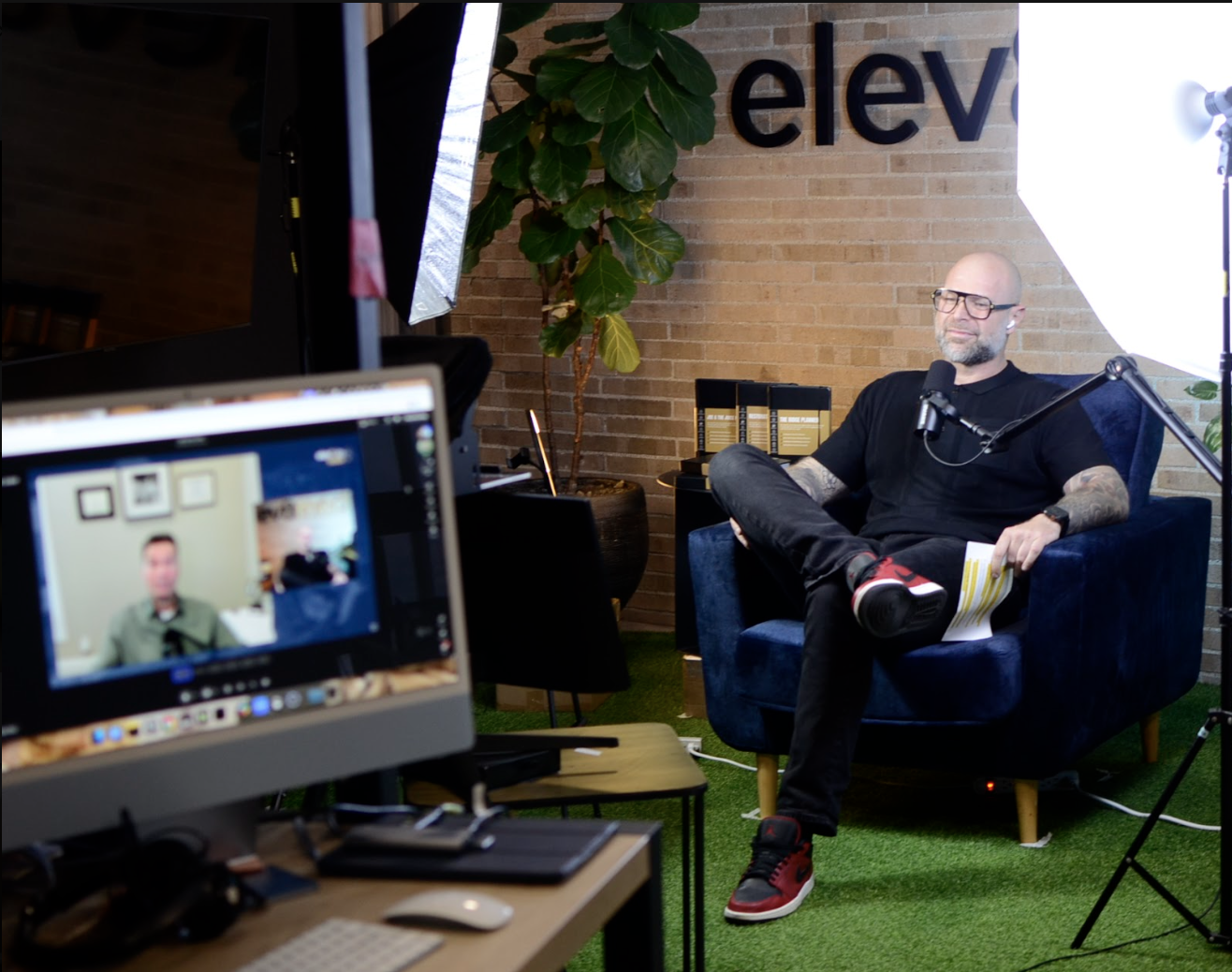
In this episode of The elev8.io Podcast, Gary Garth sits down with Bryan McKinstry, Lead of Strategic Partnerships at CTM (CallTrackingMetrics), to unpack the foundational systems required to bring clarity to marketing performance and admissions outcomes. Bryan breaks down why traditional metrics like call volume and duration fall short, and how facilities can shift toward true attribution by connecting marketing, admissions, and operations into one unified system.
Key Takeaways
- Call length is a misleading KPI. Long calls don't equal higher intent, better patient fit, or admissions. Track call quality and the full path to admission instead.
- Most facilities can't see which channels drive admissions. Attribution pinpoints which campaigns actually produce intakes, so budget moves toward what works.
- Speed-to-contact is decisive. Callers are vulnerable and ready in a small window — every hold, transfer, or phone tree risks losing them.
- Attribution is an operational system, not a marketing report. Marketing, admissions, BD, and leadership should all use it.
- AI enhances admissions; it doesn't replace them. In behavioral health, sentiment and human trust still close the loop.
“You don't call 911 and start filling out a questionnaire.”— Gary Garth, on why speed-to-contact beats friction-heavy intake
Episode Chapters
- 00:00Why most facilities lack visibility into what drives admissions
- 03:30The biggest blind spots in marketing attribution
- 05:00Why call duration is a misleading metric
- 08:00The disconnect between marketing and admissions teams
- 12:30What separates advanced call tracking from basic tools
- 16:00Speed-to-contact and capturing high-intent moments
- 20:00Why attribution should be treated as an operational system
- 23:00Multi-location vs single-location attribution
- 27:30Forms, transcripts, and reducing lead-to-speed
- 30:00AI in admissions: enhancement vs replacement
Frequently Asked Questions
Why is call duration a misleading metric in behavioral health marketing?
Long calls don't necessarily mean higher intent, better patient fit, or faster admissions. Call length ignores call quality and the path to admission — it doesn't connect a conversation to an actual conversion. Quality and full-funnel attribution matter far more than duration.
Which marketing channels actually drive admissions — and why don't facilities know?
Many facilities, especially those without an internal marketing team, have no clear view of where patients find them. Call analytics pinpoints which campaigns and channels lead to intakes, so budget can move toward what's actually producing admissions.
Why is the first phone call the most critical moment in the patient journey?
When people call, they're vulnerable and ready to seek help within a small window of time. Speed-to-contact is decisive — every hold, transfer, or phone-tree delay risks losing them. As Gary puts it, "you don't call 911 and start filling out a questionnaire."
Who inside a treatment center should own the call-tracking system?
Everyone who touches it. Marketing, admissions, leadership, and even alumni and business development use it differently. Treating attribution as a shared operational system — not a marketing-only report — is what drives adoption and results.
What separates advanced call tracking from basic tools?
Customization and depth: multi-location call trees, routing, and native integrations with CRMs, EMRs/EHRs, and Google. Basic tools count calls; advanced platforms connect marketing, admissions, and operations into one attributable system.
How does attribution differ for single-location vs multi-location facilities?
The core difference is the volume of campaigns and where the facility appears online. Larger operators run more online and offline campaigns across locations; the system must attribute correctly across all of them. A crawl-walk-run rollout works best.
What should facilities get right when implementing call tracking from day one?
Get tracking numbers onto the right campaigns, map the call tree so vulnerable callers reach the right person immediately, and involve every stakeholder team from the start. Then connect form-fills to fast follow-up so high-intent moments aren't lost.
Will AI replace admissions teams in behavioral health?
No — it enhances them. Sentiment and tone still matter, and many intake specialists are in recovery themselves. AI gathers information and surfaces patterns so reps can focus on patient care and de-escalation; it streamlines, it doesn't replace.
Full Transcript
Cleaned and speaker-labeled. Jump to any moment via the chapters above, or open the complete transcript below.
Read the full transcript10 chapters · ~33 min
Why most facilities lack visibility into what drives admissions00:00
Gary Garth: Welcome back to The elev8.io Podcast — your inside look at what's really changing in behavioral health, from admissions to outcomes. In a space where patient acquisition costs can reach $3,000 to $10,000 per admission, many facilities still lack clear visibility into what's truly driving admissions. That's exactly what we're unpacking today: the foundations of marketing attribution — what you should be tracking, how to align marketing with admissions, and how to make smarter, data-driven decisions that improve ROI and census growth. Joining us is Bryan McKinstry, Lead of Strategic Partnerships at CTM, who works with behavioral health facilities of all sizes implementing call tracking, attribution models, and admissions intelligence. Welcome to the show, Bryan.
Bryan McKinstry: Hey Gary, thanks for having me. Good to see you.
Gary Garth: Likewise — you're crushing it. For context, I've worked with CTM for about 15 years now. When we first engaged through elev8.io, the partner program was nowhere near what you've built it into — the partner portal, the visibility, the support. And every time we bring a facility onto the platform, that white-glove setup is stellar. Give our listeners a little background on your role at CTM.
The biggest blind spots in marketing attribution03:30
Bryan McKinstry: I've been with CTM about two and a half years as Lead of Strategic Partnerships. I focus on three types of partners. Integration partners — EMRs, EHRs, and other CRMs we share data with. Referral partners — agencies and consultants like yourselves who help with setup, configuration, and optimizing a CTM account. And agency partners — that one-to-many approach. Working with folks like you.
Why call duration is a misleading metric05:00
Gary Garth: About a year ago we made a true commitment to CTM. Before that we'd work with facilities coming from CallRail or other call analytics platforms, and we weren't as firm in our approach. But we decided CTM is the superior platform. We collaborated on bringing 23 new facilities onto it, and they now have real data integrity and visibility from a marketing standpoint.
Gary Garth: Looking back at those 23 facilities and your experience in the market, what are the blind spots or operational mistakes folks make when getting call analytics in place?
Bryan McKinstry: A big one is that many facilities either don't have an internal marketing team or use agencies like elev8.io to be the subject-matter experts on the CTM setup. The common theme is a poor understanding of which marketing channels are driving patient acquisitions. Of all the campaigns and channels where the facility's logo and phone number appear, they have no idea where patients are finding them. CTM pinpoints which campaigns are working, which aren't, which lead to intakes, and where you need to add resources.
The disconnect between marketing and admissions teams08:00
Gary Garth: We see it every day — that's why we make it a contractual requirement. If you want to work with elev8.io, you adopt CTM, because of the automations we've built with dashboard reporting and Google Ads optimization, and to make sure that when we get a qualified inquiry, that data is visible across every platform so better decisions can be made.
Gary Garth: Very often when we bring on customers, I see an agency has set up a conversion feeding back to Google for any call over 60 seconds. What are your thoughts on that — is it an outdated approach?
Bryan McKinstry: It can vary, but there are three or four key points. First, understand how patients are searching for care — what they're seeking and why they choose one facility over another. Simply looking at call duration ignores call quality. We always say call length doesn't necessarily attribute to a successful call. Long calls don't indicate an efficient call, and they don't assess the fit between the patient and the services offered. And there's no visibility into patient enrollment, time to enrollment, or connecting calls to actual results. Call length isn't attributing the conversation and quality to a conversion.
Gary Garth: You're preaching to the choir. It's contextual — the quality of the lead and the path to admission. Sometimes on the surface a channel may not look profitable, but it's an important touch point in the research journey, or a credibility factor viewed somewhere. I love the depth the platform brings. So why is call analytics an absolute requisite for a marketing foundation going forward?
What separates advanced call tracking from basic tools12:30
Bryan McKinstry: It's about maximizing the marketing budget and the intakes coming in. Many facilities don't have the largest budget. You can pinpoint where intakes come from based on the call and the marketing source. These intakes are expensive — treatment is expensive — so they want to be sure their marketing spend is driving patient acquisition.
Gary Garth: One important group is the admissions team using the platform and rating calls. Where's the gap between admissions and marketing, and what bridges it into one uniform system?
Bryan McKinstry: In any organization, not everyone's always on the same page. Admissions needs to understand where marketing is placing dollars to find patients. Different departments use CTM in different ways, so everyone should be involved in some capacity, even in a different role within the platform. At the very least, every department should be included.
Gary Garth: What separates CTM from other call analytics platforms?
Speed-to-contact and capturing high-intent moments16:00
Bryan McKinstry: Customization, far and away. Todd and Lori Fisher started CTM in 2011, so we're at 15 years. They're still very involved — Todd's the CEO, Lori's the COO. We take customer feedback seriously; it's not beyond Todd to hear what a partner needs and build it over the weekend so it's live Monday. A lot of folks come to us after outgrowing other systems. If you want customization, multiple facilities, an in-depth call tree or routing, people leave those platforms and come to us.
Gary Garth: Say I'm a facility owner on CallRail considering CTM. What are the important steps — besides calling elev8.io?
Bryan McKinstry: First, get your tracking numbers in place and onto your campaigns — that's where elev8.io's white-glove service shines, getting numbers mapped to the right campaigns so you understand where the dollars go. Then we map out who handles calls and what the call tree looks like, so patients reach the right person right away. The biggest thing in behavioral health: when people call, they're vulnerable and want help ASAP. It's a small window from "enough is enough, I need help." The fewer delays, holds, transfers, and phone trees, the better.
Why attribution should be treated as an operational system20:00
Gary Garth: I'm so glad you said that. So many facilities do "press one for this, press two for that." You're spending a fortune on marketing — dial them straight into the admissions team.
Bryan McKinstry: Exactly. You don't call 911 and start filling out a questionnaire either, right?
Gary Garth: Who should own CTM — marketing, IT, admissions?
Multi-location vs single-location attribution23:00
Bryan McKinstry: Everybody. Marketing uses CTM differently than intake does, so involve all the key stakeholders from the jump. You can set up different roles within CTM by department. Short answer: everyone who's going to interact with it.
Gary Garth: A few features I like a lot: the transcript functionality — admissions teams use it for a quick overview and analytics — and the forms. Most folks want phone calls, but they also have a form fill or chatbot, and 40% of potential calls get cannibalized by form fills. Lead-to-speed, from the minute someone submits a form, is a critical metric given the emotional state of someone seeking recovery. What other features would you highlight?
Bryan McKinstry: On forms, we can automate phone calls or texts for scheduling. Someone may fill out a form and not be able to take a call, or want to be around loved ones first. We set triggers — within 10 or 30 minutes, automate a text with an intake specialist's scheduling link, or automate a call patched to whichever intake specialist is available. After hours, our voice AI can collect general information and route it to an on-call specialist or queue it for the morning. And if you don't want that feature, we integrate with partners like Rollover Rep, Answering Service Care, and Dialed for 24-hour coverage.
Gary Garth: Good segue into AI. As a teaser, there's a second round coming with one of your colleagues. Today we've laid the foundation — I always say you need the processes, framework, and playbook first; then AI can support and enhance. Who will we speak with on round two?
Forms, transcripts, and reducing lead-to-speed27:30
Bryan McKinstry: The AI features we're implementing aren't meant to replace — they're meant to enhance. The AI gathers data so admission reps can focus on patient care and de-escalation rather than general information gathering. For part two we'll have my colleague Bryan Beringer — nearly five years at CTM, formerly an account manager, now our senior solution engineer and product specialist. He'll dig into the platform and the functionality behavioral health facilities are using, and should be using.
Gary Garth: So what does the future look like for admissions and call analytics? Will AI answer the phones?
Bryan McKinstry: There's still a huge human-element piece, especially in behavioral health — a familiar voice, because sentiment matters. AI is changing rapidly, but on the call side, within addiction treatment and behavioral health, sentiment and tone still matter. I'm not sure we're at a point where you can fully replace humans for intake. It'll help streamline, but I don't think it'll replace.
AI in admissions: enhancement vs replacement30:00
Gary Garth: I agree. These tools can increase the quality of the call and catch details a human may forget — but the rapport and trust, especially since many intake specialists are people in recovery, connect at a deeper level. The best specialists build a relationship; they were part of that first step and speak again six months later: "Thank you for answering that phone call." Hard to replace with AI. But if AI and CTM increase effectiveness so more people access the care they deserve, that's a surplus — and that's why we should embrace it. Tune in for round two. Bryan, thank you for being on the show.
Bryan McKinstry: Thanks for having me. If any facilities want to reach me, call the CTM hotline or email me directly at [email protected] — we'll learn about your facility and how we can help.
Gary Garth: Make sure to do that, folks — it's a great investment, and we can help along the way. Bryan, thanks again.
About the Guest
Bryan McKinstry — CallTrackingMetrics (CTM)
Bryan McKinstry leads strategic partnerships at CallTrackingMetrics (CTM), working with behavioral health facilities, agencies, and technology partners to implement call tracking, attribution models, and admissions intelligence. With nearly three years at CTM, Bryan helps treatment centers of all sizes build the marketing measurement foundation that connects spend to real admissions outcomes.
Connect on LinkedInAbout the Host

Gary Garth
Founder & CEO, elev8.io
Gary Garth is the Founder & CEO of elev8.io, where he helps behavioral health organizations achieve full census through integrated marketing, admissions, and technology-driven growth systems. With more than a decade of experience working alongside Google, Microsoft, and high-growth technology companies, Gary has built and implemented scalable growth frameworks now used by 55+ treatment centers across the United States to drive admissions and operational efficiency. Read more
Connect on LinkedInRelated from elev8.io
Curious what your true cost per admission is?
Run your numbers with our Behavioral Health Growth Calculator,
or talk strategy with our team.