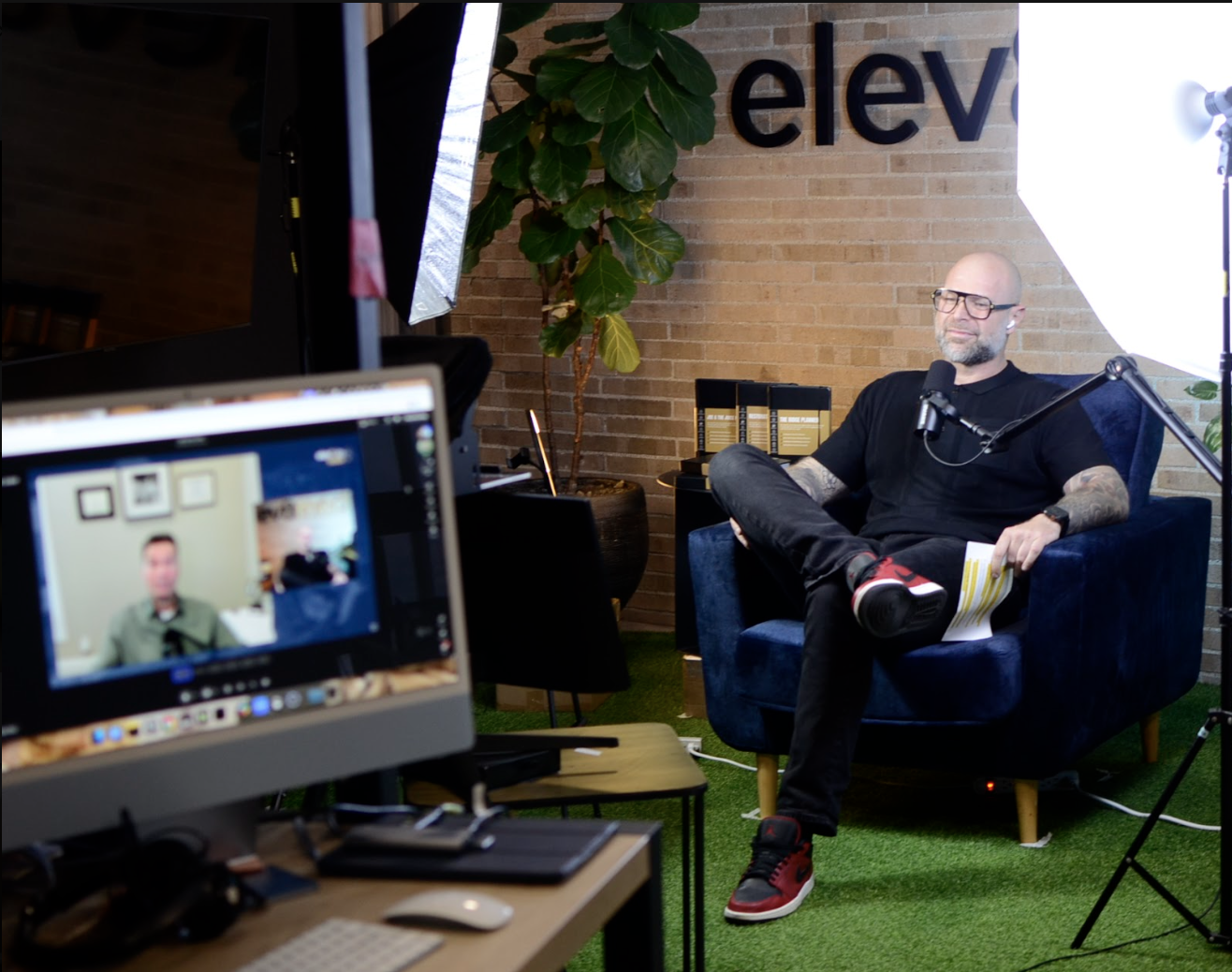
Automation, Attribution & AI: The Tech-Driven Path to Growth in Behavioral Health
Most treatment centers chase the newest AI tools while missing the unglamorous foundation that makes any technology work: a CRM that gets used, call tracking that attributes correctly, and a lead scoring system your admissions team actually follows. Without that, automation amplifies chaos — it doesn't fix it.
This episode was recorded live at the Recovery.com Marketing Summit, where Gary Garth joined the "Innovate Tech Panel" alongside Steve Donai, Founder/CEO of Growth Sherpa, and Keegan Warrington, Founder of RxMedia. Together they walk through the three-phase technology roadmap — foundation, attribution, automation/AI — and explain why getting the order right is the difference between scaling efficiently and burning budget.
Key Takeaways
- Build the foundation before touching AI. 7,000+ of the ~7,500 treatment centers in the US don't have the basic tech stack in place — CRM, call tracking, attribution, lead scoring. AI and automation on top of a broken foundation amplifies inefficiency. "Don't worry about the sexy tools if you don't have SOPs in place."
- Cost-per-viable-VOB is the one KPI that moves everything. Not cost-per-lead, not cost-per-admission — cost-per-viable-VOB. This metric captures the quality of the inquiry, enables smarter optimization signals back to Google, and lets you compare channels on a level playing field. "If I could choose one of those four, it would be cost-per-viable-VOB. Hands down."
- 30–40% of calls go unanswered industry-wide. The fastest ROI available to most treatment centers isn't a new tool — it's answering the phone. Call tracking reveals when and how calls are being missed. Admissions is not an 8-to-5 disease state.
- Automation wins: closed-lost drip campaigns and review requests. A simple text drip to leads that went MIA — "just checking in, how are you?" — will generate zero responses for weeks and then suddenly convert when someone is ready. Automated review requests at discharge (during the "honeymoon phase") can drive 20–25% review rates from discharges if leadership owns the KPI.
- AI in admissions: both panelists drew the same line. AI for content creation (no), for mass deployment (no), for replacing the first human admissions conversation (no). AI for internal workflow automation, voice-of-facility follow-up templates, and content repurposing (yes). "There's too much at stake — that's a person's life."
- Get buy-in before rollout. Technology fails at the adoption layer, not the implementation layer. Find your internal champions, connect the tool to a dollar amount leadership cares about, and introduce new tech when the team is already energized — not randomly mid-quarter.
“I'm working with vendors building AI admissions reps — and I'm not open to that. There's too much at stake. AI can give the wrong advice, and that's a person's life. At the same time, you see 40% missed calls and you think, just plug in the agent. I go back and forth — but right now, I'm not convinced the risk isn't there.”— Gary Garth, Founder & CEO — elev8.io
Episode Chapters
- 03:00The foundational tech stack every treatment center needs first
- 07:00Attribution, dashboards, and which KPIs actually matter
- 12:00Using data to reallocate budget and make better marketing calls
- 18:00Aligning leadership, marketing, and admissions around shared metrics
- 22:00Automation strategies for admissions follow-up
- 30:00Using reviews and reputation to improve conversion
- 35:00Where AI creates real value in behavioral health marketing
- 38:00Why AI should support — not replace — the human admissions team
Frequently Asked Questions
What technology should a treatment center implement first before investing in automation or AI?
Start with call tracking and attribution (CallRail or similar), a CRM for lead management and staging, and Google Analytics + Search Console on your website. These give you the data foundation to understand what's actually driving inquiries and admissions. Without this, adding automation or AI amplifies inefficiency — it doesn't fix it. "Don't worry about the sexy tools if you don't have SOPs in place."
What is the most important KPI for behavioral health marketing?
Cost-per-viable-VOB. Not cost-per-lead (too top-of-funnel), not cost-per-admission (too lagging). Cost-per-viable-VOB captures lead quality, enables better optimization signals back to Google, and allows true apples-to-apples comparison across channels. It's the one number that tells you whether your marketing is finding the right people — not just any people.
What automation should every treatment center set up immediately?
Two: (1) A text drip campaign to closed-lost and MIA leads — short, human-feeling check-in messages that will generate zero responses for weeks and then suddenly convert when someone is ready. Since retargeting ads aren't allowed in behavioral health, this is the closest equivalent. (2) An automated review request at patient discharge, during the "honeymoon phase" when sentiment is highest. Set a KPI of 20–25% of discharges leaving a review — if leadership owns it, it happens.
Should treatment centers use AI for admissions calls?
Not yet, according to this panel. AI for internal content workflows, follow-up template generation, and lead nurturing sequences — yes. AI as the first voice a patient hears when calling for help — no. The stakes are too high: a patient in crisis calling at 3am deserves a human who can read the severity of that moment. Both Gary and Steve drew this same line independently: the technology will get there, but they haven't seen it yet.
How do you get the admissions team to actually use a CRM?
Connect it to a dollar amount they care about — show how accurate lead scoring directly affects which opportunities get prioritized and how quickly. Find your internal champion (ideally the person the team trusts most) and the most skeptical person on the team — win both of them first, then have them train everyone else. And introduce major tech rollouts during high-energy moments (offsites, team events) rather than randomly mid-quarter.
Full Transcript
Cleaned and speaker-labeled. Jump to any moment via the chapters above, or open the complete transcript below.
Read the full transcript8 chapters · ~?
Steve Donai: There are 7,500 treatment centers in America, give or take. A good 7,000 of them probably don't have the foundations in place for a basic tech stack. Gary, let's kick it off — what would you start any treatment center with?
The foundational tech stack every treatment center needs first03:00
Gary Garth: Try to get the fundamentals in place. Everybody wants the newest Tesla, but are we tracking everything? Do you have a CRM? A lead rating system? Are you following up on opportunities effectively? Start with a call tracking provider — call analytics integrated into your marketing channels so you have attribution and can compare apples to apples. That's the foundation. And don't worry about AI and all these sexy tools, because if you don't have SOPs and processes in place, they're absolutely useless. Get the one-on-one in place, understand your attribution across every channel. Then you can optimize from there.
Keegan Warrington: Even just your website — do you have Google Analytics connected? Google Search Console? Setting up foundational tracking tools to understand website behavior is step one before any of the advanced stuff.
Attribution, dashboards, and which KPIs actually matter07:00
Steve Donai: Industry average right now is 30 to 40% of all calls are missed. If you want a quick 30 to 40% ROI — just answer the phone. That's it. A CRM, call tracking metrics, making sure the phone's being answered, when, and who's answering it. Wave a magic wand, that's what I'd fix first.
Gary Garth: The KPI that matters most? Cost per viable VOB. Hands down. When we did that test with Sandstone — optimizing the landing page and passing that signal back to Google — we were telling them: find us more of these kinds of prospective patients. Google knows a ton about your audience that we don't. Making sure you're collecting that data and feeding it back is extremely valuable. And when you can compare Google Ads, SEO, Recovery.com, Microsoft Ads, and BD using the same four KPIs — cost per lead, cost per VOB, cost per viable VOB, cost per admission — now you can make real decisions about where to put your money.
Keegan Warrington: I have a story about this. A detox center was spending $25,000 a month on Google Ads. No CRM, no lead tracking. We set up HubSpot, set up proper attribution, and found out the Google spend wasn't driving viable leads at all. We turned it off. Admissions didn't drop. The client saved several hundred thousand dollars a year — and could reallocate that money to channels that actually worked.
Using data to reallocate budget and make better marketing calls12:00
Steve Donai: We've had similar ones. You turn off the paid spend, the admissions team is terrified — and then nothing happens. They're like, "finally, we can talk to someone for more than five seconds."
Gary Garth: On automation — the most valuable one I'd put in every treatment center is a text drip to closed-lost and MIA leads. Short, human-feeling messages. "Just checking in, how are you?" You're not gonna get responses for 17 messages. But all of a sudden when they're ready, a few reply. In Q4 when it's challenging, that automation is the difference. You can't do retargeting in this industry — this is your alternative.
Keegan Warrington: My magic wand automation? Asking for reviews. Easy to set up, three high-value impacts: conversion rate improvement, SEO lift, and marketing assets you can use everywhere. Most facilities are not doing this consistently.
Aligning leadership, marketing, and admissions around shared metrics18:00
Gary Garth: We take it even further — we have a physical planner, the Gold's Grid & Greatness Planner, that we white-label for facilities. You hand it to the patient at discharge during the "honeymoon phase." There's a QR code to leave a Google review. It feels like a gift — reciprocity creates the obligation to review. Set a KPI of 20–25% of discharges leaving a review. People will say you're crazy. But if leadership owns that KPI, it happens.
Steve Donai: On AI — are you using it, and where are you seeing traction?
Automation strategies for admissions follow-up22:00
Keegan Warrington: I'm using AI in basically every aspect of the business — content creation, dicing up videos, turning blogs into audio with ElevenLabs. Outside of handling medical information directly, I'm open to trying AI on almost everything.
Gary Garth: Not for content creation — that's a huge no. Google wants authenticity, expertise, authority, trustworthiness. But what we do is create the "voice of elev8" — feed AI our best-performing emails, text messages, follow-up sequences, everything that's actually worked — and then use it to generate follow-up collateral that's templated but genuinely ours. Not ChatGPT writing content. You feeding it your information and leveraging it at scale.
Gary Garth: On AI admissions reps — I'm working with two or three vendors building them, and I'm not open to that. There's too much at stake. AI can give the wrong advice and that's a person's life. Part of me says 40% missed calls and you just plug in the agent. But I'm not convinced there's no risk. Not yet.
Steve Donai: Same. I don't wanna be the agency whose client has a patient call in at a critical moment — a real crisis — and the tool wasn't ready for that severity. I've been on those calls over the years. It's hard to imagine a computer getting it right now. I think we'll get there. I just haven't seen it yet.
About the Guests
Steve Donai — Growth Sherpa Consulting
Steve Donai is Founder & CEO of Growth Sherpa Consulting, a cross-departmental consulting agency specializing in treatment center growth. With 11+ years in behavioral health and oversight of approximately 15,000–20,000 admissions and $300M+ in revenue, Steve is a nationally recognized voice on admissions operations, CRM strategy, and outreach team performance.
Connect on LinkedInKeegan Warrington — RxMedia
Keegan Warrington is Founder of RxMedia, a digital marketing agency based in San Francisco focused exclusively on behavioral health. Known for his disciplined approach to attribution, lead tracking, and workflow automation, Keegan brings a data-first perspective to how treatment centers can build growth systems that scale without leaking budget.
Connect on LinkedInAbout the Host

Gary Garth
Founder & CEO, elev8.io
Gary Garth is the Founder & CEO of elev8.io, where he helps behavioral health organizations achieve full census through integrated marketing, admissions, and technology-driven growth systems. With more than a decade of experience working alongside Google, Microsoft, and high-growth technology companies, Gary has built and implemented scalable growth frameworks now used by 55+ treatment centers across the United States to drive admissions and operational efficiency. Read more
Connect on LinkedInRelated from elev8.io
Curious what your true cost per admission is?
Run your numbers with our Behavioral Health Growth Calculator,
or talk strategy with our team.