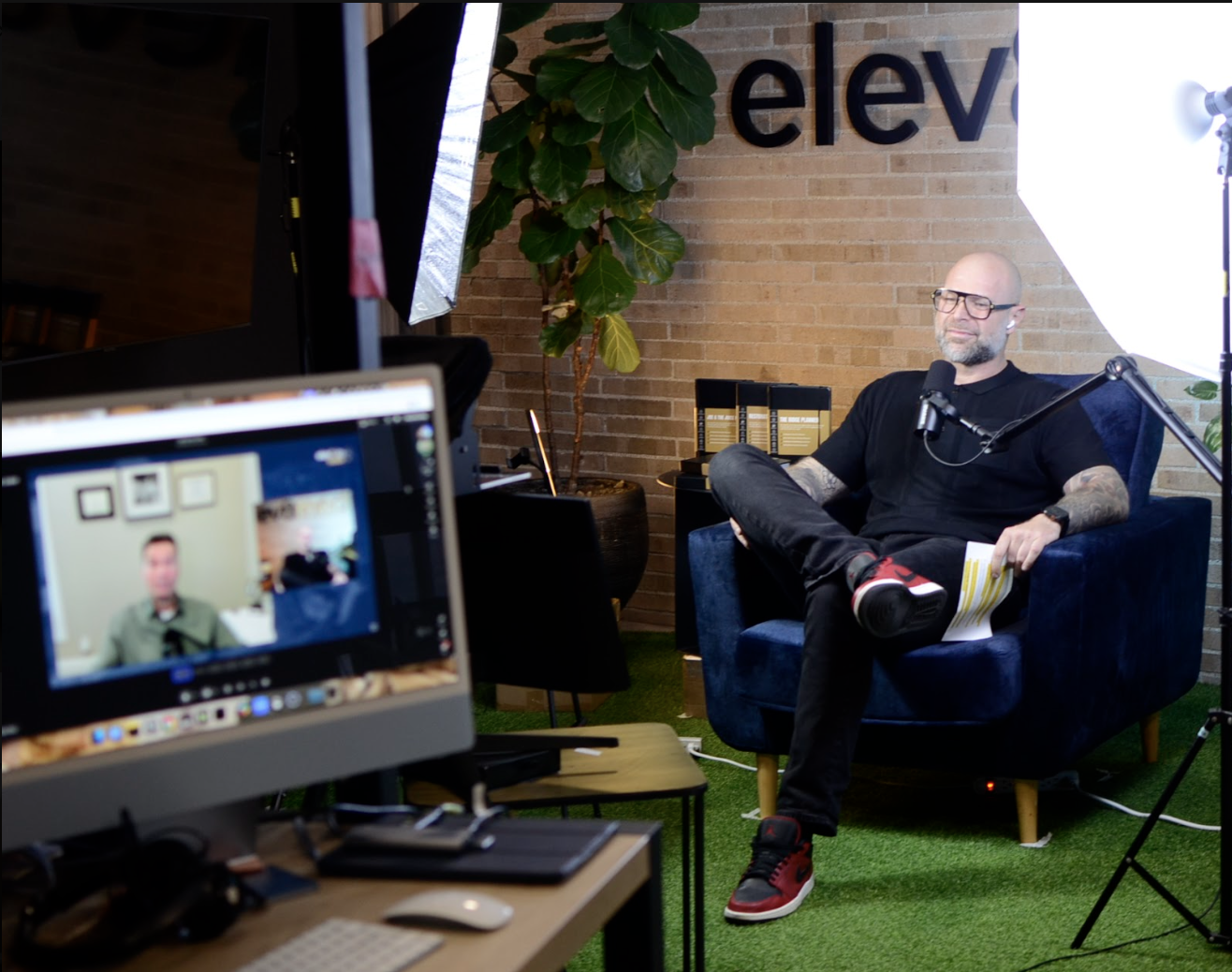
Mission-First Growth: Ben Camp on Scaling Recovery.com
The way patients find behavioral health treatment is changing faster than most providers realize. AI, LLMs, and a more informed consumer mean that families can now research and compare providers in depth before ever making a phone call — and the organizations that earn trust through transparency, outcomes, and authentic reviews will dominate discovery while those that rely on visibility and budget alone will lose ground.
In this episode of The elev8.io Podcast, Gary Garth sits down with Ben Camp, CEO & Co-Founder of Recovery.com, to discuss how the company has grown from a startup committed to eliminating deceptive treatment marketing into one of the behavioral health industry's most trusted care-navigation marketplaces — and what treatment providers must do right now to prepare for the next era of patient acquisition.
Key Takeaways
- Dark patterns in treatment directories actively harm patients. Many directories display three to five phone numbers on a facility's profile, all routing to a sponsored hotline — not the treatment center the patient intended to call. Recovery.com was built specifically to eliminate this pattern: the only phone number on any profile is the facility's direct admissions line.
- LegitScript certification is becoming the ethical baseline for treatment advertising. Already mandatory for Google paid search, Recovery.com now requires LegitScript verification for all advertisers on its platform — raising the floor for ethical marketing across the industry and protecting patients from bad actors on the organic side.
- Cost-Per-Result aligns marketing investment with admissions economics. Not every website visit carries the same intent. Recovery.com's new model lets treatment centers set a target cost per lead, letting sophisticated marketers scale spend at the ROI their funnel supports rather than paying per click regardless of intent.
- Trust is the moat that AI cannot erode — it amplifies it. As families use LLMs to research treatment before calling, they surface reviews, outcomes data, and reputation signals. Organizations with authentic stories, verified credentials, and published outcomes will be recommended; those without will not. The future of patient acquisition belongs to the most trusted, not the loudest.
- Choose investors for alignment, not valuation. The term sheet reveals far more than the number. Ben's practical advice: look for founder-friendly terms, aligned expectations on exit timing, and investors who understand that a patient-first model is the business model — not a constraint on it.
“I would love every time that someone calls a treatment center, they don't get turned away for financial reasons.”— Ben Camp, on the one thing he would change about behavioral healthcare
Episode Chapters
- 00:00The mission that inspired the creation of Recovery.com
- 03:00Building trust in an industry challenged by deceptive marketing
- 05:00Why Recovery.com acquired Rehabs.com and Recovery.org
- 08:00Exposing dark patterns in behavioral health directories
- 10:00LegitScript certification and raising the industry's ethical standards
- 12:00Why Recovery.com introduced its Cost-Per-Result model
- 16:00Balancing patient-first rankings with advertiser performance
- 20:00How outcomes, reviews, and quality scores will shape treatment discovery
- 22:00Protecting mission and culture while scaling with investors
- 26:00Advice for behavioral health leaders raising capital
- 29:00AI, trust, and the future of patient acquisition
- 35:00Why the Recovery.com Marketing Summit continues to grow
- 37:00Ben's vision for improving access to behavioral healthcare
Frequently Asked Questions
Why did Ben Camp start Recovery.com?
Ben and co-founder Jeremiah Lindemann were helping treatment centers with marketing and kept seeing a prevalent problem: patients being taken advantage of during their treatment journey. Websites appeared to be independent, helpful resources but were actually designed to exploit people in their darkest hour. Recovery.com was founded with what Ben calls "righteous indignation" about those practices — and the conviction that a genuinely trusted resource would benefit people around the world.
What are dark patterns in behavioral health treatment directories?
Many treatment directory websites display three to five phone numbers on a facility's profile page, all routing to a centralized sponsored hotline — not the treatment center the patient intended to call. A family clicks on what looks like a specific facility's number, but they're actually connected to a call center that redirects them to whichever facility is paying the highest sponsorship fee. Recovery.com has never used this model: every phone number on every profile connects directly to that facility's admissions line.
Why does Recovery.com require LegitScript certification for advertisers?
LegitScript certification already gates access to Google paid search for substance use disorder keywords, effectively keeping bad-actor aggregators out of paid results. But those same organizations can still rank well organically. Recovery.com requiring LegitScript certification for all advertisers extends that ethical standard to its own platform, ensuring that patients interacting with featured listings are connecting with verified, legitimate providers.
How does Recovery.com's Cost-Per-Result model work?
Treatment centers set a target cost per result — essentially a target cost per lead or qualified contact — rather than paying a flat fee per profile view regardless of visitor intent. Recovery.com gets traffic from a mix of channels (Google Organic, paid media, social, direct), so visitor intent varies significantly. The Cost-Per-Result model lets sophisticated advertisers optimize for the economics their admissions funnel supports and scale spend at the ROI that actually makes sense for their business.
How does Recovery.com balance rankings between out-of-network and in-network facilities?
Ranking is not purely bid-based. Recovery.com factors in click-through rate and an internal quality score based on things like reviews and — in development — outcomes data. The goal is for high-end, out-of-network facilities to surface when patients are demonstrating that type of intent, and in-network facilities to surface for broader searches. Ben acknowledges the current state is still being refined, with insurance-screening tools and better segmentation on the roadmap.
What advice does Ben give behavioral health leaders raising capital?
Don't chase the highest valuation. The valuation number is appealing, but the term sheet is what matters. Read every clause: How much operational independence will you retain? What are the investor's expectations around exit timing? Will they need to sign off on major decisions? Ben recommends looking for founder-friendly terms even if the dollar number is lower, and having explicit conversations about what success looks like before signing anything. Good legal representation is non-negotiable.
How will AI change the way families search for treatment?
Ben sees AI amplifying the importance of trust rather than replacing traditional search. Families are now armed with LLMs that let them research providers in depth before making a single call — surfacing reviews, bad press, outcomes data, and reputation signals automatically. Facilities that have invested in transparent marketing, authentic storytelling, and published outcomes will be recommended by AI systems; those that haven't will not. The future belongs to the most trusted organizations, not the ones with the largest budgets.
What's the one thing Ben would change about behavioral healthcare?
"I would love every time that someone calls a treatment center, they don't get turned away for financial reasons." Ben's vision is for Recovery.com's insurance-screening tools to help patients understand their options — including out-of-network benefits they didn't know they had — before they ever make that call, so the conversation can focus on care rather than coverage. Beyond that, he sees improving Medicaid reimbursement rates as essential to expanding access for the people who need help most.
Full Transcript
Cleaned and speaker-labeled. Jump to any moment via the chapters above, or open the complete transcript below.
Read the full transcript13 chapters · ~40 min
The mission that inspired the creation of Recovery.com00:00
Gary Garth: Hi everyone. Welcome back to The elev8.io Podcast, the thought leadership platform designed for behavioral health executives navigating growth, innovation, and impact. I'm your host Gary Garth, and today we're joined by a guest who has helped transform the way people discover trusted addiction and mental health treatment. Joining us is Ben Camp, CEO and co-founder of Recovery.com, one of the industry's leading platforms connecting individuals and families with high-quality behavioral healthcare providers around the world. Under Ben's leadership, Recovery.com has evolved beyond a treatment directory into a trusted marketplace focused on transparency, education, and helping people make one of the most important decisions of their lives. Ben, welcome to The elev8.io Podcast.
Ben Camp: It's great to be here, Gary. I'm excited.
Building trust in an industry challenged by deceptive marketing03:00
Gary Garth: Ben, why don't you take us back to the beginning? What problem did you and Jeremiah see in 2017 that made you believe Recovery.com needed to exist?
Why Recovery.com acquired Rehabs.com and Recovery.org05:00
Ben Camp: We started the company all the way back in 2017. My co-founder and I had a similar background to elev8.io in that we were helping treatment centers with their marketing. As we did that, we developed a real passion for the space — and we also saw a very prevalent problem with patients being taken advantage of during their treatment journey. There were a lot of websites that appeared to be independent, helpful resources but were actually trying to take advantage of people in their darkest hour. We like to say we started the company with a bit of righteous indignation around what was happening, and the conviction that we could build a real trusted resource that people around the world would genuinely benefit from. Ten years later, we've really seen that come to fruition.
Gary Garth: I believe I saw a post from you — you guys surpassed over one million visitors per month on the Recovery.com URL?
Exposing dark patterns in behavioral health directories08:00
Ben Camp: Yeah. Per month. Yep.
Gary Garth: That's remarkable. And recently you went ahead and acquired several other directories — the AAC Recovery Brands acquisition, multiple domains.
LegitScript certification and raising the industry's ethical standards10:00
Ben Camp: About this time last year, we were approached by American Addiction Centers, who had owned for quite a long time some of the more premium domains in the space — like Rehabs.com and Recovery.org. They and us really didn't think they were the best owner of those websites. We had always believed they should be owned by an independent company that can help people survey all the different options available to them. As we put together the deal, I think everyone in the transaction agreed we would be the best steward of those sites. We combined Recovery.org and Recovery.com, which for SEO nerds listening — we really thought that combining the domain authority would be a one-plus-one-equals-three situation, and it very much was. It helped our rankings in a bunch of different ways. We run Rehabs.com as a separate website still focused on SUD treatment.
Why Recovery.com introduced its Cost-Per-Result model12:00
Gary Garth: At elev8.io when we bring on new facilities, getting authority scores up and being listed on directories with topical relevance is foundational. But there are many directories out there, and it's hard to navigate which ones are legitimate. I remember early clients where we'd do market research on directories and call the listing number — only to find it went to some call center elsewhere. You guys have basically set the standard for how this should be done. What was one of the drivers behind requiring LegitScript certification?
Ben Camp: I actually want to share my screen — I know some people are watching versus listening. My goal isn't to name and shame any particular website, but most directory websites out there have profile pages for treatment centers where what you get is a phone number to a central hotline. If you're a patient, you see a phone number here, a phone number there, a phone number at the bottom — you would think you're calling that treatment center. But you're not. The actual facility phone number is buried in the small print. The prominent numbers connect to a sponsored hotline where a dozen or so paying facilities compete for that caller, and the person gets redirected to whichever sponsor picks up — not the one they actually looked at. If you go on our site, whether it's a free or paid listing, the only phone number on any profile page is the treatment center's own admissions line. That's it. On LegitScript — it already blocked a lot of these aggregators from Google paid search. But they can still rank well organically. That's still a challenge we're working on.
Gary Garth: Personally, I find those hotline practices almost borderline disgusting — especially when I search for AA meetings or NA meetings near me and the first results are these directories preying on people's vulnerability. What you've built is an instrumental resource that the industry genuinely needed. You've also been building toward outcome studies in profiles, and you have a very stringent advertiser verification process. That patient-centric approach shines through in everything you do. Let's talk about a recent move you made — shifting from a cost-per-view model to a cost-per-result structure. What drove that?
Balancing patient-first rankings with advertiser performance16:00
Ben Camp: When we first started, we had a subscription model — pay to be a premium center in your state. That worked for a while but didn't scale as markets got more crowded. Then we moved to cost-per-profile-view, similar to cost-per-click, which scaled well for a few years. But the primary challenge is that not all clicks are the same from an intent perspective. We now get traffic from Google Organic, paid channels, social media, direct visitors, retargeting — a whole mix, with people at very different stages of their journey. Some are just poking around. Some are ready to go to treatment today. What we introduced earlier this year is the ability to set a target cost per result. Every advertising platform you come across has this — some call it cost-per-lead, we call it cost-per-result. We're trying to let customers set the cost per lead that makes sense for their specific business and funnel economics. That lets sophisticated marketers scale their spend at the ROI that actually works for them, and move budget to us from Google Ads.
Gary Garth: That forces you into the mindset of breaking down your entire admissions journey and understanding the different metrics — which allows you to bid competitively according to what actually makes financial sense for driving census. I want to ask about something you have a lot of thought on — protecting the mission as you scale. You guys have almost doubled in team size over the last year or two. How do you protect a mission-first culture while growing that fast?
Ben Camp: We were the second fastest-growing company in Wisconsin a couple of years ago on the Inc. 5000 list. Our core values are compassion, vulnerability, growth, joy, accountability, and creativity. Our brand pillars are: independent and unbiased, ethical, helpful and educational, and comprehensive. I think our origin story helps a lot — me and my co-founder are still running the company, and we instilled those values into the team as we grew. The investors you bring on are really important. We found really good investors — HealthX, a Madison-based VC that invests specifically in healthcare companies. Our Series A investor is in recovery himself. They pragmatically understand that the business model has to be patient-first for it to be sustainable long-term. If we lose the trust we've built — with treatment centers, with agencies like yours — by taking shortcuts or doing things that harm patients, from a purely economic perspective you can very easily lose your market. Trust is one of our biggest competitive moats. It took us a long time to build and it can be lost very quickly.
How outcomes, reviews, and quality scores will shape treatment discovery20:00
Gary Garth: You've acquired several companies, raised money, expanded. What advice would you give a treatment center owner considering capital to expand — a second location, additional levels of care, telehealth — on how to assess whether a strategic partner won't compromise clinical integrity?
Protecting mission and culture while scaling with investors22:00
Ben Camp: Probably the most practical piece of advice: don't chase valuation. The valuation number is kind of fake — it doesn't mean real dollars until you exit. People get really hung up on wanting an investor that values them at X. That matters, but there's much more to the term sheet. Read everything around what operational independence you'll retain, what the investor will mandate — exit timing, things they'll want to sign off on. Are you actually going to be able to run the company as you have been, or will you have to run everything by them? You can tell a lot from a term sheet whether it's founder-friendly or not. And talk through expectations explicitly before signing: what does success look like for both of you? What's the timeframe for exit? Make sure you're really aligned. And obviously, make sure you have good legal representation.
Gary Garth: Let's talk about the next three to five years. AI is moving faster than ever, legislation is being rolled out, reimbursement rates are shifting. What should facility owners be paying particular attention to?
Ben Camp: I think the theme of this conversation has been trust — and I think that is as important as ever. People are now armed with LLMs that let them learn a whole bunch of things before they ever reach out to a treatment center. They're going to find any dirty laundry or bad reviews. And on the flip side, I'm really excited to see treatment centers using outcomes data more in their marketing. That's what people ultimately want to know: is this place going to help me or my loved one get better? We work with ERP Health and several third-party outcomes providers. If done right, demonstrating outcomes can have a real impact on your bottom line beyond simply doing the right thing. Truly being able to differentiate your program, not trying to do everything for everyone, and making sure your marketing team is great at storytelling — that's what you're doing: helping someone envision what their life could look like if they use your service. The future won't belong to the organizations with the biggest budgets. It will belong to those that earn trust through transparency, integrity, and authentic storytelling.
Advice for behavioral health leaders raising capital26:00
Gary Garth: One thing I feel is being overlooked is HIPAA, security, and compliance — categories that haven't been front and center but will be increasingly important. You recently acquired RedFox AI. What's your view?
Ben Camp: I'm certainly not a compliance expert, and you should have someone on your team or a consultant who is — because that's where you can really get bitten. At the same time, I've seen facilities that have gone so far toward risk avoidance that their legal teams have completely handcuffed the marketing team. They can't track anything and are flying blind. If you're going to say "we can't do this on the data side anymore," you better have a good alternative for how you're going to track whether your marketing is working — or you'll blow through a ton of money. I know facilities that were previously great at tracking cost per admission and are now completely in the dark. Work with experts who can help you be compliant without sacrificing your ability to measure success. Hopefully you can do both at once.
AI, trust, and the future of patient acquisition29:00
Gary Garth: And you have the Recovery.com Marketing Summit coming up — your third in a row, with double the participants this year. What inspired that?
Ben Camp: I go to a summit called the Lighter Capital Summit every year — they do debt financing and have been our partner for years. Whenever I go, I'm invigorated talking to peers. I learn a lot in a relatively small, very curated format. We wanted to create that for behavioral health digital marketers, who often spend all their time at their computers keeping everything running and don't get much opportunity to rub shoulders with peers. So we kept the list exclusive — marketing executives at treatment centers and owners, with some technology partner spots. Getting those people in a room, making it very collaborative, learning from peers — that was the thought. And honestly, it's just a great way for us to spend time with our customers, understand their needs, and strengthen those relationships. I'm really looking forward to having you back this year, Gary.
Gary Garth: Ben, let me ask you one final question. You've been in this space for over a decade, built a site with over 22,000 providers listed, and made a real impact on access to care. If I gave you a magic wand and you could change one thing about this industry, what would it be and why?
Ben Camp: In a nirvana state, I would love for every time someone calls a treatment center, they don't get turned away for financial reasons. That would be amazing. That's one thing we're working on — trying to help people understand their insurance options before they make that call so the conversation can focus on care rather than coverage. Outside of nirvana, it would be great if Medicaid reimbursement rates could actually support a viable business. We see providers creatively managing to run successful organizations, but I know how much creativity that takes. And access to Medicaid and Medicare has been getting reduced recently, which is terrible. Our passion is very much in helping people understand what their options are and how to take the next step. One of the main reasons people don't get help is because they don't know what the right next step is. Our goal is to increase access to care mostly by helping inform people on what options are available.
Why the Recovery.com Marketing Summit continues to grow35:00
Gary Garth: Two golden things there. Financial barriers are typically the biggest challenge — but giving people options, education, and an understanding of how to navigate a crisis goes a long way. Ben, thank you for the great work you and your team do. It's a privilege to be a partner. For anyone who wants to get in touch with Ben or Recovery.com — how do they reach you?
Ben's vision for improving access to behavioral healthcare37:00
Ben Camp: I'm pretty active on LinkedIn — feel free to message me and connect there, or shoot me an email at [email protected].
Gary Garth: Thank you so much again, Ben. Looking forward to seeing you at the Recovery.com Marketing Summit in Madison.
Ben Camp: Likewise. Thanks, Gary.
About the Guest
Ben Camp — Recovery.com
Ben Camp is the CEO and Co-Founder of Recovery.com, one of the behavioral health industry's most trusted care-navigation platforms. Since co-founding the company in 2017 with Jeremiah Lindemann, Ben has grown Recovery.com from a startup committed to eliminating deceptive treatment marketing into a marketplace serving more than 22,000 providers and attracting over one million monthly visitors. Under his leadership, Recovery.com has acquired Rehabs.com, Recovery.org, and RedFox AI, and has partnered with LegitScript to raise ethical advertising standards across the industry. Ben is also the founder of the Recovery.com Marketing Summit, an annual gathering of behavioral health marketing executives and operators.
Connect on LinkedInAbout the Host

Gary Garth
Founder & CEO, elev8.io
Gary Garth is the Founder & CEO of elev8.io, where he helps behavioral health organizations achieve full census through integrated marketing, admissions, and technology-driven growth systems. With more than a decade of experience working alongside Google, Microsoft, and high-growth technology companies, Gary has built and implemented scalable growth frameworks now used by 55+ treatment centers across the United States to drive admissions and operational efficiency. Read more
Connect on LinkedInRelated from elev8.io
Curious what your true cost per admission is?
Run your numbers with our Behavioral Health Growth Calculator,
or talk strategy with our team.