How Google AI Overviews Are Changing Behavioral Health
The way families search for behavioral health treatment has fundamentally changed. AI Overviews and answer engines now resolve questions before users ever click a link — and treatment centers that built their visibility strategy on clicks alone are losing ground fast.
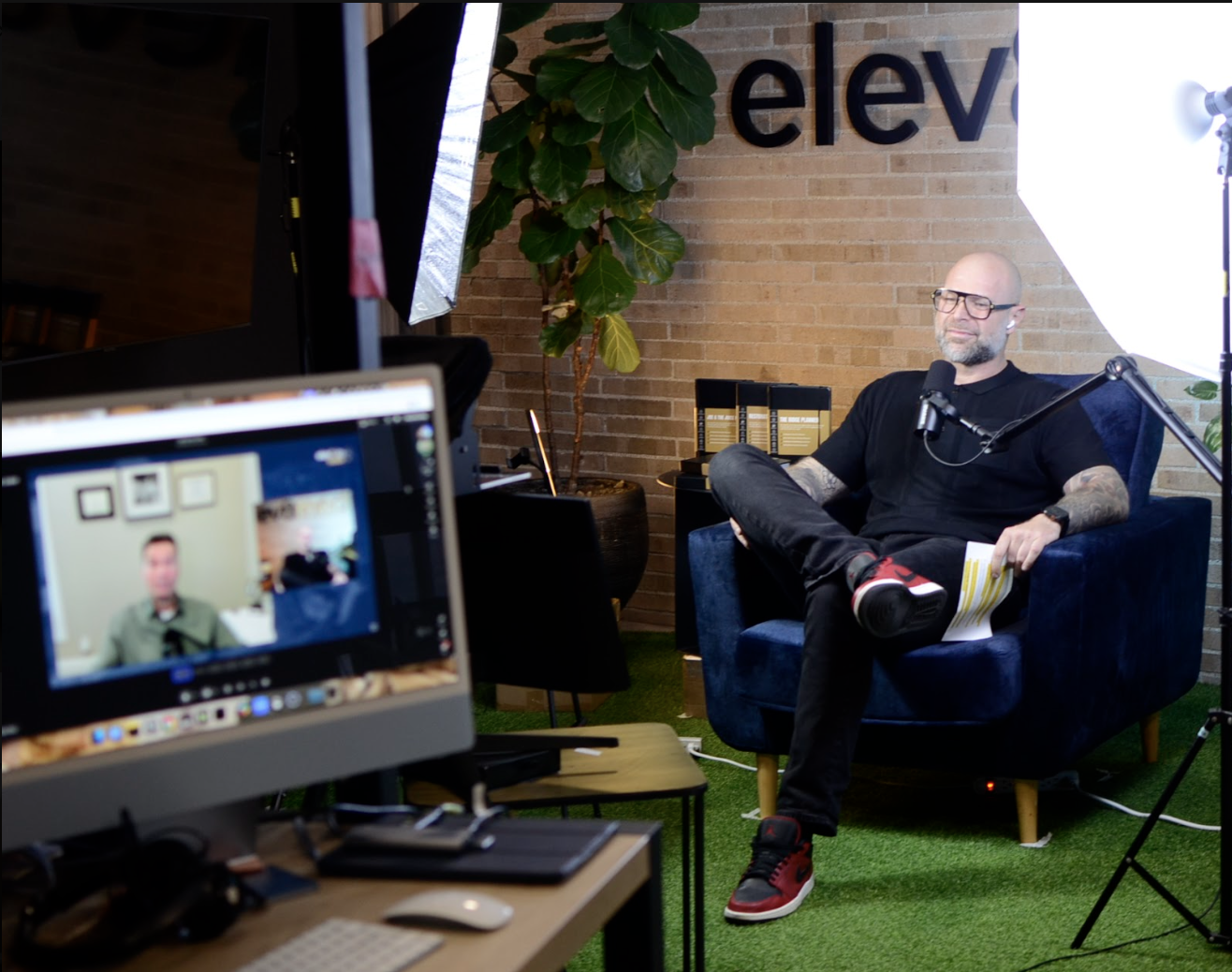
In this episode of The elev8.io Podcast, Gary Garth sits down with Trevor Rand, Account Strategist at Google and SUD vertical specialist, to break down exactly what's driving this shift, why traditional PPC strategies are no longer enough on their own, and the specific steps behavioral health centers must take to stay visible — and stay competitive — in an AI-first search environment.
Key Takeaways
- AI Overviews now appear on ~30% of all Google searches. Facilities that appear inside an AI Overview — not just beside it — see substantial increases in click-through rates and conversions. Being cited in the summary is the new SEO goal.
- 15% of daily Google searches are brand-new queries. Keyword-based strategies miss a massive share of high-intent traffic. Comprehensive Q&A content and GEO (Generative Engine Optimization) are essential to capture families at every stage of their research journey.
- Value-based bidding dramatically outperforms call or click optimization. Feed your CRM and VOB data back into Google Ads with tiered values (e.g. $1,500 per VOB, $5,000 per viable VOB, $10,000 per admission) so the algorithm learns to find your highest-value patients.
- Score your leads 1–5 stars. Medicaid leads get 3 stars; PPO VOBs get 5. Import that signal into Google Ads so campaigns stop optimizing toward volume and start optimizing toward revenue. One client generated 100 extra admissions in a single quarter after implementing this.
- YouTube Ads are behavioral health's most underused channel. As a digital billboard for awareness, YouTube reaches families researching care at a fraction of Google Search CPC. Short, authentic videos now require minimal production thanks to AI tools.
“You're only as good as the data that's in your Google Ads account.”— Trevor Rand, Account Strategist — Google
Episode Chapters
- 00:56Why behavioral health centers must adapt to AI-driven search
- 04:11What Google's AI Overviews mean for treatment facilities
- 07:47How AI Overviews impact click-through rates and SEO strategy
- 19:00Why value-based bidding beats clicks and calls for ROI
- 38:28The overlooked power of YouTube ads for awareness and admissions
- 51:06Creating compelling video content for patient acquisition
- 55:31How AI tools lower the barrier for video ad creation
Frequently Asked Questions
What are Google AI Overviews and how do they affect behavioral health marketing?
AI Overviews are AI-generated summaries that appear at the top of Google search results for complex or informational queries. They currently show on roughly 30% of all searches. While overall click-through rates are slightly lower, facilities cited inside an AI Overview see significantly higher CTR and conversions because users treat the citation as a trusted endorsement.
How can a treatment center appear in Google AI Overviews?
Create comprehensive Q&A content on your website that directly answers the questions families and individuals use when researching treatment. Pages that answer specific, nuanced questions — symptoms, treatment modalities, what to expect — are most likely to be indexed and cited in AI-generated summaries.
What is value-based bidding and why does it matter for treatment centers?
Value-based bidding means telling Google the dollar value of each type of conversion — a Medicaid lead might be worth $10, a verified VOB worth $100, a viable VOB worth $500. The algorithm then optimizes toward your most valuable leads instead of maximizing raw call volume. Facilities implementing this typically see dramatically higher-quality VOBs within weeks.
How many VOBs or admissions do you need before value-based bidding works?
At minimum, you need approximately one qualifying conversion per day (roughly 30 per month) to give the Google algorithm enough data to learn. The system works best at 50+ conversions per month. Below that threshold, stick with standard conversion tracking while you build data volume.
Why should behavioral health centers invest in YouTube ads?
YouTube is the world's second-largest search engine and functions as a cost-effective top-of-funnel channel for behavioral health. YouTube Ads reach families and individuals who are researching care but not yet ready to call — at CPMs that are a fraction of Google Search CPCs. Authentic short videos (facility tours, staff introductions, alumni stories) build familiarity and trust before the first call.
Full Transcript
Cleaned and speaker-labeled. Jump to any moment via the chapters above, or open the complete transcript below.
Read the full transcript7 chapters · ~60 min
Why behavioral health centers must adapt to AI-driven search00:56
Gary Garth: Welcome to the elev8 Podcast — the thought leadership platform designed for behavioral health executives navigating growth, innovation, and impact. Each week we sit down with top minds in behavioral healthcare and unpack the key drivers of success for patient acquisition. Today's guest is Trevor Rand, Account Strategist at Google and a vertical specialist in the substance use disorder industry. Trevor brings a wealth of insight into how behavioral health facilities can adapt to the rapidly changing digital landscape — especially with the rise of AI-driven search. In this episode we're diving into how AI Overviews are transforming search, what this means for treatment centers, and how to leverage data-driven tactics to acquire high-value patients more effectively than ever. Welcome Trevor, what's up?
What Google's AI Overviews mean for treatment facilities04:11
Trevor Rand: Great, Gary. Thanks for having me on.
How AI Overviews impact click-through rates and SEO strategy07:47
Gary Garth: I've been working with Trevor on several accounts and I've worked with Google for 15 years — I've met few people as dialed into an industry as Trevor is with substance use disorder campaigns. Trevor put together a deck covering the topics most relevant right now. Trevor, do you want to give us a quick overview?
Trevor Rand: Absolutely. My team specifically covers probably 30 of the top largest behavioral health centers in the US right now. What my clients have been asking me is: how is search changing with AI? How is that going to affect my ads? How should I be prepared? Everyone is learning as we go and the space is rapidly changing. I want to give everyone a clear picture of where things stand with Google search, where it's heading, and how that impacts behavioral health centers. I also want to cover YouTube — as a platform overall and specifically YouTube Ads as a digital billboard to market your business.
Gary Garth: Very excited. It comes up in every single status call with our 30-plus facilities. So let's start with AI Overviews — how they work and the impact on treatment facilities.
Trevor Rand: What's happening right now is different from anything we've seen in the last five to ten years — there's actually a big change in how people search. The search results page looks different. We're also releasing AI Mode, where people can ask questions and even use voice on their phone. What the AI Overview does is instead of showing you the standard results page, it scans all the indexed websites and generates an AI summary — maybe a paragraph or two — trying to answer your question directly. Right now in the United States, AI Overviews are showing on roughly 30% of searches. They appear on informational searches — queries where there's no single right answer.
Why value-based bidding beats clicks and calls for ROI19:00
Gary Garth: And for behavioral health specifically — queries like "what treatments are available for cocaine addiction" or "which methods sustain long-term recovery" — how does Google draw the line between informational and commercial?
Trevor Rand: It's evolving. If the query is purely informational — like "what is addiction treatment?" — we probably wouldn't show an ad for a facility. But if someone types "where's the best place to get treatment near me" or "when can I go get help," that's where we'll show ads in the AI Overview. The system tries to identify when a person is ready to find a facility right now, and that's when a facility ad should appear.
Gary Garth: What impact are AI Overviews having on click-through rates? Because I've read on Search Engine Land that CTR has actually dropped slightly since AI Overviews rolled out.
Trevor Rand: Yes — click-through rates are down slightly overall because the person gets their answer right there in the summary before reaching the standard results. However — and this is critical — if your facility is mentioned and cited inside that AI Overview, we've seen substantial increases in both click-through rates and conversions. People see that as an endorsement. So the new SEO goal isn't just ranking in the blue links; it's getting cited inside the AI summary itself. The best way to do that is to have comprehensive Q&A content on your website that answers the questions someone researching treatment would ask.
Gary Garth: So let's say I'm an advertiser. How does campaign performance compare to traditional search? What's the best way to optimize?
Trevor Rand: You're only as good as the data that's in your Google Ads account. The better data going in, the better the output. The best setup I see working is where facilities give Google the actual VOB data and actual admit data directly in the platform — telling the campaign: here are the admits we got from these searches, here are the VOBs. If you're only tracking calls, the campaign optimizes for calls. But most facilities don't make money from driving calls — they make money from admissions.
The overlooked power of YouTube ads for awareness and admissions38:28
Gary Garth: At elev8.io we focus on three metrics: leads to VOB, VOB to qualified VOB, and qualified VOB to admission. Understanding the lifetime value per patient changes how much you can afford to pay per lead entirely. How do you set up that measurement mechanism?
Trevor Rand: What I recommend is connecting your CRM — or your call tracking platform like CTM or CallRail — and having your team score each lead. One through five stars. A Medicaid lead gets a three-star value, say $10. A strong VOB gets four stars at $50. A viable VOB gets five stars at $100. What you're telling Google is: drive me four- and five-star leads; I'm not looking for the three-star Medicaid calls. Over a few weeks the algorithm learns the personas of people who drive high-value VOBs — their search history, how long they've been researching — and starts going after them specifically. Clients who implement this see dramatically higher-quality vobs within weeks.
Gary Garth: One client — I can't mention them — had a hundred extra admissions in a single quarter after switching to this setup with a CRM integration. So it absolutely works. What are the minimum data requirements? Budget? Conversion volume?
Trevor Rand: You want at minimum one conversion per day of whatever you're measuring — VOBs or admits. That's roughly thirty a month. Where this works best is when you're hitting fifty-plus per month. The system needs consistent daily data to learn properly. Once that's in place, implement value-based bidding. And if you have lifetime value data — if a patient comes back for additional care — feed that in too. Google doesn't know if that person came back five times unless you tell it.
Gary Garth: Fantastic. Let's shift to YouTube — you mentioned it's been a big interest area for behavioral health centers. Why YouTube, and how does it fit into the patient acquisition strategy?
Creating compelling video content for patient acquisition51:06
Trevor Rand: YouTube is the second-largest search engine in the world. For behavioral health, it works as a digital billboard — a top-of-funnel awareness channel that reaches families and individuals who are researching care but not yet ready to call. The CPMs are a fraction of Google Search CPCs. Short, authentic videos — staff introductions, facility tours, testimonials from alumni where HIPAA-compliant — build familiarity and trust before someone ever picks up the phone. And AI tools have made video production accessible to any facility, regardless of budget.
How AI tools lower the barrier for video ad creation55:31
Gary Garth: Trevor, this has been incredibly valuable. For anyone listening, the key takeaways: get your Q&A content optimized for AI Overviews, implement value-based bidding with tiered lead scoring, and add YouTube to your awareness strategy. Trevor, how can folks reach you?
Trevor Rand: Best way is through your Google rep, or connect with Gary and the elev8.io team — they'll make the introduction. Happy to help any facility thinking through these strategies.
About the Guest
Trevor Rand — Google
Trevor Rand is an Account Strategist at Google and a dedicated specialist in the Substance Use Disorder (SUD) vertical, working with many of the largest behavioral health centers in the United States. Trevor brings frontline insight into how treatment facilities can adapt to AI-driven search, leverage value-based bidding, and use YouTube as a cost-effective patient acquisition channel.
Connect on LinkedInAbout the Host

Gary Garth
Founder & CEO, elev8.io
Gary Garth is the Founder & CEO of elev8.io, where he helps behavioral health organizations achieve full census through integrated marketing, admissions, and technology-driven growth systems. With more than a decade of experience working alongside Google, Microsoft, and high-growth technology companies, Gary has built and implemented scalable growth frameworks now used by 55+ treatment centers across the United States to drive admissions and operational efficiency. Read more
Connect on LinkedInRelated from elev8.io
Curious what your true cost per admission is?
Run your numbers with our Behavioral Health Growth Calculator,
or talk strategy with our team.