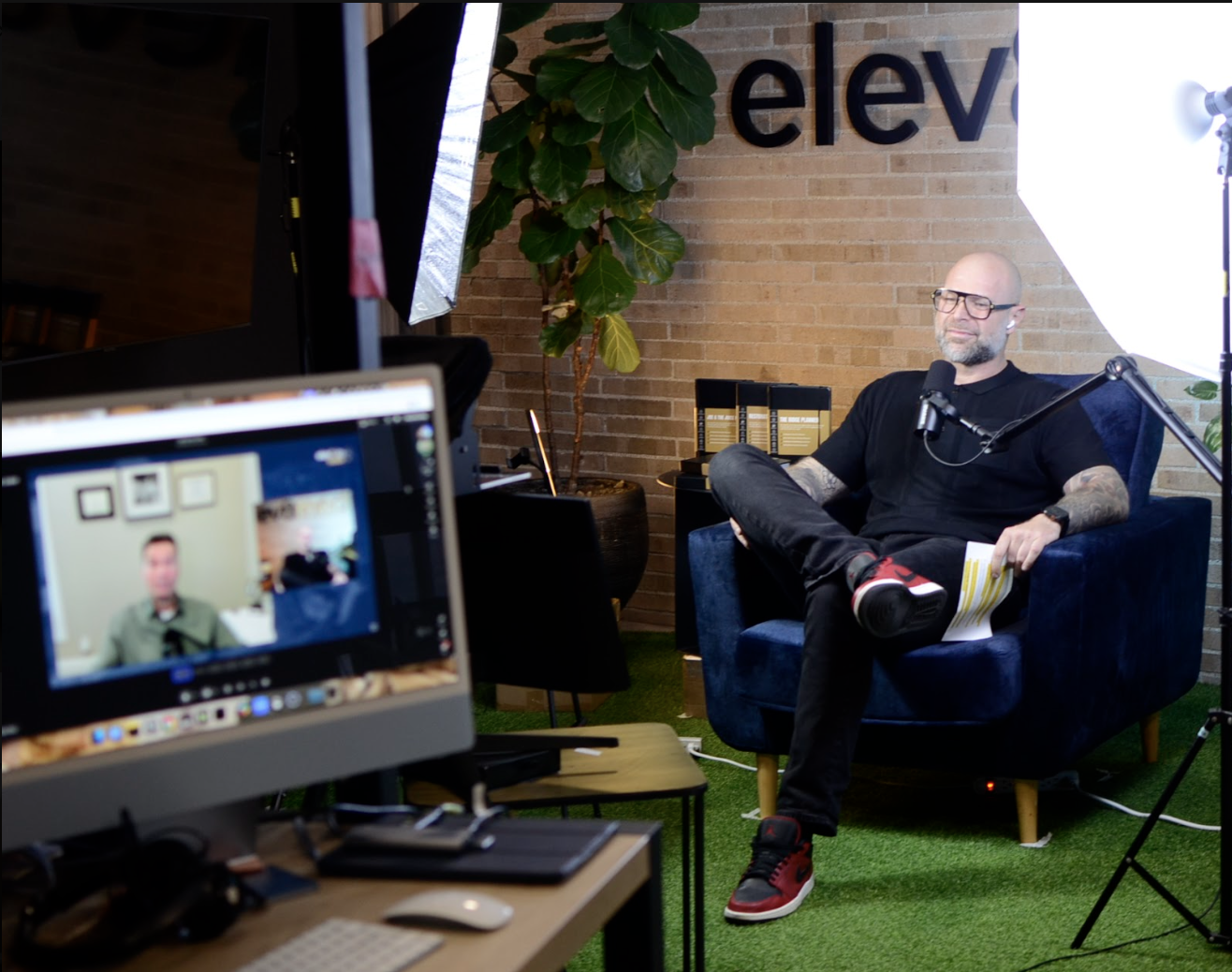
Admissions Enablement: Unlocking Your Treatment Center's Full Potential
Most treatment centers think they have a lead problem. In reality, they have an admissions system problem — and the fix isn't more ad spend. According to SAMHSA, seven out of ten people who reach out for care never get connected to treatment. The bottleneck is almost always what happens after the phone rings.
In this episode, Gary Garth sits down with Amber Vaughan, Chief Marketing Officer at Cornerstone Healing Center and one of the industry's leading experts in admissions strategy. Amber walks through her 85-page admissions audit framework, the KPIs every executive should track by heart, why poor data hygiene silently kills conversion, and the leadership philosophy that turns admissions teams from order-takers into lifelines.
Key Takeaways
- Missed call rate is the first metric to fix — and the benchmark is zero. Every missed call in behavioral health isn't just a lost lead. It may be the one time that person summons the courage to ask for help. Amber's first look in any admissions audit: how many calls are being missed.
- An ideal admissions call flow answers in under 15 seconds. Lead populates in CRM → consistent scripts → thorough discovery (clinical and financial) → quick VOB → schedule admission or set clear callback expectations → resource every caller, even those your program can't serve.
- Core KPIs every admissions director should track: missed call %, lead-to-VOB %, VOB-to-admit %, first-time-caller-to-admit %, payer mix %, source category %. Amber's benchmarks: 40% lead-to-VOB, 40% VOB-to-admit, 6%+ first-time caller-to-admit.
- Poor data hygiene kills conversion silently. If your CRM is outdated and inconsistent, callers get asked to repeat their story multiple times at their most vulnerable — destroying trust before the admission even happens.
- 70% of people who ask for help don't get it. SAMHSA data shows seven out of ten people who reach out for treatment never get connected to care. The fix starts with operational systems, not marketing spend.
“Know your customer journey. Build a tech stack that supports that process. Measure what matters. And let the main thing be the main thing — we're here to help people.”— Amber Vaughan, CMO — Cornerstone Healing Center
Episode Chapters
- 00:00What Admissions Enablement really means
- 02:00Auditing the patient journey from first call to admission
- 05:00Why missed calls remain the industry's biggest opportunity
- 07:00Hiring, coaching, and developing elite admissions teams
- 11:00Designing the ideal admissions workflow
- 13:00Common technology and CRM mistakes treatment centers make
- 16:00KPIs every admissions leader should measure
- 19:00Using call recordings to improve coaching and performance
- 24:00Automation strategies that reduce administrative burden
- 30:00When to hire more reps vs. improve current workflow
- 34:00Insurance trends, payer mix, and preparing for market changes
- 37:00Amber's one wish to improve behavioral health admissions
Frequently Asked Questions
What is admissions enablement and why doesn't every facility have it?
Admissions enablement is a comprehensive framework that equips admissions teams with the tools, scripts, training, technology, and data they need to convert high-quality leads into admissions — while guiding prospective patients through the process with clarity and empathy. Most facilities have bits and pieces of it; very few have a comprehensive strategy. The gap usually comes from treating admissions as a staffing function rather than a strategic growth engine.
What is an acceptable missed call rate for a behavioral health admissions team?
Zero. Amber Vaughan's benchmark — and she's unambiguous about it. A missed call in behavioral health isn't a lost lead. It may be the one time that person finds the courage to ask for help. Shame, guilt, and fear can prevent them from ever calling again.
What KPIs should every admissions director track weekly?
Missed call percentage, lead-to-VOB percentage, VOB-to-admit percentage, first-time-caller-to-admit percentage, payer mix percentage, and source category breakdown. Amber's benchmarks: 40% lead-to-VOB, 40% VOB-to-admit (to anywhere, not just your facility), 6%+ first-time-caller-to-admit.
Why is poor data hygiene such a problem for admissions conversion?
When CRM data is outdated or incomplete, callers get asked to repeat their story to different reps — destroying trust at their most vulnerable moment. It also makes follow-up unpredictable: which of yesterday's hundred calls are viable, and what was the next step with each? Clean, real-time data with clear next actions is the foundation of consistent conversion.
When should a treatment center hire more admissions reps vs. improve the current process?
Fix the process first. Hiring more reps into a broken system just trains them in ineffective patterns and makes the fix harder. Amber's approach: assess the system, identify what efficiencies can be created in the next 2–4 weeks, then evaluate hiring. Use call center staffing formulas as a starting guideline, but recognize that behavioral health calls are far more nuanced than the models assume.
Full Transcript
Cleaned and speaker-labeled. Jump to any moment via the chapters above, or open the complete transcript below.
Read the full transcript12 chapters · ~40 min
What Admissions Enablement really means00:00
Gary Garth: Welcome back to the elev8 Podcast, where we explore proven growth strategies that behavioral health leaders are using to increase admissions, drive full census, and scale with purpose. Today we're focusing on one of the most overlooked, high-impact opportunities in the industry: Admissions Enablement. Joining us is someone who's not just talking the talk — she's building it, auditing it, and architecting it every single day. Amber Vaughan is a seasoned behavioral health strategist with over 15 years of experience across admissions, marketing, clinical services, and operations. Now CMO, she holds an MA in Counseling and has built admissions and BD systems from the ground up for several leading facilities. Amber, welcome to the podcast.
Auditing the patient journey from first call to admission02:00
Amber Vaughan: Thank you, Gary. I'm so excited to be here — especially to talk about this topic that I don't think gets nearly enough attention in the industry.
Gary Garth: For folks who may not be familiar with the term, what is admissions enablement at a high level?
Why missed calls remain the industry's biggest opportunity05:00
Amber Vaughan: Admissions enablement is really an adaptation of what we call sales enablement in the sales world — equipping teams with the tools, resources, knowledge, and training they need to effectively engage with prospects and convert them to care. We've adapted that into an admissions framework that guides prospective clients or their families through the journey of choosing care with clarity, empathy, and effectiveness.
Hiring, coaching, and developing elite admissions teams07:00
Gary Garth: Based on your experience, is it the norm for facilities to have implemented an admissions framework like this?
Amber Vaughan: It's the norm to have bits and pieces of it. It is very much a rarity to have a comprehensive admissions enablement strategy. When I come into a facility, I like to go through the admissions process as a prospective patient — from all angles. From the moment the call comes in: what do they say to me, how does my question get answered? Then on the backend: where does that information go, how is it communicated to the right people at the right time? Following that ecosystem all the way through, from both the patient experience and the provider experience, to identify what's working, what's not, where the gaps are.
Gary Garth: What are the most common red flags you find?
Designing the ideal admissions workflow11:00
Amber Vaughan: I usually start with missed call rate. I know right off the bat based on how many calls are being missed whether or not the team is efficient — because it's consistently surprising how many calls treatment centers miss. That's a telltale indicator. And the acceptable missed call rate? Zero. This is like 911. You don't miss a 911 call.
Common technology and CRM mistakes treatment centers make13:00
Gary Garth: Amen. Let's talk about the people component. Is it more about talent, or training and enablement?
Amber Vaughan: Work ethic and systems will always surpass raw talent. A professional athlete has raw talent, but they don't walk in off the street and outcompete someone who has put in the work consistently. Training, scripting, structure — all of that surpasses talent in the long run. I love to hire people who are hungry over people who are skilled. I don't care what your resume says. I want to know how hungry you are, what you want to grow into, and whether you want to help people. Those are the right ingredients.
KPIs every admissions leader should measure16:00
Gary Garth: What does an ideal admissions workflow look like?
Amber Vaughan: Ideally: answer the call in under 15 seconds. The lead populates in my CRM. I have a consistent set of scripts in a knowledge base I can quickly search. I take the time to connect with that caller so they feel heard and understood. I complete a thorough discovery — clinical and financial — to determine if my organization can help them. If I believe we can, I run a quick VOB to confirm benefits and simultaneously submit to my billing team. Then in a perfect world, I schedule admission on that call. But if not — the call ends with clear expectations: what happens next, when, and when they'll hear from me. And if I can't help them, I provide resources and connect them to a program that can. Everyone who calls gets connected to care.
Using call recordings to improve coaching and performance19:00
Gary Garth: Let's talk tech. Where do facilities typically go wrong?
Amber Vaughan: Most of the time I see a fragmented tech stack — different pieces of technology that are either duplications of the same work or can't talk to each other. And admissions teams are often understaffed, so those inefficiencies compound. I also still see programs in spreadsheets instead of a CRM. Having the right technology that actually works for you — not against you — is foundational. And the best system is the one people actually adopt and use consistently.
Gary Garth: What specific CRM-related issues kill conversion the most?
Automation strategies that reduce administrative burden24:00
Amber Vaughan: Poor data hygiene, without question. If you've had a hundred calls today, how do you know which are viable leads and what happens next with each? Even worse: if a caller calls back in and a different rep answers — are they going to ask that vulnerable person to repeat their entire story again? That destroys trust at the worst possible moment. Clean, accurate, up-to-date CRM data with clear next actions is the second-biggest problem I see after missed calls.
Gary Garth: What are the core metrics every admissions director should know by heart?
Amber Vaughan: Missed call percentage is number one. Lead-to-VOB percentage is number two — though you first have to agree on what counts as a "lead" at your organization. VOB-to-admit percentage tells you how well the team handles qualified opportunities. First-time-caller-to-admit is a cleaner, more undiluted metric. Payer mix is the most overlooked — what insurance types are in your census, and are you dangerously concentrated in one payer category? And source category breakdown: where are leads actually coming from, and how does each source convert?
Gary Garth: What benchmarks should leaders hold their teams to?
When to hire more reps vs. improve current workflow30:00
Amber Vaughan: I try to keep it simple: 40% lead-to-VOB. Of those VOBs, 40% should turn into an admission — meaning the person lands at a facility, even if it's not mine. That gets you to roughly 15% lead-to-admit. For first-time callers specifically, I keep that at 6% or above. These are above industry averages, but they're achievable with the right systems.
Gary Garth: How important are call recordings, and how should leaders use them?
Amber Vaughan: They're essential — for both the leader and the reps themselves. I require all of my reps to listen to three of their own calls per week and three of a peer's per week. What I'm listening for: Did they follow the script? Did they take time to genuinely connect with the caller? Did they provide clear next steps? What objections came up that they had trouble answering? Those go into a knowledge base — an objection-handling library they can reference on future calls. Hearing themselves also catches habits they don't realize they have.
Insurance trends, payer mix, and preparing for market changes34:00
Gary Garth: What automations make the biggest impact?
Amber Vaughan: Two that I start with everywhere. First: a CRM button that automatically sends VOB requests to the billing team, eliminating the manual step of copying insurance info into an email. That's a simple lift that removes real friction. Second: automated text message follow-ups with prospective patients when we lose contact — a simple "checking in on you" message sent at a cadence we define. The rep doesn't have to remember; the person receives a reminder that we're there to support them. It pulls people back in without adding to the rep's workload. On average it takes 12 touchpoints over up to six months to get a patient into care — those automations make that sustainable.
Amber's one wish to improve behavioral health admissions37:00
Gary Garth: Final question: if you had a magic wand and could fix one admissions problem across the industry, what would it be?
Amber Vaughan: Missed calls. I want every single person who has taken the hardest step — reaching out for help — to get connected with someone who truly and meaningfully wants to help them. Not a voicemail. Not an unreturned callback. SAMHSA data shows that seven out of ten people who reach out for care don't get connected to treatment. Seven out of ten. If we fix that one thing — a compassionate person answering every call — we change this industry.
About the Guest
Amber Vaughan — Cornerstone Healing Center
Amber Vaughan is the Chief Marketing Officer at Cornerstone Healing Center and a seasoned behavioral health strategist with over 15 years of experience across admissions, marketing, clinical services, and operations. She holds an MA in Counseling and has built admissions and business development systems from the ground up for several leading treatment centers. Amber is known for her 85-page admissions enablement audit framework, her emphasis on call recording as a coaching tool, and her belief that great admissions teams are built on purpose-driven leadership — not just process.
Connect on LinkedInAbout the Host

Gary Garth
Founder & CEO, elev8.io
Gary Garth is the Founder & CEO of elev8.io, where he helps behavioral health organizations achieve full census through integrated marketing, admissions, and technology-driven growth systems. With more than a decade of experience working alongside Google, Microsoft, and high-growth technology companies, Gary has built and implemented scalable growth frameworks now used by 55+ treatment centers across the United States to drive admissions and operational efficiency. Read more
Connect on LinkedInRelated from elev8.io
Curious what your true cost per admission is?
Run your numbers with our Behavioral Health Growth Calculator,
or talk strategy with our team.