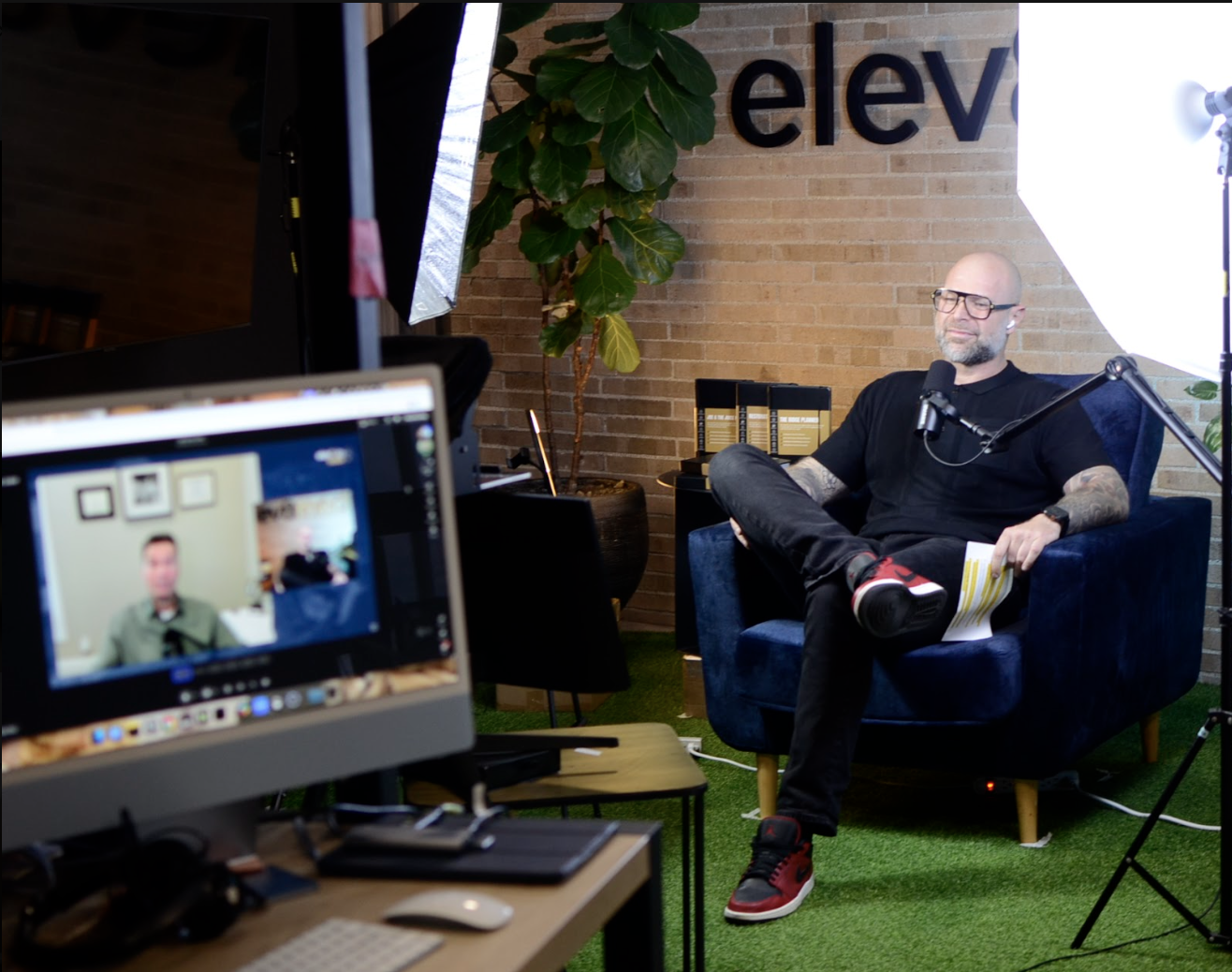
Culture Is the Strategy: How Leadership Standards Determine Who Scales and Who Breaks
In behavioral health, many leaders try to solve census challenges by pushing harder on marketing. But as this episode makes clear, the real bottleneck is almost always upstream — in leadership, hiring discipline, and the culture that either enables or prevents execution at every level of the organization.
In this episode, Gary Garth sits down with Dr. Ken Huey, CEO of The Hope Group and host of The Voice of Hope Podcast, to break down why culture isn't a buzzword — it's infrastructure. Ken shares the frameworks he's used to identify "missionaries vs. mercenaries," why interviews are overrated as a hiring tool, and how to measure culture with the same precision you'd apply to any other business metric.
Key Takeaways
- Culture is infrastructure, not a value statement. It's the operating system that determines whether your admissions team converts at 40% or 60%, whether your clinical staff stays or churns, and whether your census grows or fluctuates unpredictably.
- Missionaries vs. mercenaries — and interviews won't tell you which you're hiring. Talk about pay in the first three minutes of an interview? Mercenary. Focus on work-life balance as a negotiating point? Mercenary. The best predictor of future behavior is past behavior — reference checks with people you find, not people they provide, are far more reliable than any interview question.
- Topgrading as a hiring system. For frontline staff, speak with three references you source independently. Director level: five. Executive level: seven. Ask specific behavioral questions. Past behavior predicts future behavior. Mercenaries in past roles will be mercenaries in yours.
- Employee Net Promoter Score is the best culture metric most facilities aren't using. Ask your team: on a scale of 1–10, would you recommend this workplace to a friend? The resulting eNPS tells you more about operational health than any engagement survey.
- "Who first, then what." Many executives try to solve operational constraints with more process or more spend. The right answer is almost always: do we have the right person in this role? Solve the "who" first and the "what" often becomes obvious.
“Mercenaries are uncomfortable in a missionary environment. Before you know it, they're gone — and they're replaced by people who will actually support the culture. That's when the business starts to thrive.”— Dr. Ken Huey, CEO — The Hope Group
Episode Chapters
- 00:00Why culture in a behavioral health organization is infrastructure
- 02:00Ken's journey and why he joined The Hope Group
- 04:30"Missionaries vs. mercenaries" and why it matters in behavioral health
- 06:30How to spot mercenaries (and why interviews aren't enough)
- 08:00Topgrading and reference checks as a hiring system
- 10:30The best culture metric: Employee Net Promoter Score
- 13:00Balancing hiring urgency with protecting culture
- 16:00"Who first, then what" — solving constraints with the right people
- 19:00Aligning departments around mission, values, and a BHAG
- 22:00Where to find Ken and The Voice of Hope Podcast
Frequently Asked Questions
What is the 'missionaries vs. mercenaries' framework and how does it apply to behavioral health hiring?
The framework distinguishes between employees who are driven by mission — 'these are my people, I want to help them' — and those driven purely by compensation and conditions. In behavioral health, where outcomes depend heavily on therapeutic relationships and staff consistency, mercenaries create high turnover and cultural toxicity. The fix isn't a better interview question; it's behavioral reference checks with people you source independently.
What is Topgrading and how does Ken Huey use it in behavioral health?
Topgrading is a hiring methodology built on the principle that past behavior predicts future performance. Ken uses it by conducting structured reference checks with people the candidate worked with — not just the references they provide. The depth scales with seniority: 3 references for frontline, 5 for directors, 7 for executives. Specific behavioral questions replace generic impressions.
What is Employee Net Promoter Score and why is it useful for measuring culture?
Employee NPS asks staff: on a scale of 1–10, would you recommend this workplace to a friend? The percentage of promoters minus detractors gives you a single score that captures how your team actually feels about working there — not how leadership thinks they feel. It's the most honest culture metric most behavioral health organizations aren't using.
What does 'who first, then what' mean as a leadership principle?
Most executives respond to operational constraints — low census, high AMA rates, inconsistent admissions conversion — by changing processes or increasing spend. Ken's argument is that the root cause is almost always a people problem: the wrong person in a key role. Solve the 'who' first and the 'what' — the right process, the right results — often follows naturally.
Full Transcript
Cleaned and speaker-labeled. Jump to any moment via the chapters above, or open the complete transcript below.
Read the full transcript10 chapters · ~?
Why culture in a behavioral health organization is infrastructure00:00
Ken's journey and why he joined The Hope Group02:00
"Missionaries vs. mercenaries" and why it matters in behavioral health04:30
Gary Garth: Welcome back to The elev8.io Podcast. Today I'm joined by Dr. Ken Huey, CEO of The Hope Group and host of The Voice of Hope Podcast. Ken is known for his disciplined approach to leadership and hiring in behavioral health — and specifically for the idea that culture isn't a soft concept, it's the operating infrastructure. Ken, welcome to the show.
How to spot mercenaries (and why interviews aren't enough)06:30
Topgrading and reference checks as a hiring system08:00
Ken Huey: Thank you, Gary. Great to be here. Looking forward to the conversation.
The best culture metric: Employee Net Promoter Score10:30
Balancing hiring urgency with protecting culture13:00
Gary Garth: Let's start with the core idea — you talk about culture as infrastructure. What does that mean, practically, for a behavioral health executive?
"Who first, then what" — solving constraints with the right people16:00
Aligning departments around mission, values, and a BHAG19:00
Ken Huey: The thing that creates change and accounts for most of the variance in outcomes is the relationship between therapist and client, or direct care providers and client. That group becomes massively important, and they must be on the same page with where leadership is trying to go. That's about culture. And how do you rally around an idea that has everybody being missionaries, not mercenaries? I'm not here to just get my pay — it's about: I have an ACEs score of six, these are my people, I want to work this field. So finding those rallying points and truly building that energy that draws in the people who feel it — and quite frankly spits out the people who don't. Mercenaries are uncomfortable in a missionary environment. They're like: you're willing to spend an extra hour without pay? I've got a football game I want to see. That doesn't stand when you've got good culture. Before you know it, those people are gone and they're replaced by people who will support culture — and that culture makes the business thrive.
Where to find Ken and The Voice of Hope Podcast22:00
Gary Garth: Love it. So missionaries versus mercenaries — how do you detect them? In the interview process, screening, or performance evaluation?
Ken Huey: We wildly over-value the interview process. If someone's talking about pay within the first three minutes of the interview — that's mercenary behavior. If they're focused on work-life balance as a negotiating point — mercenary. But we still overvalue that interview. The best predictor of future behavior is past behavior. If someone was a mercenary in a past role, they will be a mercenary in yours. We have a policy: for frontline staff, we speak with three references we source independently — not ones they provide. For director level, five. Executive level, seven. And we ask very specific behavioral questions: what was it like to work with this person? Were they a team player? Did they stay late when it mattered? Did they give back instead of always taking? If we're getting descriptions of missionary behavior — excitement about the team, willingness to have crucial conversations productively — that's the person we want to hire.
About the Guest
Ken Huey — The Hope Group
Dr. Ken Huey is CEO of The Hope Group and host of The Voice of Hope Podcast. With decades of hands-on experience leading behavioral health organizations, Ken is known for his disciplined, no-compromise approach to leadership and hiring — particularly his "missionaries vs. mercenaries" framework and his use of Topgrading and Employee Net Promoter Score as culture diagnostics. He brings a systems-thinking lens to the question every behavioral health executive eventually faces: is it a marketing problem, or a people problem?
Connect on LinkedInAbout the Host

Gary Garth
Founder & CEO, elev8.io
Gary Garth is the Founder & CEO of elev8.io, where he helps behavioral health organizations achieve full census through integrated marketing, admissions, and technology-driven growth systems. With more than a decade of experience working alongside Google, Microsoft, and high-growth technology companies, Gary has built and implemented scalable growth frameworks now used by 55+ treatment centers across the United States to drive admissions and operational efficiency. Read more
Connect on LinkedInRelated from elev8.io
Curious what your true cost per admission is?
Run your numbers with our Behavioral Health Growth Calculator,
or talk strategy with our team.