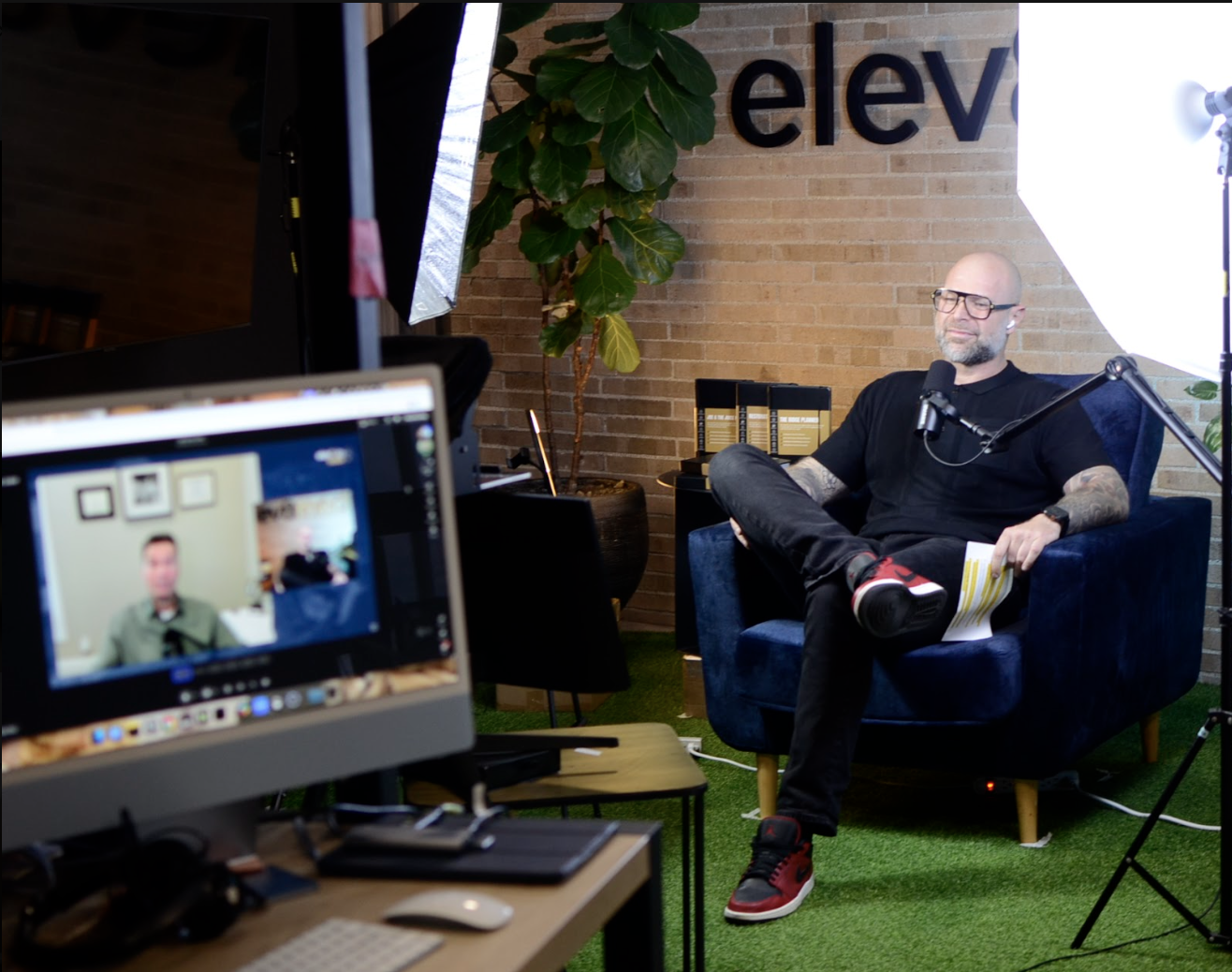
Beyond Discharge: How Continuous Engagement Drives Outcomes
Most behavioral health organizations invest heavily in admissions, clinical care, and discharge planning — then lose visibility into the patient journey at precisely the moment it matters most. Ben Wilkins argues that engagement is one of the most underappreciated drivers of long-term recovery outcomes, and that treating alumni programs as an afterthought — rather than a recovery strategy and a business strategy — is one of the industry's most costly blind spots.
In this episode of The elev8.io Podcast, Gary Garth sits down with Ben Wilkins, General Manager at CaredFor, to discuss why continuous engagement — from the minute a patient walks in the door through post-discharge recovery — is critical for outcomes, referrals, and organizational growth. With over 200,000 patients on the platform and more than a decade of experience, Ben shares what the data actually shows about when relapse happens, what real engagement looks like, and how to build an alumni program that benefits both patients and the bottom line.
Key Takeaways
- Engagement must begin on day one of admission, not at discharge. The most effective recovery programs keep the same continuity of connection all the way from pre-admission through post-discharge. Starting an engagement app after discharge means missing the most critical window to establish the habit — patients who are already accustomed to checking in during treatment are far more likely to stay connected afterward.
- Alumni coordinators belong under marketing — and should be measured on referrals and outcomes. Many alumni programs struggle to justify budget because they're siloed under clinical operations with no KPIs tied to business outcomes. When alumni coordinators report to marketing and are measured on referrals and post-discharge outcomes, the program gets the investment and accountability it deserves.
- The first 7–14 days post-discharge are the highest-risk window for relapse. CaredFor data shows this is when relapses occur most frequently. Organizations need structured daily touchpoints — wellness checks, care journeys, community support — during that window, not a single discharge call.
- Alumni can drive 30–40% of admits through referrals — at a fraction of conventional acquisition cost. One facility generated 11 alumni referrals within 2.5 months of launch, four of which converted to admits. That alone covered the platform cost for two years. A well-run alumni program is one of the highest-ROI channels in the treatment center's marketing mix.
- Outcomes should be measured post-discharge — not just at discharge. Measuring outcomes only at discharge tells you how well a patient progressed during treatment, not whether the change was sustainable. CaredFor's assessment tools, wellness tracker, and care journey data combined give providers an MRI-level view of recovery — not just an X-ray snapshot at the moment of leaving.
“Keeping that same continuity of engagement all the way through the entire patient journey is absolutely critical.”— Ben Wilkins, on why alumni engagement must start at admission
Episode Chapters
- 00:00Why recovery outcomes depend on engagement beyond discharge
- 03:00Why patient engagement should begin before admission
- 06:00Rethinking alumni programs as a growth strategy
- 09:00Measuring outcomes after treatment ends
- 12:00How technology strengthens therapeutic alliances
- 15:00Wellness tracking, care journeys, and continuous engagement
- 19:00Alumni referrals as a measurable business outcome
- 23:00KPIs executives should monitor beyond admissions
- 28:00Why integrated technology creates better patient experiences
- 32:00Building successful alumni programs through process and accountability
- 36:00Measuring long-term recovery and standardizing outcomes
Frequently Asked Questions
Why should patient engagement begin before admission rather than at discharge?
Because engagement is a habit, and habits are built through repetition in context. When patients start using an app and connecting with their recovery community while they're still in treatment — supported by staff, peers, and structure — they arrive at discharge already accustomed to checking in, tracking their wellness, and being part of a community. Starting after discharge means asking someone to build a new habit during the highest-risk period of their recovery, without the scaffolding that makes it stick.
What are the key KPIs a CEO should track to evaluate their alumni program?
Ben identifies two primary executive KPIs: alumni referrals that convert to admits, and post-discharge outcome measures. Secondary engagement KPIs include app engagement rates (close to 100% for residential patients in treatment, around 80% for alumni within the first two years), wellness tracker completion, care journey adherence, and connection touchpoints within the first 7–14 days post-discharge — the highest-risk window for relapse.
What percentage of admits can realistically come from alumni referrals?
Ben cites 30–40% as a strong target for a well-run program. He distinguishes between readmits (the same person returning after relapse) and true alumni referrals (alumni referring new people to the program) — the goal is more of the latter, because it means the program is helping more people while also growing census. One CaredFor client generated 11 alumni referrals in 2.5 months of launch, converting four into admits — enough to cover the platform cost for two years.
What is the difference between measuring outcomes at discharge vs. measuring post-discharge outcomes?
Discharge outcomes measure how well a patient progressed during treatment. Post-discharge outcomes measure whether that progress was sustainable — which is the actual definition of a successful recovery. Ben uses the analogy of an X-ray vs. an MRI: periodic assessments give you a snapshot, but CaredFor's continuous data (wellness tracker, app engagement, care journey completion) fills in the gaps and shows whether someone is genuinely on track or showing early warning signs of relapse.
What is contingency management, and how does CaredFor use it to drive engagement?
Contingency management is an evidence-based behavioral health practice that uses positive reinforcement — points, rewards, prizes — to encourage healthy behaviors. CaredFor builds it directly into the app: every action earns points that can be redeemed for rewards. Early on, this gamification drives engagement while patients are still building the intrinsic motivation to use the app. Over time, as they experience the value of the community and care journeys, the rewards become less necessary.
How large does an organization need to be to benefit from CaredFor?
CaredFor works with organizations of all sizes — from small facilities to large systems like American Addiction Centers and Summit Behavioral Health. Ben recommends approximately 100 active users for the peer support community to reach critical mass. Smaller organizations can still benefit from the personalized features — care journeys, wellness tracker, contingency management, assessments — without the community component. Pricing is intentionally structured to be accessible to smaller facilities.
What does Ben recommend before implementing CaredFor or any alumni engagement platform?
Ben's pre-implementation checklist: confirm you have dedicated alumni coordinators at each facility, identify who is responsible for family engagement, and make sure processes and accountability structures are in place before purchasing. Software doesn't solve process problems on its own. He recommends about 15 minutes per day of dedicated attention from alumni coordinators and clinical advisors to keep engagement running well. Implementation takes roughly six to eight weeks, followed by a structured three-month and twelve-month goal-setting process.
What would Ben change about behavioral healthcare if he could wave a magic wand?
Two things: first, standardizing outcomes measures across the industry so that there are consistent baselines for what recovery success looks like — right now every organization uses different tools, making industry-wide comparisons impossible. Second, extending outcomes measurement beyond the point of discharge. Ben believes the industry has become too focused on what happens during treatment and not focused enough on whether patients are actually sustaining recovery afterward — which is what payers, patients, and families actually care about.
Full Transcript
Cleaned and speaker-labeled. Jump to any moment via the chapters above, or open the complete transcript below.
Read the full transcript11 chapters · ~41 min
Why recovery outcomes depend on engagement beyond discharge00:00
Gary Garth: Hi, everyone. Welcome back to The elev8.io Podcast, the thought leadership platform designed for behavioral health executives navigating growth, innovation, and impact. Today, we're talking about a question that every treatment provider should be asking: What if recovery outcomes aren't determined by what happens inside treatment, but by what happens before admission and after discharge?
Gary Garth: The reality is that many organizations invest heavily in admissions, clinical care, marketing, and discharge planning — but often lose visibility into the patient journey when it matters most. And when relapse rates remain stubbornly high across the industry, it's worth asking: Are we engaging patients long enough to create lasting recovery? Are we supporting families well enough to become part of the solution? And are we measuring the outcomes that truly matter?
Why patient engagement should begin before admission03:00
Gary Garth: Joining us today is Ben Wilkins, General Manager at CaredFor — a platform helping behavioral health providers build stronger connections with patients, families, and alumni throughout the entire continuum of care. Ben has been at this for over a decade and has become a strong advocate for continuous engagement as one of the most important drivers of long-term recovery outcomes. Welcome to the show, Ben.
Ben Wilkins: Thank you. Great to be here, Gary. Thanks for having me.
Gary Garth: I've been looking forward to this conversation. We've met at a couple of conferences now and talked about mutual clients and your technology. Before we dive into the deep end, could you give our listeners a little background on yourself and what you work on?
Rethinking alumni programs as a growth strategy06:00
Ben Wilkins: Absolutely. I am one of the original co-founders of CaredFor, and I've been at this for a little over 10 years. We started CaredFor with the idea that when people leave treatment, a lot of organizations didn't really know how to stay connected with them. They were struggling to stay connected with their alumni. We were tech people — we look at tech solutions to problems — and we figured we could solve this with technology. And it turned out we could. A lot of the main issues weren't necessarily process problems or even human problems. Staying connected was something that technology could actually help us solve. And what we've found throughout this process is that staying connected with your alumni goes way deeper than placing a phone call or sending an email here and there. It actually has a far bigger impact than you would even imagine. And really the best way to do that is to stay connected from the minute they walk in the door — all the way from pre-admission through treatment and post-treatment as well. Keeping that same continuity of engagement all the way through the entire patient journey is absolutely critical.
Gary Garth: I love that. I heard you on the Recover Reach podcast with Cliff McDonald, and he was asking when is the right time to engage a patient from a discharge process standpoint, and you said "At the minute they admit." I was like, of course — that's so obvious. Anybody in the tech or app space knows product engagement is key for any tool to be adopted, and the best way is to get them accustomed to it while they're in the journey with the right support. And you've been thinking about alumni before it was even a thing.
Ben Wilkins: That's right. That's right.
Measuring outcomes after treatment ends09:00
Gary Garth: How have you seen the topic of alumni engagement evolve over the last couple of years?
Ben Wilkins: It's evolved in a few ways that are very positive, and maybe a couple that aren't quite as positive. Initially when people first started thinking about alumni, they were mostly focused on just alumni — how do I get the word out about my program, how do I stay connected with the people who left? They really weren't thinking about the full impact alumni could have on the program. It wasn't until probably four or five years into this journey with CaredFor that people really started thinking, "Oh, we could use this to generate alumni referrals." I've actually had several alumni coordinators tell me they struggle getting budget for their alumni program because it doesn't impact the bottom line. And I'm sitting there thinking, "If it didn't impact the bottom line, you wouldn't have an alumni program." What's great about that statement is that a lot of alumni coordinators are truly in it for the people — they just want to help more people, and that is fantastic. But what they haven't understood previously is how much their alumni program can benefit the actual program itself. How it can impact outcomes, how it can impact referrals, and how it can actually make a difference on the bottom line. Your alumni really can be an army of marketers for your organization — because they had a great experience and they want to share that. The evolution has been from "how do we stay connected" to "how do we tap into this powerful resource to benefit both them and our program."
Gary Garth: We work with about 50 facilities, and a typical question I ask is: do you have an alumni coordinator? If they do, I ask which department they report to and what their KPIs are. If you were asked that question, what would the ideal answer be?
How technology strengthens therapeutic alliances12:00
Ben Wilkins: Ideally, marketing. We're starting to see this more and more — alumni coordinators reporting to the marketing department. As far as KPIs, referrals is obviously a big part of it. But the other part is outcome measures post-discharge. Are you able to determine if the program the patient went through is sustainable long term? That's the information payers want. When you look at insurance providers and grant money, they want to know: is this treatment going to be sustainable, or are they just going to have to come back? Being able to measure outcomes post-discharge is huge. And then — what are the connection points you're making within the first seven to fourteen days post-discharge? Because that's the period where we see the most relapses happen.
Gary Garth: That makes complete sense. In terms of outcomes — is that something the app helps capture? From my understanding it's surveys around anxiety levels, cravings, and other indicators.
Wellness tracking, care journeys, and continuous engagement15:00
Ben Wilkins: Yes, the app absolutely can help capture that. Even if you're not using CaredFor, I'd still recommend finding a way to collect outcomes post-discharge. A lot of organizations today are stopping outcomes measures at discharge — they measure at admission, throughout treatment, and then at discharge, and that's their "outcome." But that's not an outcome. That's how well did you progress during treatment. Your outcome is: was it sustainable? And yes, the app can help automate that. Beyond just outcome measures, the app also has several layers of data that give you a fuller picture. If you're filling out an assessment every fourteen days, you're only getting a glimpse of how someone is doing at that moment. The app fills in the gaps in between. I always compare it to an X-ray versus an MRI — assessments are the X-ray, giving you a good baseline. CaredFor is the MRI, giving you the full picture of what's really going on.
Gary Garth: I love that you immediately talked about sustained recovery, and then referrals. Alumni engagement is probably the most underutilized tactic across all the facilities I work with. One common argument I see for alumni programs is "X percentage increase in readmissions." But as the primary KPI, I don't think that's what an alumni program should be designed to facilitate. What kind of indicators can the app help measure?
Ben Wilkins: We have what we call a wellness tracker — it lets users track their mood and level of cravings on a daily basis. That's one data point. App engagement is another — if someone is logging in daily and then suddenly goes a week without logging in, or their activity within the app starts to drop, we can flag that as a potential indicator. Then we have what we call care journeys — guided curriculum, usually five to seven days at a time, where each day they're assigned a different task: reading an article, watching a video, journaling. We can tell if they completed it or skipped it. Combined — engagement data, wellness tracker data, care journey data, assessment data — we can look at all of this around a patient and determine: is this person on track or not?
Gary Garth: I've seen the challenge with low app engagement at scale — back when I was at a large agency, the dashboards were beautiful but the number of people actually logging in was devastating. What have you done over 10 years to combat low engagement?
Alumni referrals as a measurable business outcome19:00
Ben Wilkins: We have a couple of ways. Number one is SMS — if they've deleted the app or got a new phone and didn't reinstall, we can use SMS to re-engage them and remind them of the app's benefits. The other thing is contingency management. It's a very evidence-based practice within treatment programs, and we take it further within the app. Every action they take earns them a certain number of points, which they can redeem for different rewards or prizes. At least initially, that's really what drives engagement. Once they start to see the value of the features — the community, the care journeys — they don't rely on contingency management as much. But those first few weeks, contingency management is what's driving engagement.
Gary Garth: What's the ideal client profile — the perfect scenario, the right levels of care, size, years of establishment, team structure? And what do you recommend to a smaller facility that might have fewer discharges?
Ben Wilkins: We work with organizations of all sizes — American Addiction Centers, Summit Behavioral Health, and really everywhere in between. For the peer support community within the app, we usually recommend about 100 active users as the critical mass to keep it going. However, you don't have to rely only on the peer support community. You can still use the more personalized features — the care journeys, contingency management, wellness tracker. And the app is priced intentionally to be affordable for smaller organizations, because at the end of the day, we want to help as many people as possible. We measure our success not by the number of clients we have, but by the number of end users — because that's how we help as many people as possible.
Gary Garth: I've read that you've had over 200,000 patients on the platform over 10 years. Is that right?
KPIs executives should monitor beyond admissions23:00
Ben Wilkins: That's correct. Yes.
Gary Garth: That's a heck of a lot of people you've helped. Let me ask about the executive KPIs — if I'm a CEO who just rolled out the app, what are four or five metrics I can point to that justify the investment and help translate it into budget for an alumni coordinator and ongoing staffing?
Ben Wilkins: Number one is referrals — the easiest way to show your bang for the buck. We had one organization that within two and a half months of signing up had generated 11 alumni referrals, and four of those had converted into patients. That more than paid for the app for the next two years. Number two would be the outcomes measures — we've built measurement-based care tools into the platform, and because alumni are already engaged, you can actually collect post-discharge assessments with high completion rates. That's the other big thing: a lot of tools out there say they help you improve your outcomes, but what they actually do is improve your completion percentage — and the people completing assessments are the ones likely doing better anyway. With CaredFor, we can help improve both completion percentage and actual outcomes through the resources, care journeys, and peer support within the app.
Gary Garth: What percentage of census would you say comes from alumni referrals in a well-deployed program?
Why integrated technology creates better patient experiences28:00
Ben Wilkins: Somewhere around thirty to thirty-five to forty percent of your admits coming from alumni referrals would be really strong. And you want more referrals than readmits — because referrals mean you're helping new people, not the same people over and over again.
Gary Garth: Does the platform help build the attribution case — tracking which admits actually came from alumni referrals versus being claimed by business development?
Ben Wilkins: Absolutely. That was one of the big reasons we built the referral program in the first place. Alumni coordinators were telling us: "I know people are being referred from our alumni program, but when they call in, those calls are being attributed to business development — so I can't justify my budget." The second reason: we had a customer where a competitor facility took out a Google ad pretending to be their facility. When people searched for them and called, they ended up somewhere else entirely. Within the app, referrals are safe and secure — you know exactly where the person is being sent. And when a referral comes in, CaredFor can help nurture that referral all the way through to an admit, making sure it doesn't get lost in the handoff.
Gary Garth: What integration partners do you work with to support that nurture flow?
Building successful alumni programs through process and accountability32:00
Ben Wilkins: We integrate with your CRM — Salesforce, Dazos, and others. We also integrate with your EHR — close to 20 different EHRs at this point. We consider ourselves EHR agnostic. Our platform is built on an API so we can really integrate with anybody. And I really do feel like those integrations are the key to success — not just with CaredFor, but really across the industry. When you're looking at all the different tech stacks a single program uses, the question is: can you simplify that stack, and are the tools you're using actually talking to each other? Because if they're not, you get a disjointed experience for both the patient and the clinical staff.
Gary Garth: Amen. What considerations should executives have before implementing CaredFor? What does a successful adoption roadmap look like?
Ben Wilkins: The main thing is: is your organization structured in a way to be successful with something like CaredFor? Do you have dedicated alumni coordinators at each facility? Do you have someone in charge of family engagement? You need the people and the processes in place before you start buying software. This is true with any software — it's not going to solve all your problems on its own. Where we see people struggle most, with CaredFor and with really any software, is when they think it's set-it-and-forget-it. It's not. You are going to have to adjust your workflow a little — but CaredFor is designed to reduce your workflow, not add to it. We're automating the things you don't want to be doing anyway, so you can spend more time with the people. In terms of specifics: we recommend about 15 minutes a day for alumni coordinators and clinical advisors. That's what it takes to keep things running well. Implementation usually takes about six to eight weeks, and then we work with your team to identify goals for the first three months, the next three months, and the first year — based on your organizational priorities.
Gary Garth: What would you change about behavioral healthcare if you had a magic wand?
Measuring long-term recovery and standardizing outcomes36:00
Ben Wilkins: Two things. First, standardizing outcomes measures across the industry. Right now organizations are using all different outcomes tools, making it difficult for the industry as a whole to establish baselines and standards. Second, measuring post-discharge outcomes consistently. Organizations right now are too focused on what happens during treatment and not focused enough on whether patients are actually doing well after they leave. I would love to see that change. Those are the two things I would standardize and strengthen — and I think together they would transform the industry's ability to improve recovery at scale.
Gary Garth: Two out of two — I think those are the two ingredients that would absolutely transform the trajectory and help even more people access care. Ben, for listeners who want to reach you, how do they get in touch?
Ben Wilkins: You can email me at [email protected], or find me on LinkedIn and send me a message. Also follow CaredFor or Continuum Cloud on LinkedIn — we have webinars coming up where you can learn more about the platform and the problems we're solving in the industry.
Gary Garth: Encourage everyone to do that. Thanks again for being on the show, Ben.
Ben Wilkins: Thank you, Gary. It was a pleasure. Absolutely.
About the Guest
Ben Wilkins — CaredFor
Ben Wilkins is the General Manager and one of the original co-founders of CaredFor, a behavioral health engagement platform that helps treatment providers build stronger connections with patients, families, and alumni throughout the entire continuum of care. Over more than a decade building CaredFor, Ben has helped more than 200,000 patients stay connected to their recovery communities through technology-enabled engagement, care journeys, wellness tracking, and alumni referral programs. He is a leading voice on continuous engagement as a driver of long-term recovery outcomes and sustainable business growth for behavioral health organizations.
Connect on LinkedInAbout the Host

Gary Garth
Founder & CEO, elev8.io
Gary Garth is the Founder & CEO of elev8.io, where he helps behavioral health organizations achieve full census through integrated marketing, admissions, and technology-driven growth systems. With more than a decade of experience working alongside Google, Microsoft, and high-growth technology companies, Gary has built and implemented scalable growth frameworks now used by 55+ treatment centers across the United States to drive admissions and operational efficiency. Read more
Connect on LinkedInRelated from elev8.io
Curious what your true cost per admission is?
Run your numbers with our Behavioral Health Growth Calculator,
or talk strategy with our team.