Building Better Adolescent Behavioral Healthcare: Family, Safety & Sustainable Recovery
Adolescent behavioral healthcare is being delivered in a world with faster information, greater financial pressure, and less room for slow relationship-building. Teens today have zero privacy and open access to information with zero discernment, the path to addiction and self-harm is faster, and parents often arrive having already diagnosed their child online. What has not changed, Gary Hazy argues, are the fundamentals: safety, trust, family involvement and human connection.
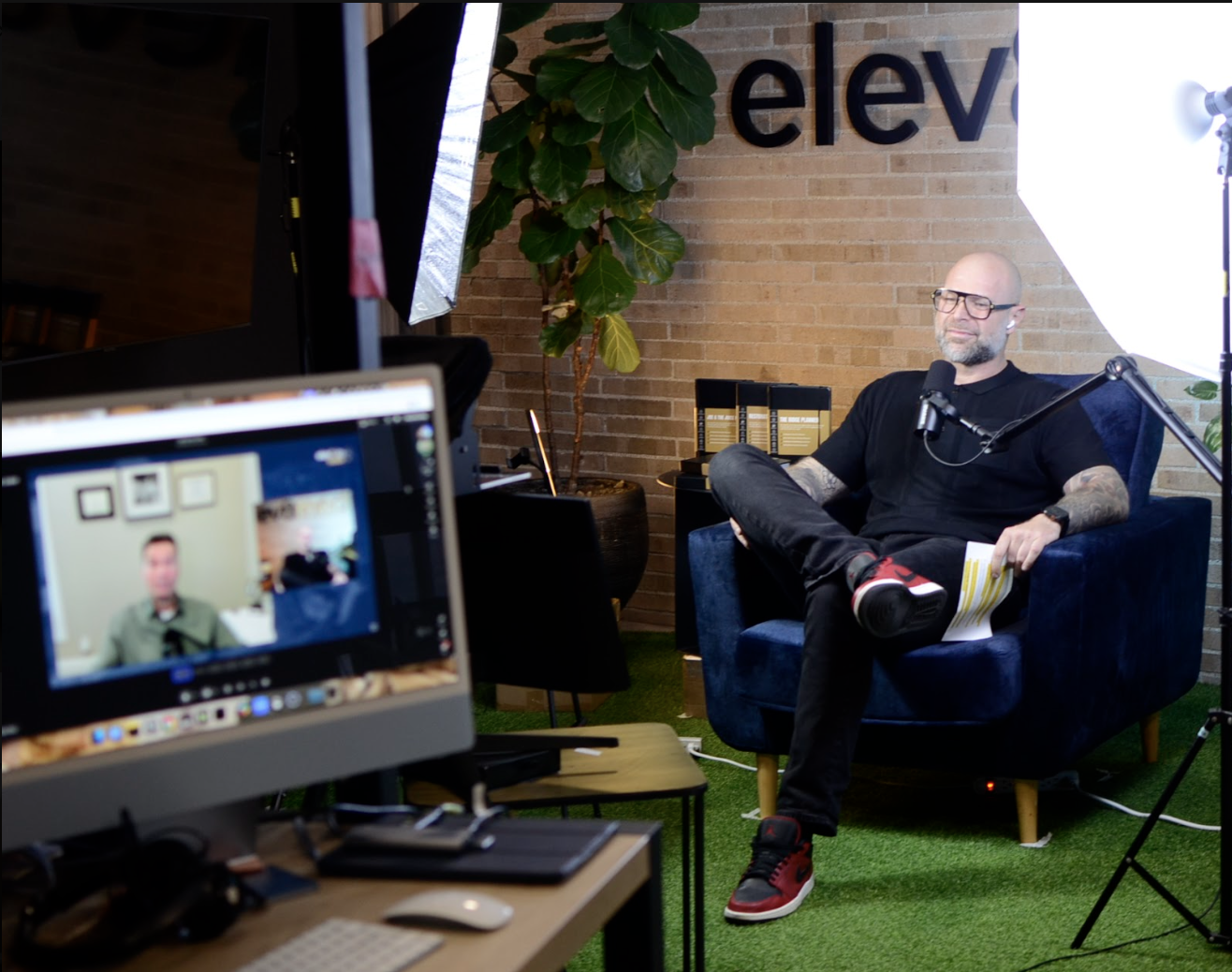
In this episode of The elev8.io Podcast, Gary Garth sits down with Gary Hazy, CEO & Executive Director of Lotus Behavioral Health, to look back on 26 years in the field: what the bigger, faster, cheaper model has cost, how technology has opened access for families, how to guide parents past misinformation and preconceived diagnoses, what to ask before choosing a program, and why hope and the seeds planted along the way matter as much as the outcomes.
Key Takeaways
- Safety comes first. Gary Hazy began in direct care and has worked as a behavioral health tech, a role he calls the foundation of everything: if there is not safety, there is no therapy.
- Bigger, faster, cheaper works against relationship. Residential programs once had six to 12 months for the family work; now the same work is expected in an abbreviated time, while everything costs more.
- Teens have access without discernment. Zero privacy and open access to information have made the path to addiction and self-harm faster, and unless parents are tuned in, that information can be positive or devastating.
- Guide parents past the self-diagnosis. Families arrive self-diagnosing and self-prescribing; the answer is a tour and a conversation to assess together, because the right level of care may be outpatient, partial or residential.
- Ask every question before admission. Are staff in person or virtual? How many other kids are there? Can you tour, even virtually? Answers to questions reduce worry.
“You just learn that those little things, they feel like failures in the moment, those are nothing more than your future seeds being planted.”— Gary Hazy, CEO & Executive Director of Lotus Behavioral Health
Episode Chapters
- 00:00Intro: Meet Gary Hazy, Executive Director at Lotus Behavioral Health
- 01:28Gary Hazy's 26-year journey into behavioral health
- 04:15How experience shapes his leadership at Lotus
- 06:45Empathy: putting yourself in others' shoes
- 08:28What's changed in the industry over 25 years
- 10:14How teen struggles have changed with the digital age
- 12:37Technology's role in improving family access to treatment
- 16:20Guiding parents past misinformation and preconceived diagnoses
- 21:02What to look for in a treatment program: key questions to ask
- 23:41Closing thoughts: hope, seeds planted, and where to find Lotus
Frequently Asked Questions
How has adolescent behavioral health treatment changed?
Gary Hazy says the fundamentals have not: he still treats the person with a very humanistic approach. What has changed is what teens are facing. They have zero privacy and open access to information with zero discernment about what is true, so the path to addiction, self-harm and suicide is faster than it was, and unless parents are tuned in, that information can be devastating.
What has changed most in the behavioral health industry over the last 25 years?
A bigger, faster, cheaper model. Residential programs used to have six to 12 months to dig into the family work; now the same work is expected in an abbreviated time, which works against relationship, and everything has become more expensive. On the positive side there has been more research, naltrexone and life-saving drugs such as naloxone, and the stigma around mental health is lifting, though the stigma around addiction is still there.
How has technology helped families find treatment for their teen?
Families are no longer limited to the clinic down the road: they can find resources across the country and fact-check what they are told. The caution is that information comes too fast, so it has to be vetted.
How should a program handle parents who arrive with a self-diagnosis or a level of care already in mind?
Trust but verify. Lotus is very medication-light, and it often meets parents who are self-diagnosing and self-prescribing before their child has been diagnosed. In the best case the family comes in for a tour to sit down and assess together, because the right answer may be outpatient, a partial program or residential care. If the family is far away, that means time on the phone with the parent, a prior treatment provider and the young person.
What should parents ask when choosing an adolescent treatment program?
Ask all your questions before admission, not on the day or after, and do not accept the rules and then try to change them for your child once they are admitted. Ask whether staff are in person or virtual, how many other kids are there, and what the food is like; ask for a tour or a virtual tour; and ask about specific therapies without demanding one, especially if you are not a professional. Answers to questions reduce worry.
Why have finances become a bigger barrier to adolescent admissions?
Prices have risen sharply in the last five or six years, insurance costs more, and families worry about what happens when insurance stops paying. Lotus is a nonprofit with its own financial barriers. Gary Hazy notes that what can look like an excuse from the outside is often a family's reality, and that no program can assure treatment will work on the first try.
What would Gary Hazy change about behavioral health?
Rather than one thing about the industry, he would want people, professionals and families alike, to keep their hope. He has seen upwards of 20,000 kids and has many success cases, but the bigger, faster, cheaper model pushes people to go to bed thinking about the one who is not making progress. Failures are also learning opportunities, and seeds planted in the moment can grow later.
Full Transcript
Cleaned and speaker-labeled. Jump to any moment via the chapters above, or open the complete transcript below.
Read the full transcript10 chapters · ~29 min
Intro: Meet Gary Hazy, Executive Director at Lotus Behavioral Health00:00
Gary Garth: Hi, welcome back to the elev8.io Podcast. Today I'm sitting down with Gary Hazy, Executive Director at Lotus Behavioral Health, and he comes with 26 years of experience in the field, holding multiple roles and really taking a unique approach to treating adolescents. We unpack several interesting topics that are very relevant in terms of how today's landscape has changed the way we treat teens, but also how the very same fundamentals are in place.
Gary Garth: Gary also shares some unique perspectives on how they treat not just the teen, but also the family counseling program they have in place, and essentially an encouragement on how they have experienced the long-lasting impact by bringing in families to see the facility, meet the therapist, look through the program, and make sure that this is the right place to send their kids for continued care.
Gary Garth: Great to have you here on the podcast, Gary. Why don't you give our listeners a little bit of background on yourself, your trajectory with Lotus, and how you got into this space?
Gary Hazy: Absolutely. I don't really know where my background started, but it started a long time ago. I always was helping people. Whether I liked it or not, I was always helping people. I've been in the field for, I guess it's 26 years at this point. I'll say I started pre-9/11, because I remember 9/11 very vividly. I was actually a direct care staff at that point.
Gary Hazy's 26-year journey into behavioral health01:28
Gary Garth: Oh, that is 25 years.
Gary Hazy: Yeah. So that was 2001, so I guess in June I just passed 26 years. I've been in the space for that long, and I've worked in so many different capacities. I was a behavioral health tech. That's like the foundation piece of anything related, 'cause if there's not safety, there's no therapy, there's nothing else.
Gary Hazy: Throughout that journey, I worked in case management and some different items. But my first actual position within the field was working with adolescents, but adolescents that really struggled with sexual offending. They found themselves making some really bad decisions, some of them characterological, some of them learned, and some of them were just, I'll call it struggles with maybe being taught right from wrong.
Gary Hazy: And then I've worked a lot with the underserved, all residential capacity: working with shelters, working in residential, working transition housing for young men ages 18 to 25, and also working detention diversion programs, trying to get the lowest-level offenders out of the detention center into a safer atmosphere so that they didn't continue on their path.
Gary Hazy: That was in Pittsburgh, and then I also worked for several years in Texas. There I was more on the quality assurance and the executive angle, working again in residential care, but also foster care and in-home services, and also outpatient clinics as well. I guess I've done a lot of jobs. I've never been a nurse. I love my nurses, but I've never been one. So that's where things have come from.
Gary Garth: Thanks for all the great work you've done over the last two and a half decades, in multiple roles in multiple organizations. Now you're the executive director at Lotus Behavioral Health. How have all these accumulated experiences shaped the way that you operate at Lotus?
Gary Hazy: I guess I should start with, I do believe in so many ways the field found me. I can only count on one hand how many jobs I actually applied for.
Gary Hazy: Even finding my way into the field, I went to school for psychology. But that was hard. It was a lot of hard work and a lot of statistics, and I never felt like I was gonna do it. I also have a degree in marketing, and I tried getting into marketing, but I don't know, I guess I didn't market myself well enough.
How experience shapes his leadership at Lotus04:15
Gary Hazy: And so a friend of mine actually filled out my very first application and said, "You're gonna work with kids." I took a huge pay cut from waiting tables to make $9.40 an hour, to try not to get hurt and try to just make it through a shift. And I always say I spent my first 90 days in the field looking for a new job.
Gary Hazy: I didn't think I had what it took. I was uneasy because the notion of actually helping somebody professionally was scary to me. Helping somebody volunteering is so much different than coming in day in, day out, and you have to replicate yourself every single day. You just can't do it when it feels good.
Gary Hazy: So I believe that at the root of the field, there's a lot of people that are in the same place. They wanna help, they don't know how, and it's my job to kinda help guide their way through the field. I'm at the place in my career where there's so many things that are automatic that I'm not as good of a teacher as I once was.
Gary Hazy: Instead, I feel like I'm starting to turn into the old guy that kinda says, "Here, you hold the screwdriver for me and let me do it." But I'm trying to pass along some of that knowledge. So the way I lead is really knowing that no matter where you start in the field, you have an opportunity, and the opportunity only comes not through your education.
Gary Hazy: It comes through hard work, and it comes through caring, and it comes through always having hope. And even on my worst days, I try to suck it up and figure out, while my head's in my hands, how to wear, maybe not a different mask, but have a different set of confidence for my staff members. Knowing that if I can't lead them through it, and they're asking me for help, what's their other option? Is to make a crisis decision.
Gary Garth: I think that relates a lot to when we were chatting, you mentioned the approach of always trying to put yourself in the other person's shoes. How does that translate, both with your team and with families, for that matter?
Gary Hazy: It's such a simple question because, to me, it's such a no-brainer. For me to be listened to, I want somebody to understand where I'm at. But it's the hardest thing to do, because when we're stressed, we become selfish. We're trying to get our needs met, but sometimes getting our needs met is helping those around you.
Empathy: putting yourself in others' shoes06:45
Gary Hazy: Because if you can get those around you successful, it's such an awesome feeling, where you may not have the ribbon, you may not have the thing to hang on your door that you did that, but you can kinda walk away and say, "I'm really proud of them." And I think that's the reason I put myself in other people's shoes.
Gary Hazy: The other thing is working with kids or working with families: if you can't picture yourself sitting in the seat, or sitting in the courtroom, or sitting at the emergency room with your son or daughter, I will not be effective, because I'm just gonna be some AI computerized robot kinda thing that's just giving them the really smart answers.
Gary Garth: Yeah, absolutely. What is it? Seek first to understand before being understood, right?
Gary Hazy: Yeah, a little Stephen Covey.
Gary Garth: Stephen R. Covey, yeah. So if you were looking back at your career over the last 25, 26 years, what do you feel has changed the most in this industry over time? Anything particular that stands out?
What's changed in the industry over 25 years08:28
Gary Hazy: There's so many things that have changed, and some for the better, some for the worse, right? There's this change to this bigger, faster, cheaper kinda model, which is in every industry. It's how do we get our needs met now? We used to have maybe six to 12 months in a residential program to really dig into the family work.
Gary Hazy: Now everything starts to feel like how can you do the same amount of work in a very abbreviated time, which works against relationship. That's been the change for the negative, and everything's become more expensive, so that creates the bigger, faster, cheaper kind of issue.
Gary Hazy: But at the same time, there's so many things that have gotten better. There's been more research, especially in the addiction space, with Lotus Behavioral Health working with addictions: the creation of naltrexone, the creation of certain life-saving drugs and naloxone, that we didn't have 25 years ago, especially growing up in the Northeast, in Appalachia, in Pittsburgh, where there were coal miners and the opioid pandemic. There wasn't a solution.
Gary Hazy: And seeing the solutions come along, there's still a stigma around behavioral health and mental health. I think the stigma is lifting on mental health. However, the stigma on addictions is still there, because it's considered to be a choice. While there's numerous bad choices along the way, it starts to become not a choice, just like any other disease. There's a lot of diseases that your choice brings you to. So I think that the stigma's lifting on the substance use space, but it's something that we just keep needing to plug through.
Gary Garth: Let's shift gears a little bit. You've worked with teens for quite some years. As a father, I have a 14-year-old daughter, and I always think about her when we chat together, and the environment. It's just an entirely new world, right? In so many ways. Has the way you treat teenagers changed, or is it still the same fundamentals that are in place?
How teen struggles have changed with the digital age10:14
Gary Hazy: I think in how you treat the person, it's still the same fundamental for me, the very humanistic approach. But our teens are going through challenges that I could have never dreamt of as a teenager. If you rewind the clock, as a teen there were more private struggles, so there was even more secrecy.
Gary Hazy: I think the problem that teens face that makes it harder and harder to treat is they have zero privacy. You don't go home or to your teacher for your information anymore. You can get your information anywhere, just like we get our information from places and take things as gospel that are absolutely false. So the teens today have such access to information, but with zero discernment on what's true or not.
Gary Hazy: So their struggles are real. Even in mental health and addictions, the path to addiction is faster. The path to self-harm and suicide is set faster, because you had to dream about how to do certain things before, or really think about it, but now you can just look it up. It's right online. And they put warnings, but when you're already in a crisis, the warning doesn't matter anymore.
Gary Hazy: That's what scares me about the teenagers now: they have zero privacy, and they have open access to information, and unless the parents are tuned in with them, that information is either positive or devastating.
Gary Garth: So the path towards addiction has simply been accelerated, almost correlating with the faster, cheaper, bigger mentality. Let's look at it with the glass-is-half-full kind of lens. How has the landscape and technology maybe improved how family involvement can be enhanced with treatment?
Gary Hazy: Families can find resources. You only knew the clinic down the road before. Now families can find resources. Just technology, however long the internet's been around, 1995 we'll call it. The idea that you can travel across the country. You can find your resource, whether it's California, Florida, wherever it may be. So those barriers have been lifted quite a bit. That's been the hugest piece I think technology has played, is the interconnecting of resources.
Gary Hazy: There's also this bit of, I was saying information comes at us too fast, but we do have access to information. We just have to be very cautious that we vet our information. My parents weren't always right. But now I do have some fact-checking I can do. I have access to things that I don't have to go sit at the library for. I can look it up. So that's a huge positive.
Technology's role in improving family access to treatment12:37
Gary Garth: I can see. Actually, one of the exercises we also do here a lot at elev8.io now, with AI visibility, is changing the perspective on how a parent, for example, finds the right treatment provider for the teenager.
Gary Garth: It used to be in Google, and now it's very much on ChatGPT or Claude or Perplexity, and they're asking an entirely different set of questions. The flip side is that, if you look at it, that is very helpful. They can be educated, better find options and draw from experiences. But at the same time, the information that gets pulled can maybe lead to some preconceived notions or some conclusions that may or may not be accurate in every case.
Gary Garth: Have you experienced some of that, and are there some scenarios where parents are unintentionally drawing some conclusions when they're searching for a treatment provider for their kid?
Gary Hazy: Yeah, absolutely. Just like with all information, it's trust but verify. We run into situations all the time where, we are very medication-light at our facility; however, a lot of times you can almost get so much information that you believe you're a doctor by the time you walk into the doctor's office.
Gary Hazy: So we deal a lot with parents self-prescribing the drugs for their child who hasn't even been diagnosed: self-diagnosing, self-prescribing. And we spend a lot of time on counsel with those parents, because there's such information, but diagnosing is not an easy thing.
Gary Hazy: I always say, "Just because you had a bad day, that doesn't make you anxious. And two bad days in a row is also not anxiety." We work a lot through that, and it's been one of the largest barriers that we've had. But at the same time, if we can find common ground and solutions, it can really strengthen the family bond. Knowing that, "Oh, maybe I was onto something, maybe I was wrong." Or the kid going, "Throughout all this research, I figured out my parents care for me more than they ever did." They're late at night Googling because they care, not because they're mad at you.
Gary Garth: One of the scenarios that comes to mind, and you can probably relate to it, is a parent looking for treatment options and then starting to read about the different levels of care, and then walking into the conversation: "I need help for my kid, and I really think that IOP is something that would be good for him."
Gary Garth: Kind of drawing those conclusions without fully understanding acuity, the diagnosis needed and so forth. How do you tackle those scenarios with parents that come in with the best intentions possible, and guide them on the right path?
Gary Hazy: In the perfect-world scenario, we guide it by "come in for a tour." Let's sit down and breathe the same air. And while the word is very out there, let's assess. Let's just have a conversation.
Gary Hazy: Because it may be that more of an outpatient model is right, or maybe some sort of partial model is right, or maybe it's that they believe they can do it at home, but it's been failing for four years, and they're running away from home. So sometimes it allows us to really go through the options.
Gary Hazy: I don't wanna equate this to sales, but if you've ever gone to the car dealership, if they sit down with the price sheet rather than ask you, "How many kids do you have?" or, "Do you like to drive fast?", trying to get a total picture so they can get you in the right make and model. Instead, they sometimes just try to sell you what you're looking at.
Guiding parents past misinformation and preconceived diagnoses16:20
Gary Hazy: And I'd be like, "How about you ask them about their lifestyle? Or where's your wife? Would she kill you if you bought this?" That dynamic. But I think that's the biggest thing. If we can get them in for a tour and a conversation, that's the best-case scenario.
Gary Hazy: If they're from far away and they can't do it, we have to spend a lot of time on the phone with the parent, maybe a prior treatment provider, but also with the young person.
Gary Garth: No, I love it. It resonates well with being more open, and I think that conveys trust: that you open up the facility and say, "Here's where your kid will be. Here's who we are. Let me show you behind the scenes." That makes sense, bringing folks in for a tour and conveying trust and openness.
Gary Garth: What other changes have you experienced in the adolescent behavioral health space over your career, significant changes in how you approach admissions?
Gary Hazy: With how we approach admissions, unfortunately one of the things that we're always up against is financial. And it's hard, because we're a nonprofit. We have financial barriers as well. So I also understand that the prices of everything, especially in the last five or six years, have been crazy.
Gary Hazy: One of the biggest challenges, because things were just more affordable before, is how do you work with families on, and this is a little facetious, giving up your Starbucks in lieu of your child's safety. It's been hard, because you know that you can help save a life, but the family has ruptured to the point where there's such anger that Starbucks is taking priority in where you spend your money.
Gary Hazy: Because you know what the Starbucks tastes like. You don't know if treatment will be successful. And that's been a huge change, and a lot of that has changed because of the cost of insurance, because of what happens when the insurance stops paying. Who's gonna help me then? Those are real barriers that we have to work through.
Gary Hazy: I think sometimes it's easy to see parents or families and it looks like an excuse, but in so many ways it's their reality. It feels like an excuse because you're sitting outside, and it's so easy to judge a family from outside, saying, "Well, if I was you, I'd do this," or, "If I was..." It's so easy. I could be the expert in your life today. But at the same time, you're saying, "Gary, you don't know what I got going on." And that's the piece that I think has changed.
Gary Hazy: And because there's such a strong financial component, I also think there's more mistrust, where it's like, where do I put my resource? Where do I put my money?
Gary Hazy: Whether it's real or not real, society in general has changed to, such a strong word, but more of a litigious society, where it's about how can you assure that treatment will happen on the first try, and the answer is there is none.
Gary Garth: No. True.
Gary Hazy: There's no assurance. There's no assurance when somebody says, "I'm gonna lose weight" at the beginning of the year. There's no assurance when you make a commitment to work your hardest every day at your job. I bet you don't. But it's always in how do you keep those paths clear.
Gary Garth: Gary, what would be your recommendation for parents looking for treatment for their kid? What are the things they should look for, in your point of view, in a facility or treatment program? What kind of questions should they ask? What should they prioritize? I know every scenario is different, but what are the common denominators for successful outcomes?
What to look for in a treatment program: key questions to ask21:02
Gary Hazy: Absolutely. I think first, the generic answer is ask all your questions. Don't hold questions until the day of admission or after. Ask all your questions. You may have questions that pop up, but ask them all. Also, don't accept rules and then try to change them for your son or daughter after admission.
Gary Hazy: In so many ways, that's how we got to the place that we're in: not having strong parental boundaries, not having that structure in place. As far as looking for a program, I'd always ask, "Are your staff in person or are they virtual?" There are a lot of places that use a virtual model for treatment, especially when we're dealing with teenagers.
Gary Hazy: Even this. If I'd be on Zoom, I would look so much more confident. I would be a different person. But being in person allows me to feel the talk a little bit more. I'll probably be a little bit more exhausted at the end, but that's part of me buying into it.
Gary Garth: Amen.
Gary Hazy: I think it's always good to ask how many other kids are there. What's the food like? The number one complaint every teenager has is, "My roommate snores and the food sucks." It could be summer camp. It could be like, "Oh, my bed's scratchy." There's gonna be something. Ask the facility if they have a virtual tour. If you're nearby, go tour the facility.
Gary Hazy: And I don't wanna equate dog care to kids, but if you were dropping your dog off at a kennel, and the kennel will not show you a bedroom, why would you leave your pet? So I think the more that we can do this... We have a virtual walkthrough where you can click through and walk through. If you don't like that, we can FaceTime and walk through. We can do some things that other people either can't or won't; it doesn't really matter at this point. But those are questions that you should ask.
Gary Hazy: If you have specific therapies that you wanna know about, ask about them. Don't demand a specific therapy, especially if you're not a professional. But ask about what our belief system is around those. I think all the questions, because answers to questions reduces your worry.
Gary Garth: That's some good insights. I like that. Last but not least, let me ask you, Gary. You've worked in this industry for 26 years, and now you're executive director, and you've held all these different positions. If you just take a step back and said, "Okay, if I had a magic wand and wanted to change one thing about the industry," what would that be, and why?
Closing thoughts: hope, seeds planted, and where to find Lotus23:41
Gary Hazy: Tough one. I wasn't really prepared for this one. Rather than one thing to change about the industry, maybe I'll just twist that a little bit and say the one thing that I wanna change about people is that people have hope, and I don't want them to lose the hope in what they're doing.
Gary Hazy: Because in this industry, you can lose a lot of hope very fast. I've seen I don't know how many thousands of kids at this point. I'm thinking it's upwards of 20,000. However, I have a lot of success cases, and I have to go to bed thinking about those.
Gary Hazy: And I think that's the issue with the industry. When I talked about there being a whole lot more risk, and that bigger, faster, cheaper model leads to a lot of risk, you have a tendency to go to bed thinking about the one that's not making progress. Or just like in families, families have bigger, faster, cheaper models too, and sometimes we focus on the child that struggles so much that we forget about all the good things happening in our home. And then we quit.
Gary Hazy: And I think that, for the professionals and for the families, it's the same thing. For me, that's the black cloud that's happened in the field. And I think that the speed of information has created that, magnified with AI. It really has.
Gary Garth: KPIs and benchmarks and performance metrics...
Gary Hazy: They're all awesome things at the same point. Every tool used the right way is powerful. Every tool used the wrong way can be dangerous.
Gary Garth: I love that. I was watching this interview, maybe not to relate it directly, but I like tennis, so I was watching an interview about Djokovic, who's historically the number-one-ranked greatest of all time, and the statistics of all his games combined were that he won 82% of all games. Like, 82%, but he only won 54% of every point. So if you flip it over, it's like you might only be able to help every other kid, but that makes a significant difference in the overall impact, just like him in tennis as a winner. So just relate it to having the hope that you just have to fight for the margin with every single kid.
Gary Hazy: Absolutely. And knowing that no matter what the circumstance, no matter what the outcome, there's seeds planted. I can think back to teachers that I had when I was younger. I was not the most studious, but I can think back about the things that I learned, and I can think back to a teacher that got me into the field, but he never knew it.
Gary Hazy: It's those things. He was planting seeds that I was covering up with dirt that I didn't wanna look at, but then they started to grow over time. And I think that's kinda the thing. I don't watch tennis, but I understand the metaphor because I watch a lot of sports.
Gary Hazy: But your outcomes and your direct outputs are completely different. And your failures can turn into successes as well, and they also turn into such learning opportunities. That's the other thing with families, and even new therapists coming into the field. I was able to fail as a therapist several times, but now it's like everything's exposed, and we think we have to have success on our first case.
Gary Hazy: I can think back, I won't get into details, but I can think back to my first one, and I was like, "I'm not ready for this field. Maybe I should go bus tables somewhere." You just learn that those little things, they feel like failures in the moment, those are nothing more than your future seeds being planted.
Gary Garth: Gary, as a parent, as an industry advocate and behavioral health ambassador, thank you for all the good work you've done over the last two decades, and the great work you do at Lotus. If any listener wants to get ahold of you or learn more about Lotus Behavioral Health, which direction can you point them in?
Gary Hazy: I would start with our website, and it's www.lotusbh.org. You would find, I think, access to our programs. You would see my picture from a few years ago, where I looked a little bit better. You'd see links to our donation page. You'd just see a whole lot of information. And you know what? If you just wanna talk to me directly, I think it's [email protected]. It's also on the website. Just put, "I wanna talk to Gary," and that'll be it. That's how easy it is.
Gary Garth: Thank you so much, Gary. Really enjoyed the podcast.
Gary Hazy: Thank you.
Gary Garth: Thank you for tuning in to the elev8.io Podcast. If you liked the content you heard today, make sure to subscribe to our channel and share this episode with somebody who needs to hear it. I'll see you in the next show.
About the Guest
Gary Hazy — Lotus Behavioral Health
Gary Hazy is the CEO & Executive Director of Lotus Behavioral Health, a nonprofit adolescent treatment center in Winter Springs, Florida, serving teens with substance use and co-occurring mental health needs. In 26 years in the field he has worked as a behavioral health tech and in case management, residential care, shelters, transitional housing and detention diversion programs in Pittsburgh, and in quality assurance and executive roles across residential care, foster care, in-home services and outpatient clinics in Texas.
Connect on LinkedInAbout the Host

Gary Garth
Founder & CEO, elev8.io
Gary Garth is the Founder & CEO of elev8.io, where he helps behavioral health organizations achieve full census through integrated marketing, admissions, and technology-driven growth systems. With more than a decade of experience working alongside Google, Microsoft, and high-growth technology companies, Gary has built and implemented scalable growth frameworks now used by 55+ treatment centers across the United States to drive admissions and operational efficiency. Read more
Connect on LinkedInRelated from elev8.io
Curious what your true cost per admission is?
Run your numbers with our Behavioral Health Growth Calculator,
or talk strategy with our team.