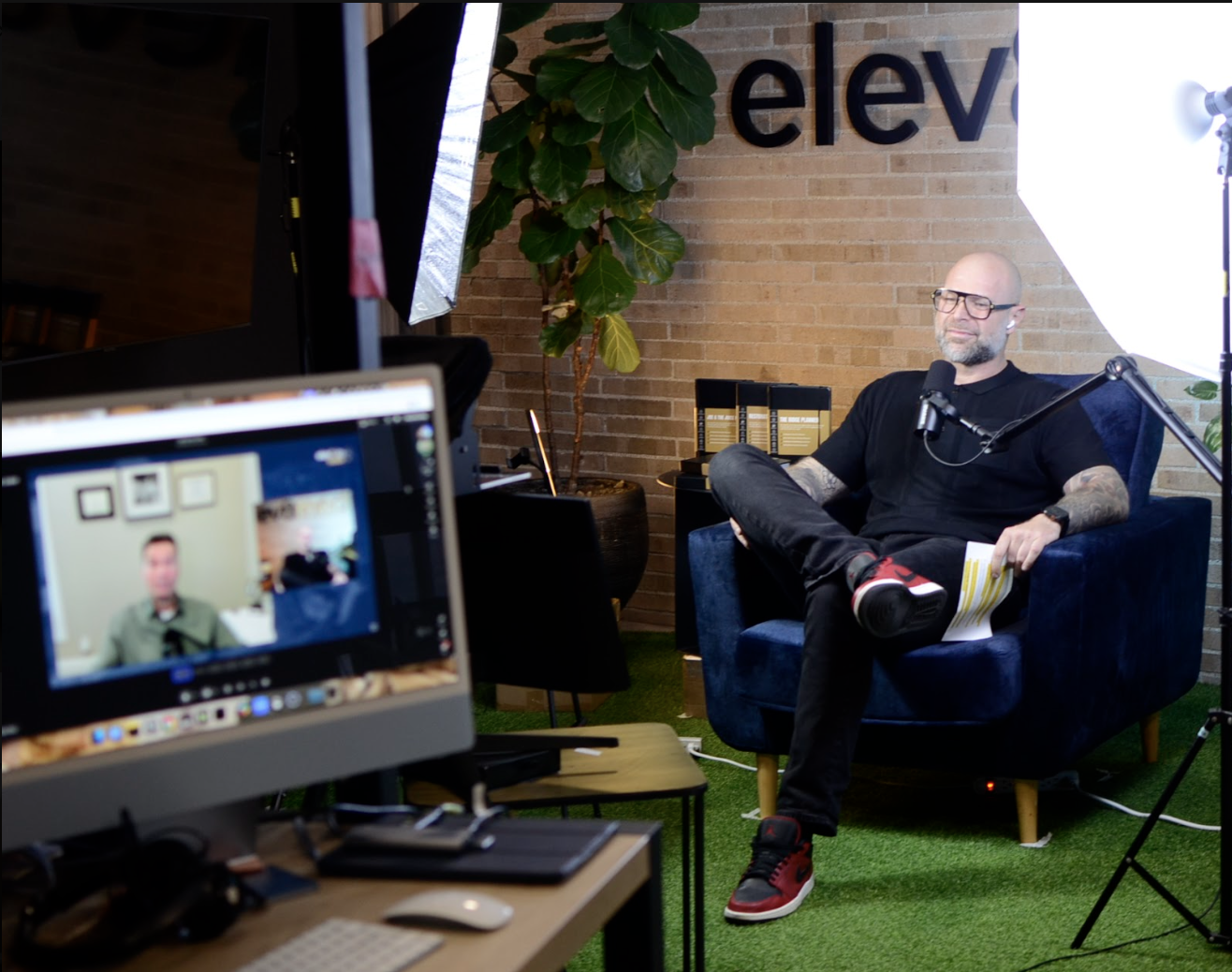
The Agency Perspective: Real Solutions for Patient Acquisition
The behavioral health marketing landscape has fundamentally shifted. AI has already changed how patients find care, digital trust has replaced keyword ranking as the primary competitive advantage, and treatment providers are being challenged to do more with increasingly fragmented technology ecosystems. The agencies seeing the strongest results aren't chasing tactics — they're building attribution systems, clinical credibility, and multi-channel foundations that compound over time.
In this special live panel from the Recovery.com Marketing Summit 2026, Gary Garth joins moderator Signe Engelien (Director of Agency Partnerships, Recovery.com), Derek Hyman (Founder & CEO, Scalable Growth), and Adrienne Wilkerson (Co-Founder & CEO, Beacon Media) to share what they're actually seeing across hundreds of behavioral health organizations — what's working, what they refuse to do for clients, and where the industry is heading.
Key Takeaways
- Build attribution before buying channels. The most common mistake: facilities request specific channels ("I need Google Ads") before establishing any attribution framework. Without knowing your cost per viable opportunity, cost per admit, and multi-touch conversion path, you can't make rational marketing investments. Agencies that start with attribution unlock dramatically better ROI across every channel.
- AI has already changed user behavior — websites must change too. Patients no longer arrive at websites during the research phase. AI handles the research. By the time someone hits your site, they're evaluating whether to call — and they're most likely comparing you to two or three AI-recommended alternatives. Websites must shift from awareness-stage content ("we treat addiction") to connection-stage content (provider videos, authentic stories, trust signals) that close the decision.
- Clinical differentiation beats generic SEO. With millions of pages of AI-generated addiction treatment content flooding the web, facilities that involve clinicians — original research, outcomes data, provider-specific video content, digital PR — separate themselves from lead aggregators. Your clinical program is not a supporting detail. It is the primary marketing asset.
- AI visibility requires technical foundations most sites are missing. 70–80% of websites lack an LLMs.txt file and proper robots.txt configuration, making them invisible to ChatGPT, Claude, Perplexity, and Gemini. Core Web Vitals, E-E-A-T signals, schema markup, and authoritative citations aren't SEO extras — they're prerequisites for AI-era visibility.
- Alumni is the most underutilized growth channel in the room. All three panelists independently cited alumni engagement as the highest-ROI channel most organizations are barely touching. Alumni generate reviews, referrals, authentic video testimonials, and readmissions — and they do it at a fraction of the cost of paid media. Organizations that invest in alumni infrastructure now will have a compounding advantage as paid acquisition costs continue to climb.
“Do you have the foundation in place? Do you understand attribution? Have you established goals aligned with industry benchmarks that are realistic? Because you can't say 'let's run Google Ads' if your reviews are bad and your attribution is broken.”— Gary Garth, elev8.io — Recovery.com Marketing Summit 2026
Episode Chapters
- 00:00Introduction and the biggest marketing mistakes agencies help clients avoid
- 08:22Patient acquisition strategies producing the strongest results right now
- 13:34AI, search, and how patient behavior has already changed
- 14:45Building trust through websites, reviews, and digital authority
- 17:22What keeps behavioral health executives awake at night
- 26:17Technology stack every behavioral health organization should evaluate
- 31:12Marketing attribution, CRM integration, and measuring ROI
- 35:46Looking ahead: AI, personalization, and the future of patient acquisition
- 44:55Audience Q&A: Why partner with a specialized behavioral health agency
Frequently Asked Questions
What marketing tactics should behavioral health organizations stop doing?
All three panelists pointed to the same pattern: adding tactics before establishing foundations. Facilities come in requesting specific channels — Google Ads, Recovery.com profiles, social media campaigns — before they have attribution tracking, realistic benchmarks, or basic trust signals like Google reviews. Agencies say no to channel investment when the conversion infrastructure isn't in place, because spending money on traffic that can't convert is waste. Start with attribution. Start with reviews. Start with a website that builds trust, not just awareness.
How has AI already changed the patient acquisition funnel?
AI has shifted the research phase offline — patients use ChatGPT, Claude, and Perplexity to research treatment options before they ever visit a website. By the time someone lands on your site, they're evaluating whether to call, and AI has often already narrowed their choice to two or three facilities. This means websites can no longer function as research resources ('we treat addiction'). They must function as trust-closing experiences: provider videos, authentic stories, social proof, and connection-oriented content that answers 'can I trust this place?'
What does "clinical differentiation" mean and why does it matter for SEO and AI visibility?
Clinical differentiation is the practice of showcasing what makes your specific treatment program distinct — through clinician-created content, original outcomes research, provider video bios, and digital PR. With millions of pages of AI-generated addiction treatment content flooding the web, generic keyword-optimized pages no longer rank or get cited by AI. Facilities that involve their clinicians, publish original research, and build media authority through earned coverage are the ones AI models recommend — because AI is trained to favor original, authoritative, human-created expertise over mass-produced content.
What is an attribution framework and why do agencies always recommend building it first?
An attribution framework is a system that tracks every touchpoint in a patient's journey from first contact to admission — including multi-touch paths across devices, channels, and time. It assigns credit appropriately (rather than giving it all to the last-click channel) and produces actionable metrics: cost per lead, cost per viable opportunity, cost per admission by channel. Without this, facilities make channel decisions based on vendor promises instead of data. With it, every marketing investment becomes a testable hypothesis with a measurable outcome.
Why do AI tools like ChatGPT and Perplexity ignore most behavioral health websites?
Most websites lack LLMs.txt files and proper robots.txt configuration that tell AI crawlers how to read and cite their content. Approximately 70–80% of behavioral health websites are effectively invisible to AI-powered search — which means when a family asks ChatGPT 'what's the best treatment center near me?' or 'does this facility offer family therapy?', those facilities don't appear in the answer. Core Web Vitals scores, schema markup, E-E-A-T signals, and authoritative backlinks are also required prerequisites for AI visibility — not optional SEO extras.
What technology stack does every behavioral health marketing operation need?
The panel consensus: call tracking (CTM preferred), a properly integrated CRM with deep data pass-through (not single-field integrations), a lead rating/scoring system, marketing automation for consistent nurture sequences (text, email, calls), and HIPAA-compliant compliance infrastructure. The most common failure point is tools that don't talk to each other — each platform tells a different story and nobody can reconcile the data. Integration is the prerequisite; tool selection is secondary.
Why do all three agencies cite alumni as the most underutilized channel?
Alumni referrals convert at higher rates than any paid channel, cost a fraction of Google Ads per admission, generate authentic reviews and video testimonials, and support readmissions from a population with 80–90% regression rates in the first year. Most organizations have a loose alumni program, but almost none have the CRM infrastructure to track alumni-generated admissions as a distinct attribution source on an executive dashboard. Once executives can see 'alumni referrals: $X cost per admit vs. Google Ads: $Y cost per admit,' the funding conversation changes immediately.
Why partner with a specialized behavioral health agency rather than a generalist digital agency?
Specialized agencies bring industry-specific datasets — knowing which publications have topical authority in behavioral health, which directory placements drive qualified leads, which reimbursement mixes make certain patient profiles more valuable, and which content formats resonate with families in crisis. A generalist agency applies general digital marketing principles; a specialized agency applies those principles with behavioral health benchmarks for cost per admit, conversion rates by channel, and regulatory constraints built in. The economies of scale also matter: specialized agencies can consistently publish authoritative content and manage complex multi-channel programs that in-house teams with multiple responsibilities cannot sustain alone.
Full Transcript
Cleaned and speaker-labeled. Jump to any moment via the chapters above, or open the complete transcript below.
Read the full transcript9 chapters · ~45 min
Introduction and the biggest marketing mistakes agencies help clients avoid00:00
Signe Engelien: We wanted to open this up to the audience and find out what you're most interested in learning more about. So while you vote — quick introductions. In the center, Gary Garth: founder and CEO of elev8.io, a growth agency exclusively focused on helping addiction treatment and mental health providers increase patient access. Serial entrepreneur, best-selling author, and five-time Inc. 5000 honoree. Gary spent fifteen years working alongside Google and Microsoft before dedicating his career to behavioral healthcare in 2020. On the end, Derek Hyman: founder and CEO of Scalable Growth, where he helps treatment centers own their admissions pipeline instead of renting leads. He built the first real-time insurance verification tool on a treatment center website back in 2019, holds a Master's in public health, and measures everything by beds filled. And Adrienne Wilkerson: co-founder and CEO of Beacon Media and Marketing, an award-winning digital marketing agency in the mental health and behavioral health sectors — published author, podcast host, and speaker on ethical marketing and AI's role in business.
Signe Engelien: Looks like you all want to hear about solutions and strategies first. So: what do your clients ask you to do that you're going to say no to?
Adrienne Wilkerson: We're dealing with a lot of "add bells and whistles." Complicated is a barrier — the more you can strip down the barriers, the more people are going to get the help they need. It comes back to creating connection. The more complicated it is, people tend to bounce faster. Whether that's a website or social media, if you're cramming it full of credentials and acronyms on the first touch, that's not going to connect to the emotional need. Simplicity creates connection.
Derek Hyman: Our partners come to us because they want us to help drive leads and admissions. Not everything is going to do that. We get hired because we are experts in our field and understand what is going to help drive traffic and put people into treatment. When clients ask us to do things that we fundamentally know aren't going to have a positive impact on lead generation or admissions, we just have to draw that line. It's about letting us do our job — and being laser-focused on what actually moves the needle.
Patient acquisition strategies producing the strongest results right now08:22
Gary Garth: Facilities come to us very channel-specific: "I need help with SEO, Google Ads." We like to take a step back first and say: do you have the foundation in place? Do you understand attribution? Have you established goals that are aligned with industry benchmarks that are realistic? Because you can't say "let's spend money on Recovery.com or Google Ads" if your Google reviews are bad. It's a multi-touchpoint world across multiple devices. The path to admission is not straightforward — there will be multiple touchpoints, and trust and credibility has to be in place first. Establishing the attribution framework is always step one.
Signe Engelien: What tactics are delivering the strongest results for your clients right now?
AI, search, and how patient behavior has already changed13:34
Derek Hyman: There's an enormous amount of content about addiction treatment on the internet — millions of pages. Your brand has to differentiate itself from all of it. Tactically: involve your clinicians. Have them talk about how you're providing alcohol detox or addiction treatment — specifically, authentically, in their voice. Get in the media through digital PR. Do research studies based on your own outcomes and real data that are unique to your treatment program. You used to be able to rank a website by gaming the system. Today, your clinical program is the thing you need to promote. Your website is just a lens into that — promote what's behind the lens.
Building trust through websites, reviews, and digital authority14:45
Gary Garth: Two things you can do immediately from an AI visibility standpoint: first, 70–80% of all websites don't have an LLMs.txt file or proper robots.txt — so ChatGPT, Claude, Perplexity can't properly read your site. They can't answer "what's your family counseling like?" or "do you accept this insurance?" Second: your core web vitals have to be ten out of ten. All components have to be in place to get preferred and get that AI visibility. And when you write content, stop writing for Google only — write content that can be repurposed. Turn a blog post into a podcast clip, then into reels, then into an interview segment. Multi-platform distribution with different content types. Everybody in this room can probably double their earned and owned media reach with those two moves alone.
What keeps behavioral health executives awake at night17:22
Adrienne Wilkerson: User behavior has already changed — we need to stop saying "is changing." By the time people are hitting your website, they're most likely already choosing between your top three because AI recommended you. They're not in the research phase; AI handled that. So they're hitting your website looking for human connection and trust. Your website has to function as a connection experience, not an information catalog. Video provider bios. Authentic patient stories — handled ethically and compliantly. Content that says "I understand your fear right now" instead of content that lists credentials. That's what closes the gap between a website visit and a call.
Gary Garth: The brands that have good domain authority and authentic content are the ones getting favorized in AI visibility. That weeds out all the lead aggregators. I think that's the biggest opportunity right now: the organizations that invest in genuine authority, clinical credibility, and alumni communities are building something that compounds — while paid channels keep getting more expensive and less predictable.
Signe Engelien: What's keeping executives up at night right now?
Derek Hyman: Reimbursement disruption and payer unpredictability. Insurance companies are combating claims with AI — everything and anything is getting rejected, and payments are being reduced. That directly impacts marketing budgets. The CFO looks at margin compression and cuts marketing first. So the challenge is making a bulletproof case for marketing ROI in the middle of that pressure — which is exactly why attribution frameworks matter so much right now.
Technology stack every behavioral health organization should evaluate26:17
Gary Garth: FOMO — fear of missing out on whatever the latest tactic is. And misalignment between marketing, admissions, and business development. You can generate leads all day, but if the admissions team isn't converting them, or if BD is claiming credit for alumni referrals that marketing actually influenced, the attribution breaks down and everybody is arguing about where the budget should go instead of growing census.
Adrienne Wilkerson: We're also seeing AI being used to try to solve problems that aren't AI problems. Leaders are chasing AI tools without first asking: "What is the actual business problem we're solving?" Use AI to enhance the human connection, not replace it. In behavioral health specifically, where trust is the entire decision — the human element is non-negotiable.
Signe Engelien: What technology stack should every behavioral health organization be evaluating?
Marketing attribution, CRM integration, and measuring ROI31:12
Derek Hyman: Start with call tracking — CTM is our preferred choice for robustness. Lead rating systems properly mapped and integrated with your CRM. Marketing automation that creates consistent nurturing through text, email, and calls. And CRM integration that's true deep-data integration, not just passing a single field. Every step of the patient journey should be captured. Without that, you can't do attribution, and without attribution you're flying blind on every channel decision.
Gary Garth: Alumni systems — and I cannot say this enough. Alumni is the most underutilized technology investment in behavioral health. Build the CRM infrastructure to track alumni referrals, readmissions, and alumni-influenced admissions as a separate attribution source. Add that to your executive dashboard alongside paid search and SEO. Once executives see the cost per admission from alumni vs. Google Ads, the conversation about alumni investment changes immediately.
Looking ahead: AI, personalization, and the future of patient acquisition35:46
Adrienne Wilkerson: And make sure the tools talk to each other. The biggest technology problem isn't which tool to pick — it's that the tools don't integrate. You end up with four platforms that each tell a different story, and nobody can reconcile them. Integration first, then optimization.
Signe Engelien: Looking ahead — what are you most excited about, and what are you most concerned about?
Gary Garth: Excited: AI-driven personalization. The ability to deliver the right message to the right person at the right point in their journey — without them having to navigate a confusing website — is going to be extraordinary for behavioral health. Concerned: organizations abandoning proven fundamentals to chase every new AI tool. The brands that win will be the ones that use AI to enhance their authentic clinical voice, not replace it.
Derek Hyman: In May 2026, there were more robot visitors to websites than humans for the first time. That means the ROI on the content you're creating is actually being magnified — robots are crawling, indexing, and citing your content across AI platforms. But ninety-five percent of the search market is still traditional Google. Good marketing principles haven't changed. Create genuine clinical expertise. Build real authority. Differentiate through outcomes. Those fundamentals will outlast every algorithm change.
Audience Q&A: Why partner with a specialized behavioral health agency44:55
Adrienne Wilkerson: I'm excited about AI giving smaller organizations the ability to compete with the big guys on content and personalization. And concerned — same concern as Gary — about organizations getting so distracted by new tools that they stop investing in the basics: reviews, referrals, community, trust. Those will always win.
About the Panelists

Gary Garth
Founder & CEO, elev8.io
Gary Garth is the Founder & CEO of elev8.io, where he helps behavioral health organizations achieve full census through integrated marketing, admissions, and technology-driven growth systems. With more than a decade of experience working alongside Google, Microsoft, and high-growth technology companies, Gary has built and implemented scalable growth frameworks now used by 55+ treatment centers across the United States to drive admissions and operational efficiency.
Connect on LinkedInDerek Hyman — Founder & CEO, Scalable Growth
Derek Hyman is the Founder & CEO of Scalable Growth, where he helps behavioral health treatment centers own their admissions pipeline instead of renting leads. He built the first real-time insurance verification tool on a treatment center website in 2019, holds a Master's degree in public health, and measures every strategy by beds filled — not traffic or impressions.
Connect on LinkedInAdrienne Wilkerson — Co-Founder & CEO, Beacon Media + Marketing
Adrienne Wilkerson is the Co-Founder & CEO of Beacon Media + Marketing, an award-winning digital marketing agency renowned for its work in the mental health and behavioral health sectors. A published author, podcast host, and sought-after speaker, Adrienne is known for her expertise in ethical marketing, trust-based patient acquisition, and AI's transformative role in healthcare marketing.
Connect on LinkedInSigne Engelien — Director of Agency Partnerships, Recovery.com
Signe Engelien is the Director of Agency Partnerships at Recovery.com, where she connects behavioral health facilities with digital marketing agencies to strengthen patient access across the country. She moderated this panel at the Recovery.com Marketing Summit, drawing on her deep experience bridging the gap between treatment centers and the agencies driving their growth.
Connect on LinkedInRelated from elev8.io
Curious what your true cost per admission is?
Run your numbers with our Behavioral Health Growth Calculator,
or talk strategy with our team.