The State of Behavioral Health in 2026: More Demand. Less Capacity. Higher Stakes.
Behavioral health growth, funding, and workforce data for 2026, plus a clear-eyed look at where AI helps and where it creates real risk for treatment centers.
Key Takeaways
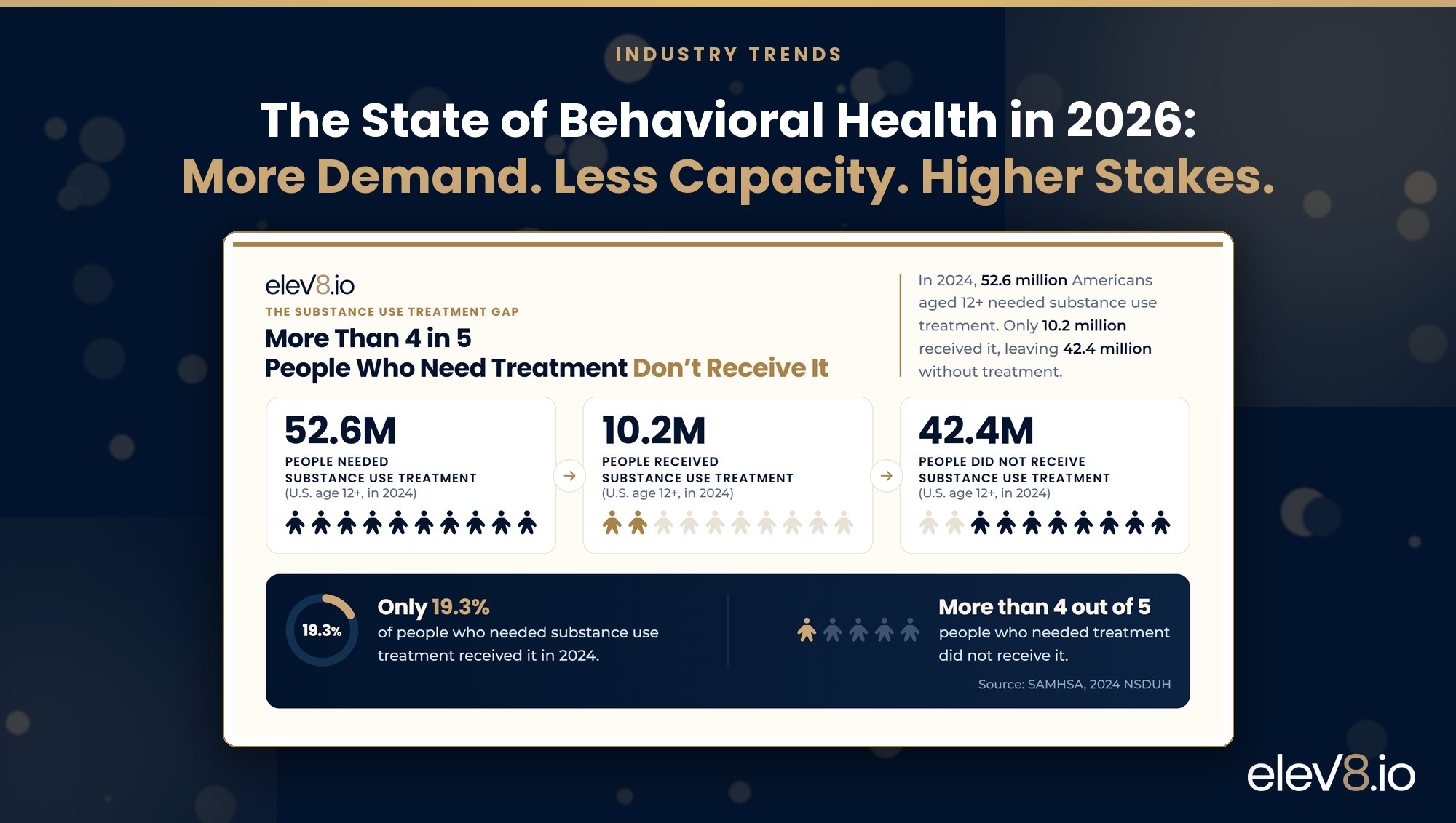
- Behavioral health visit volume rose 62.6% between 2018 and 2024, with anxiety and pediatric developmental-disorder visits growing even faster, but the treatment gap remains wide: only 19.3% of the 52.6 million people who needed substance use treatment in 2024 received it.
- The U.S. behavioral health market is on track to grow from $92.14B in 2025 to $132.46B by 2032, but capital is consolidating selectively, favoring mental health and IDD over SUD.
- Workforce adequacy sits at 27.3% nationally, and the sector faces a projected shortfall of over 136,000 combined psychiatry and counseling FTEs by 2038, making staffing the real constraint on growth.
- Telehealth prescribing flexibilities for controlled substances have been extended through 2026 for the fourth time but remain temporary, and a 24% visit drop followed the last lapse.
- AI is already reducing administrative burden and aiding early risk detection, but chatbot inconsistency on suicide-related queries and the absence of uniform federal regulation make compliance review essential before deployment.
This article breaks down the numbers, the pressure points, and where AI helps versus creates exposure for operators.
The Big Picture
Demand for behavioral health care in the United States continues to grow. Visit volume for behavioral health services rose 62.6 percent between 2018 and 2024, outpacing nearly every other category of outpatient care1.
Adults 18 or Older
Any Mental Illness
Serious Mental Illness
Capital has followed. Deal flow in the sector rose 17 percent year over year in 2025, the second straight year of gains after 20232.
Growth is no longer the only story. Payers want proof of outcomes. Workforce shortages are capping how much capacity a facility can actually add.
Artificial intelligence is moving from pilot programs into daily clinical and administrative workflows faster than most regulatory frameworks can track.
For treatment center operators, 2026 holds both real opportunity and real exposure at the same time.

A Market That Keeps Expanding
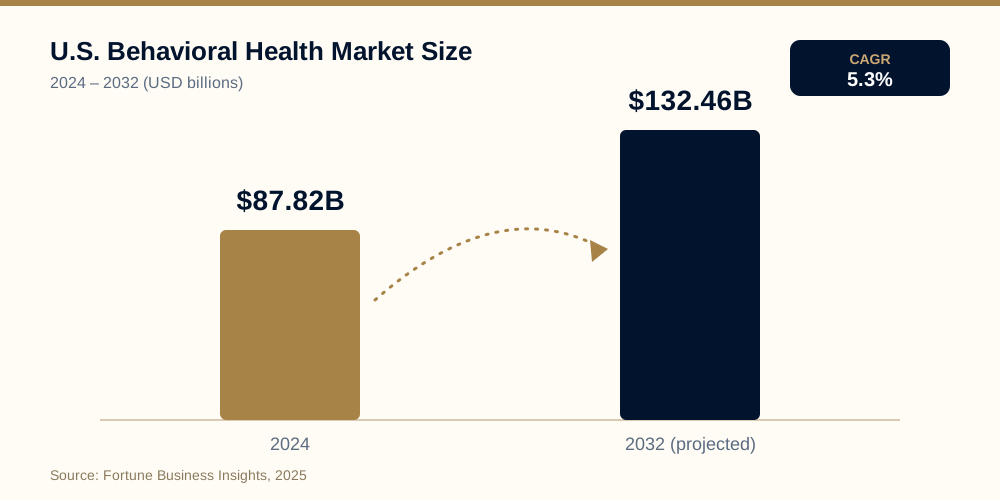
The U.S. behavioral health market was valued at about $92.14B in 2025 and is projected to reach $132.46 billion by 2032, a compound annual growth rate of 5.3 percent3. That growth is not evenly distributed.
Anxiety disorder visits climbed 89.3 percent between 2018 and 2024.
Behavioral and emotional disorder visits grew 51.0 percent over the same period.
Among children, visits for pervasive developmental disorders, including autism, grew 93.0 percent1. Applied behavior analysis volume alone grew 309.2 percent between 2019, when dedicated billing codes took effect, and the end of 20251.
The growth concentrates in diagnostic categories that the system was not designed to quickly absorb. Operators who show clinical depth in a specific population, such as adolescents, co-occurring disorders, or autism services, are positioned to capture that demand.
Generalized, undifferentiated care is competing for a smaller share of a slower-growing segment.
The Census: The elev8 Newsletter
Join 2,000+ behavioral health leaders. Get notified when we publish new articles — the strategies, data, and insights shaping behavioral health marketing.
2,000+ executives already subscribed
Unsubscribe anytime. Just one newsletter a month — no spam.
The Treatment Gap Has Not Closed
Growth statistics can create a misleading picture of access. The treatment gap is the number operators should focus on.
Alcohol use disorder cases declined from 29.7 million in 2021 to 27.9 million in 2024. However, the share of people prescribed medication for it grew from 1.9 percent to 2.5 percent over the same window. This is modest progress compared to the size of the gap4.
From the perspective of census strategy, this gap matters most, as it’s not about a shortage of demand. Unmet need often points to gaps in access, trust, and awareness. Closing those gaps is where a real patient acquisition system earns its return.

Consolidation Is Selective, Not Universal
While investor interest in behavioral health remains strong, it is not evenly spread across segments.
Mental health led M&A activity in 2025 with more than 80 deals, up from roughly 70 in 2024, as buyers focused on interventional psychiatry, including transcranial magnetic stimulation and ketamine-based treatments2.
Intellectual and developmental disability services set a record with 31 transactions, surpassing the previous high of 30 deals in 20212.
Substance use disorder deals moved the opposite direction, falling from 16 in 2024 to 12 in 2025, with further softness through 2026 as Medicaid uncertainty dampens buyer interest2.
Trilliant Health recorded 167 total behavioral health transactions in 2025, 111 of them in mental health1.
The pattern is consistent with a broader shift industry leaders are describing5:
A move away from scale for its own sake and toward condition-specific expertise. Clinical credibility, not bed count, is becoming the asset that buyers and payers actually value.
Workforce Is the Real Ceiling on Growth
If a facility cannot staff its clinical capacity, none of the above matters. The national mental health workforce adequacy rate stands at 27.3 percent1.
By 2038, projected demand is expected to exceed supply by 36,780 full-time-equivalent psychiatrists and 99,780 full-time-equivalent mental health counselors1. Fewer than 10 percent of providers are MDs or DOs.

Nurse practitioners and physician assistants now account for 34.3 percent of behavioral health prescription volume, up from 20.7 percent in 20181.
Burnout compounds the problem: 83 percent of providers reported burnout in 2023, with therapists reporting the highest rate at 77 percent1.
While marketing can fill a waitlist, it cannot staff a unit. 2026 growth plans that do not include a workforce strategy will generate inquiries that a facility cannot actually convert to admits.
Policy Remains Provisional, Not Permanent
Telehealth access for controlled substance prescribing has been extended a fourth time, running from January 1, 2026, through December 31, 20266.
More than seven million controlled medication prescriptions were issued through telemedicine in 2024, a channel many mental health and substance use disorder patients rely on6.
When Medicare telehealth flexibilities briefly lapsed in September 2025, fee-for-service telehealth visits dropped 24 percent almost immediately6.
Operators building admissions funnels or care models around telehealth access should treat every extension as temporary. A permanent policy has still not been enacted, and each renewal cycle carries the same access risk as the last one.
AI in Behavioral Health: Opportunity and Exposure
Where AI Is Already Working
More than 60 AI tools are now in active use across behavioral health organizations for transcription, referrals, and billing, reducing the administrative burden that drives clinician burnout7.
Early-stage tools are also being used to flag warning signs in patient data, including indicators associated with suicide risk, and to help forecast which interventions are likely to work for a given patient7.
Industry leaders are converging on a consistent perspective: AI should not replace clinical judgment, but be used to reduce clinicians’ administrative weight, so more of their time goes toward the therapeutic relationship itself.
Where AI Creates Real Risk
Significant risks exist. Research has found meaningful inconsistency in how AI chatbots respond to suicide-related queries, with performance varying by phrasing7.
One consumer AI platform has estimated that roughly 1.2 million of its users express suicidal thoughts in conversation each week, a volume that puts real weight behind the accuracy of how such systems respond7.
Adolescents, older adults, and people with existing mental illness carry the highest exposure to these gaps7.
Data governance is a parallel problem: several studies point to a lack of transparency in how conversational health data is stored, used, and shared7.
No uniform federal standard currently governs these tools. States including Tennessee, Nevada, Illinois, and New York have moved first, restricting AI systems from posing as licensed mental health professionals and requiring crisis-detection and referral protocols in consumer-facing tools7.
Facilities piloting AI-driven chat, triage, or content tools should treat a compliance review as a prerequisite, not a follow-up step.
What This Means for How Patients Find Care
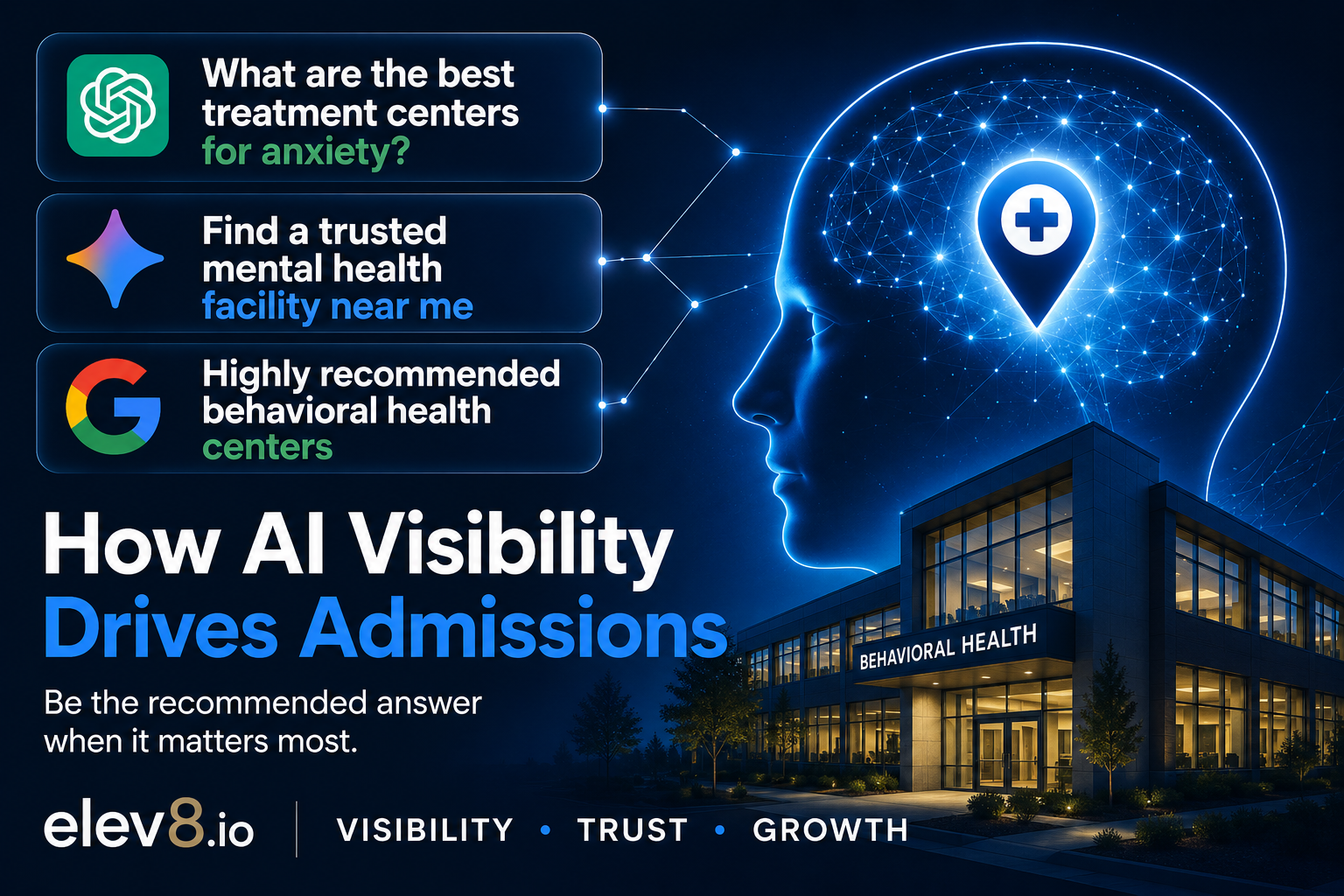
Search behavior is shifting alongside clinical AI adoption. A growing share of people researching treatment options now start their search inside an AI assistant or an AI-generated summary rather than a traditional list of links.
In elev8’s experience, this shift should now be part of the marketing and content strategy conversation, with the same rigor that operators are beginning to apply to clinical AI adoption.
Where This Leaves Behavioral Health Operators
In 2026, the gap between centers that understand their numbers and those that don’t is widening fast.
- Cost-Per-Clicks continue to rise
- Insurance reimbursements are tightening
- Admissions teams are under pressure
- And guesswork marketing is no longer survivable
The behavioral health industry continues to grow, but growth has become pricier.
elev8 estimates the following:
- High-intent keywords regularly costing $100–$200 per click
- CPA ranges from $3,000 to $10,000+ for under-optimized programs
- Increased competition from PE-backed platforms
- Admissions teams overwhelmed with unqualified leads
- Only 19.3% of people who needed treatment received it4
- Most facilities, in our experience, operate below 60% census
- The opportunity is massive if execution is precise
- Know their Cost-Per-VOB
- Control their Cost-Per-Admit
- Align marketing, admissions, and insurance strategy
In Summary
Behavioral health in 2026 is growing, consolidating, and modernizing at once, and none of those forces automatically favors the operator.
The facilities that come out ahead over the next 18 months will treat growth, workforce planning, and AI adoption as one connected system instead of three separate line items.
That is the operating model elev8 builds with clients: a patient acquisition strategy grounded in the same data discipline the rest of the industry is now being held to.
Test Our Website Assessment Tool
Try the tool now to gauge your AI visibility, Core Web Vitals, HIPAA compliance, security, and overall performance.
Sources
- Trilliant Health. (2026). 2026 behavioral health demand and workforce report, as reported by Acuity News.
- Behavioral Health Business. (2026). SUD falls short while mental health, IDD led behavioral health M&A in 2025.
- Fortune Business Insights. (2025). U.S. behavioral health market size, share, growth, 2032.
- Substance Abuse and Mental Health Services Administration. (2025). Key substance use and mental health indicators in the United States: Results from the 2024 National Survey on Drug Use and Health.
- Behavioral Health Business. (2025). Behavioral health in 2026 will transition from growth to proof.
- U.S. Department of Health and Human Services. (2025). HHS & DEA extend telemedicine flexibilities for prescribing controlled medications through 2026.
- Pew Charitable Trusts. (2026). AI in mental healthcare presents both opportunities and challenges.

Founder & CEO · elev8.io
Gary Garth is the Founder & CEO of elev8.io, where he helps behavioral health organizations achieve full census through integrated marketing, admissions, and technology-driven growth systems.
With more than a decade of experience working alongside Google, Microsoft, and high-growth technology companies, Gary has built and implemented scalable growth frameworks now used by 45+ treatment centers across the United States to drive admissions and operational efficiency.
As a speaker, Gary focuses on the intersection of patient acquisition, AI-driven search, and admissions performance, helping founders, operators, and investors identify the hidden bottlenecks limiting growth—and how to fix them.
The author of The Zero to 100 Million Sales Blueprint and The Goals, Grit & Greatness Planner™, Gary is driven by a mission to close the gap between the millions of people struggling with addiction and mental health and the care they need.