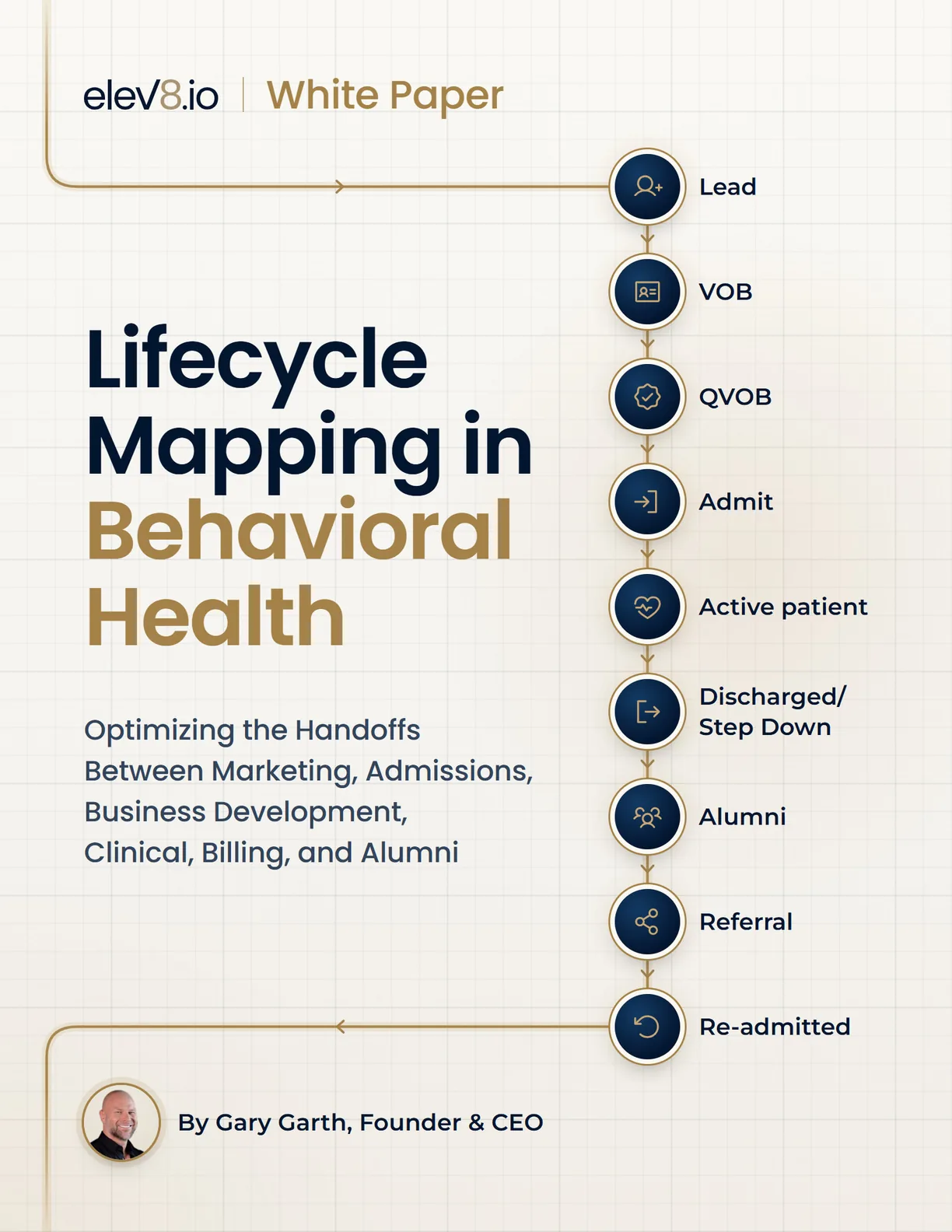
Lifecycle Mapping in Behavioral Health
Optimizing the handoffs between marketing, admissions, business development, clinical, billing, and alumni. A practical guide to mapping every stage, from first inquiry to alumni, so each handoff has an owner and a clear next step.

By Gary Garth
Founder & CEO, elev8
- 30 pages
- Free

Page 1 of 30 · Cover
Get the Full 30 Pages
The preview shows four pages. The full PDF walks through the whole lifecycle and includes:
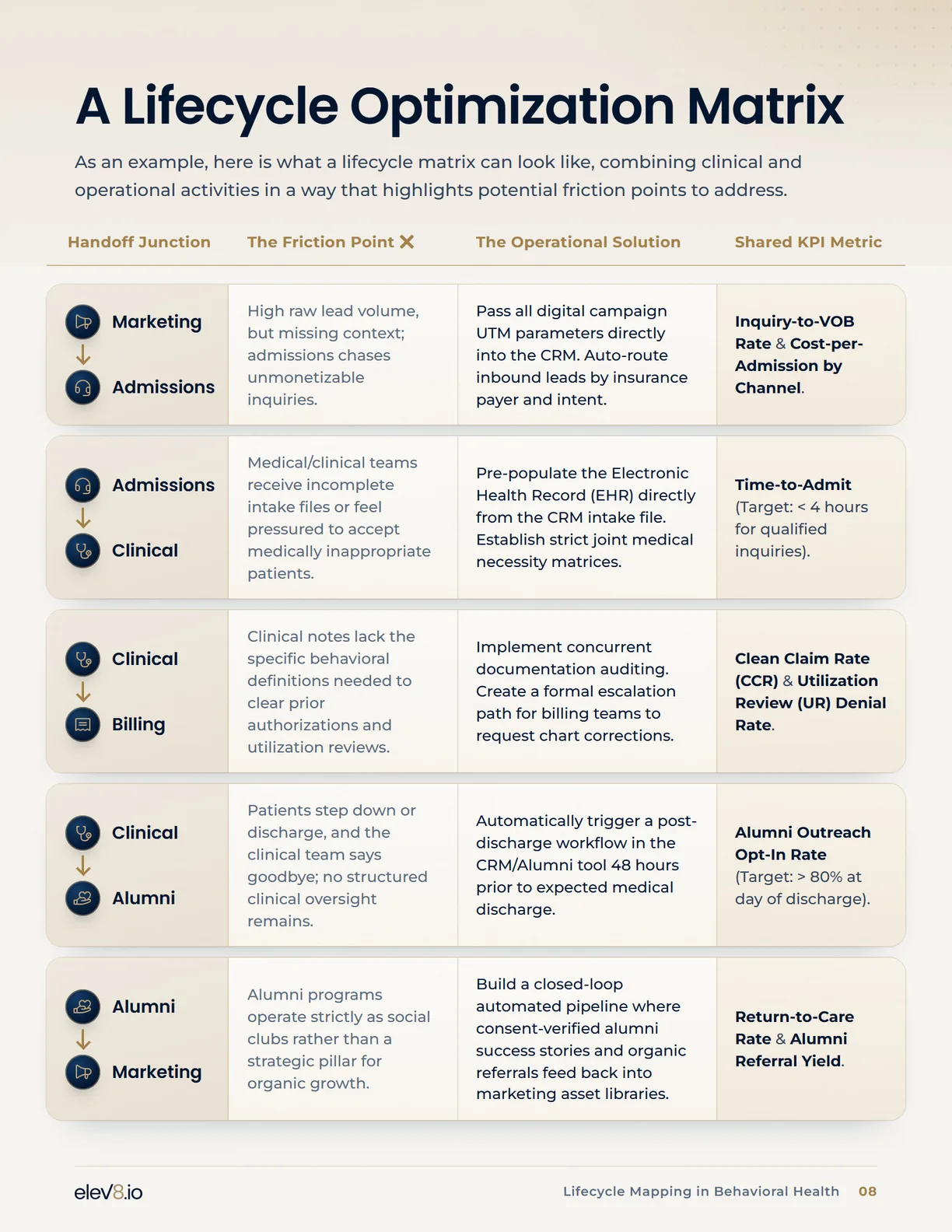
- Nine lifecycle stages, from lead and VOB to alumni and re-admission, and a matrix of the five handoffs where they break
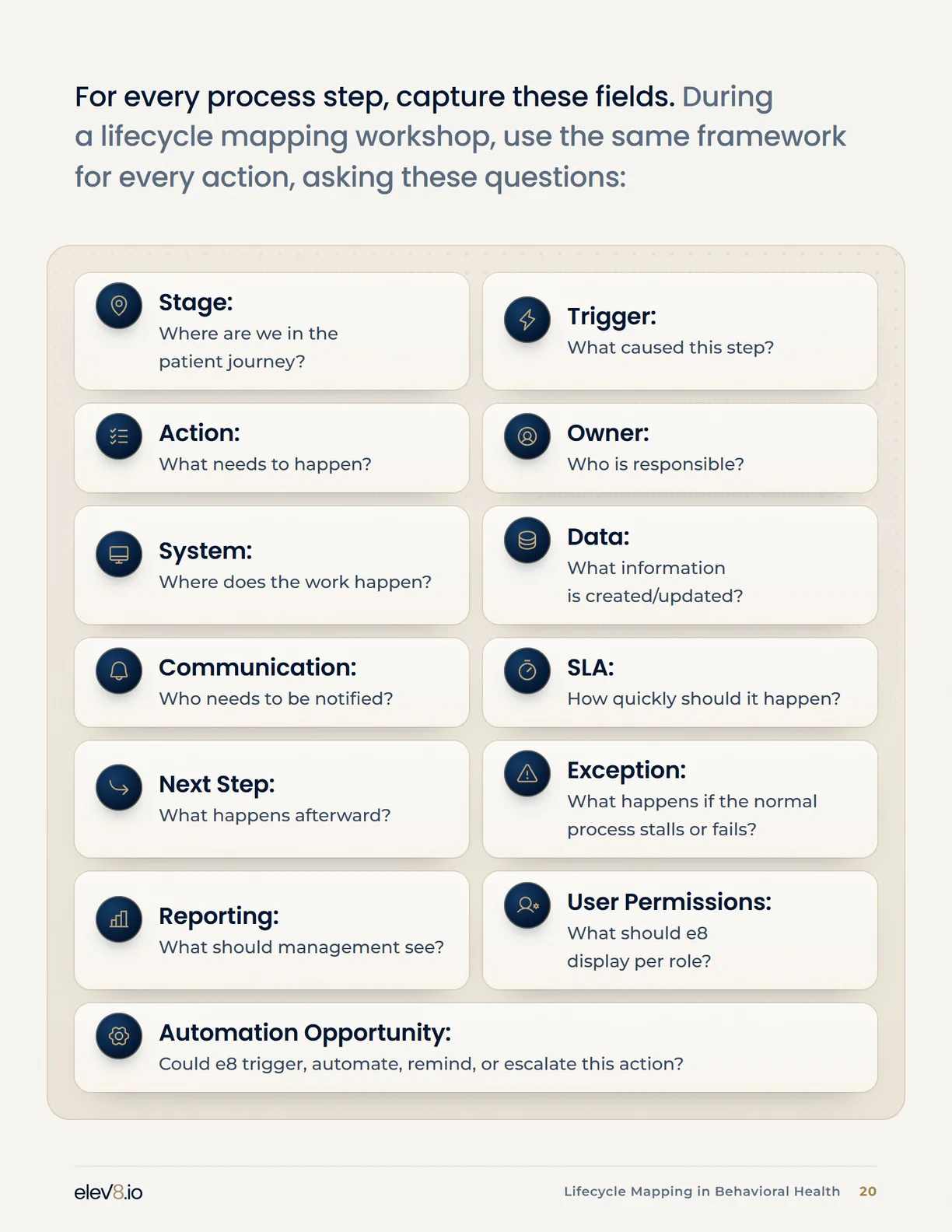
- A 13-question framework to map any process step: stage, trigger, owner, SLA, automation, and more
- A worked alumni example with roles, ownership, and structured handoff fields from the EHR
Frequently Asked Questions
Short answers from the white paper. The full PDF has the stage-by-stage framework, the handoff matrix, and the worked alumni example.
What is lifecycle mapping in behavioral health?
Lifecycle mapping documents how a treatment center manages its relationship with a prospective patient, from the first inquiry through admission, treatment, discharge, and later engagement. It shows who owns each stage, what triggers the next step, and what information has to move with the person.
How is lifecycle mapping different from patient journey mapping?
A patient journey map shows what the experience feels like to the patient. An operational lifecycle map shows the departments, systems, responsibilities, and information transfers behind that experience. The two work best together.
What stages does a treatment center lifecycle include?
The white paper uses a typical set of nine stages: lead, VOB, QVOB, admit, active patient, discharged or step down, alumni, referral, and re-admitted. Each stage has entry and exit criteria, a goal, and an owner.
Where do handoffs break between departments?
The white paper focuses on five critical handoffs: marketing to admissions, admissions to clinical, clinical to billing, clinical to alumni, and alumni back to marketing. For each one it names the friction point, the operational fix, and a KPI both teams share.
What should a treatment center measure at each stage?
Metrics by stage, such as lead-to-VOB rate, QVOB-to-admit rate, census, step-down rate, alumni check-in rate, and alumni referrals. The paper also connects acquisition costs, such as CPL and CPA, to what happens after admission.
How do you keep departments from working in silos?
The white paper recommends three processes: a weekly 30-minute revenue and census handoff meeting, continuous interoperability between the CRM and the EHR, and a shared north-star metric reviewed every quarter.
Which systems does a lifecycle map connect?
The examples in the paper include Salesforce, Kipu, e8, CTM, ActiveCampaign, and oneway. The goal is CRM and EHR records that match how the business actually runs, so reporting follows the real handoffs.
Can lifecycle maps use patient data?
Build and report on lifecycle maps using aggregate or de-identified data only. In the paper’s alumni example, the clinical team completes structured handoff fields in the EHR discharge summary, so e8 receives only what alumni engagement needs.
Download the Full White Paper
All 30 pages, free: the nine lifecycle stages, the five critical handoffs, the 13-question mapping framework, and the worked alumni example.