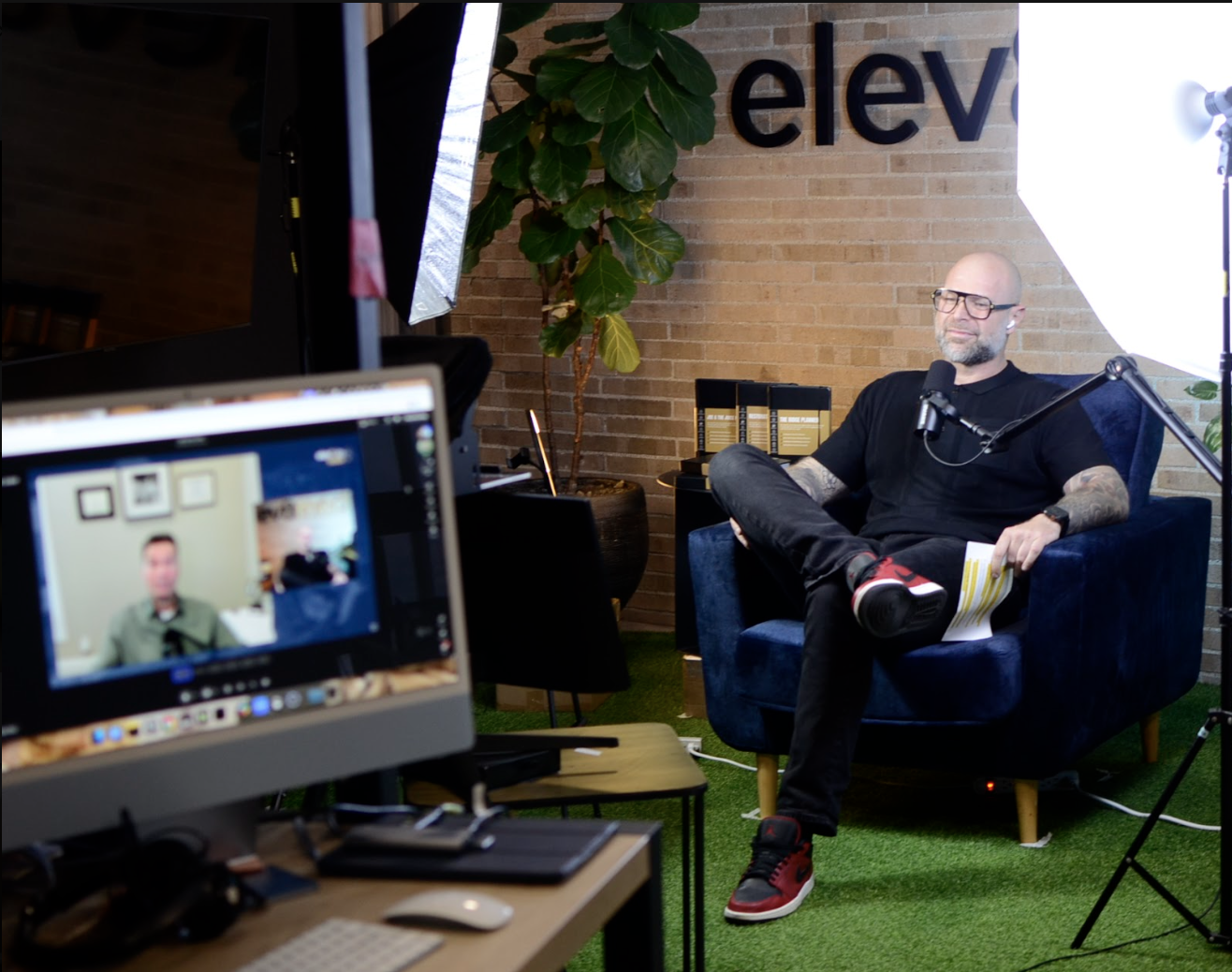
Measuring the ROI of Alumni Engagement in Behavioral Health — TPAS Workshop
Behavioral health organizations spend millions each year on Google Ads, directories, and business development — yet the single highest-converting, lowest-cost patient acquisition channel sits almost entirely unfunded. Alumni engagement delivers 50% inquiry-to-admission conversion rates, generates reviews that drive local SEO, and costs a fraction of any paid channel. The gap between what most organizations invest in alumni vs. what they could return from it is the largest untapped opportunity in the industry.
In this special TPAS Workshop episode of The elev8.io Podcast, Gary Garth joins Colton Morgan (Team Recovery) and moderator Gina de Peralta Thorne (Executive Director, TPAS) to present a complete executive framework for measuring alumni ROI. Colton opens with the financial math — treatment episodes, engagement rates, readmission benchmarks, and the exact formula that produced $5M+ in annual ROI at Renaissance Ranch on a $65K payroll. Gary follows with the elev8.io Patient Acquisition Hierarchy, the Alumni ROI Chain, and the dashboards executives actually want to see.
Key Takeaways
- Alumni converts at 50% — paid channels convert at a fraction of that. Alumni referrals enter with social proof, lived trust, and a personal success story. Google Ads generate leads at $4,000–$9,000 per admission (up to $15,000 out-of-network in California); alumni generates them at a fraction of that cost and converts twice as fast. The math is not close.
- Colton's benchmark: 25–45% of admissions should come from alumni. TPAS research puts the healthy range for readmissions + alumni referrals at 25–45% of total admissions. Most facilities are at 3–10%. Renaissance Ranch went from 14.3% to 39.7% of admissions from alumni — a $5M+ year-over-year ROI on a $65K payroll.
- 10–30% annual engagement rate is the alumni health benchmark. Calculate total treatment episodes per year. Measure what percentage of those alumni actively participate in programming month over month. Under 10% = a program that isn't building community. 30%+ = a program that's compounding ROI.
- Stop reporting activities. Start reporting outcomes executives understand. Events held, calls made, and app engagement are good operational metrics — they don't move a CFO. Report: alumni-sourced referrals converted to admissions, revenue attributed to readmissions, cost per alumni-generated admit, and Google reviews generated. Those numbers unlock budget.
- Alumni is a marketing function, not an admissions function. It influences referrals, brand reputation, local SEO, and paid media conversion rates — not just post-discharge follow-up. Facilities that file it under admissions consistently underinvest and underreport. Changing the reporting line changes the funding conversation.
“Alumni is essentially just a slam dunk ROI. You're throwing a nickel at it compared to your five-hundred-thousand-dollar monthly Google Ads budget. Of course you're not seeing it.”— Gary Garth, elev8.io — TPAS Workshop
Episode Chapters
- 00:00Why alumni should become one of the strongest drivers of census growth
- 04:00The elev8.io Hierarchy of Patient Acquisition and why alumni delivers the highest ROI
- 07:00Understanding the Alumni ROI Chain and building the business case for investment
- 09:00Why marketing costs are rising and alumni has become more valuable than ever
- 11:00Speaking the executive language: shifting from activity metrics to business outcomes
- 14:00The KPIs every alumni leader should measure to demonstrate organizational impact
- 16:00Building executive dashboards that prove alumni ROI and support better decision-making
- 19:00Technology, CRM integration, and creating an alumni ecosystem executives will invest in
- 20:30Using ROI calculators and benchmarking to justify additional alumni funding
- 23:00Audience Q&A: Why alumni teams deserve credit for readmissions and referrals
Frequently Asked Questions
How do you calculate the ROI of an alumni program?
Start with total annual treatment episodes (census × 12 ÷ average length of stay in months). Then measure what percentage of your total admissions came from readmissions or alumni referrals. Multiply that percentage by your total admissions and your average reimbursement per patient. That's your alumni-generated revenue. Compare it to payroll and programming costs to get true ROI. Renaissance Ranch grew from 14.3% to 39.7% of admissions from alumni — producing $5M+ in annual revenue on a $65K payroll.
What is a healthy alumni engagement rate?
According to Team Recovery's benchmarks, a healthy alumni engagement rate is 10–30% of total annual treatment episodes actively participating in alumni programming month over month. If you discharge 1,000 patients a year, you should have 100–300 alumni actively showing up to meetings, events, or digital touchpoints. Under 10% means your community isn't sticking. 30%+ means your program is compounding.
What does TPAS research say about alumni-generated admissions benchmarks?
TPAS research indicates that 25–45% of admissions at well-run programs should come from readmissions and alumni referrals. Most behavioral health facilities are at 3–10%. A facility treating 1,000 patients per year at 25% alumni-generated admissions, with a $10,000 average reimbursement, generates $2.5M in alumni-sourced revenue annually.
Why do executives underinvest in alumni programs despite the ROI?
The most common answer Gary Garth gives: they're not seeing the ROI because they're not measuring it. A $50K alumni payroll next to a $500K/month Google Ads budget doesn't look like an investment worth tracking — until you track it. The second reason is that alumni teams report activity metrics (events held, calls made, app engagement) instead of business metrics (readmissions attributed, referrals converted, cost per alumni admit). When the reporting language doesn't match what executives are paid to care about, the investment doesn't compound.
Why should alumni be classified under marketing, not admissions?
Alumni influences referrals, brand reputation, online reviews, local SEO visibility, and paid media conversion rates — all marketing functions. Admissions is incentivized on front-end conversions; alumni is responsible for the long-term community that feeds those conversions. Colton Morgan's argument: if you're contributing 30%+ of admissions through readmissions and referrals and you're not getting credit, it's because you're being evaluated by the wrong department on the wrong metrics.
How can an alumni leader get credit for readmissions?
Two steps: first, establish readmissions and alumni referrals as your official performance metrics with leadership — put them in your role documentation. Second, work with admissions and the CRM team to ensure the intake dropdown properly captures alumni-sourced admissions vs. other channels. In most EMRs, a duplicated chart is definitionally a readmission. That's your attribution anchor. As Colton Morgan says: 'If someone's holding you accountable to the metric, it's okay to hold them accountable to any duplicated charts within the EMR.'
What conversion rates do alumni referrals achieve vs. paid channels?
Alumni referrals convert at approximately 50% — they're referred by someone who has lived the program, witnessed the transformation, and has personal trust in the facility. Organic search traffic converts at roughly half that. Paid channels (Google Ads, Meta, directories) convert at the lowest rates, yet receive the largest share of marketing budgets. This conversion gap is the core economic case for increasing alumni investment relative to paid media.
What technology do alumni programs need to track ROI effectively?
At minimum: a CRM with an alumni-specific intake source classification, an EMR integration to track duplicated charts (readmissions), and a reporting dashboard that tracks alumni-sourced referrals, readmissions, and reviews week over week. Gary Garth recommends integrating alumni reporting with the same executive dashboards used for SEO, paid search, and business development — showing census contribution, cost per alumni admit, and review velocity alongside other acquisition channels. Without CRM integration, you're working from words, not numbers.
Full Transcript
Cleaned and speaker-labeled. Jump to any moment via the chapters above, or open the complete transcript below.
Read the full transcript10 chapters · ~26 min
Why alumni should become one of the strongest drivers of census growth00:00
Colton Morgan: Just for context — my first job as an alumni coordinator, I got hired the day I graduated my 15th treatment center, and they told me to go build a spreadsheet and start calling people. They had used four different EMRs over the last 10 years. There was no history of clients. But we started a meeting, got some service positions set up, started events, and started empowering people to take responsibility for that community. We started Team Recovery in 2022 in a coffee shop. We've done alumni consulting for over 200 facilities in the United States and four health groups in Canada. Alumni is the only rabbit we chase.
Colton Morgan: When I'm defining return on investment, there are two outputs from alumni. Either a graduate struggles again and comes back — that's a readmission. Or they do well and other people think that's attractive, and a friend calls the facility — that's an alumni referral. ROI is anything that comes from either of those after somebody has completed an intake.
Colton Morgan: There are three things we measure. Number one is engagement. We calculate the total volume of treatment episodes year over year. If you have a census of 100 residential for 30 days, you're doing about 1,200 treatment episodes per year. Healthy range of alumni engagement — people showing up to meetings, showing up to events — is 10% to 30% of total annual treatment episodes. So if you discharge 1,000 patients a year, you should have 100 to 300 alumni actively participating month over month. I meet programs discharging 1,000 patients a year with 12 individuals showing up per week. That's a 1% engagement rate. We want to be between 10 and 30%.
Colton Morgan: The second metric is percentage of admissions coming from readmissions or alumni referrals. TPAS put out a white paper that says healthy range is 25–45% of admissions should be coming from either readmissions or alumni referrals. If 25% of a thousand treatment episodes come from alumni at a $10,000 average reimbursement per patient — that's $2.5 million in revenue. And no money, no mission. I have to make my role make sense to the facility.
The elev8.io Hierarchy of Patient Acquisition and why alumni delivers the highest ROI04:00
Colton Morgan: Renaissance Ranch — the facility I started with. I figured out their treatment episodes, measured their total admissions, and counted how many came from alumni. They started at 14.3% of admissions coming from readmissions and alumni referrals. We expanded the program. Because of the health of the community — a 30% engagement rate year over year — we got that to 39.7%. It was over a $5 million year-over-year return on investment in alumni services. My payroll was $65,000 a year. I quickly elevated in that role because I was able to prove: if we're doing the next right thing, here's how it makes sense to the business.
Colton Morgan: Alumni is a marketing function, not an admissions function. You live as a key component of the marketing team in behavioral health. You are a leader responsible for a thousand clients per year. And if you're contributing a third of admissions and not getting credit for it, that is insane. You have to advocate for yourself — work with marketing, understand what lives in the CRM intake dropdown, and make sure that your contributions are properly attributed. Because admissions didn't create that readmission. You did.
Colton Morgan: There is an 80–90% regression in symptomology over the first year after somebody leaves treatment. What you have to ask is: what percentage of that 80% do you want to capture? Is 10% good enough? It's not. There are 800 people left on the table. We have to disrupt that train of thought.
Understanding the Alumni ROI Chain and building the business case for investment07:00
Gina Thorne: Thank you, Colton. I'm going to pause there and transition over to Gary, and ask Gary to go ahead and step in and talk more about the executive perspective on financial impact — taking us from where Colton is into: now that we have an idea of what these numbers look like, how do you translate that in a way that will hit home to leadership? Gary, I'll turn it over to you.
Gary Garth: Thank you, Gina. Very nice to meet you all. Let's just keep this conversational — I have a tendency to go on a rant sometimes, so feel free to just shut me up and ask a question. That's appreciated.
Gary Garth: What I always look at is: how can you position something? In marketing, why does a Gillette razor cost fifteen times more than another? They put money into it, created association and emotion, and a perception that it's giving you something better. With alumni, typically what I see — and we work with about fifty facilities — it's this island by itself, very low funded, not a lot of attention. Over the last three years running elev8.io, my focus has really been on alumni because I look at everything from a numbers standpoint. And what we're going to talk about today is: how can you position alumni as the channel that should drive — I would say — upwards of 50% of census.
Why marketing costs are rising and alumni has become more valuable than ever09:00
Gary Garth: I was recently in a survey published on Recovery.com where me and ten other people were interviewed on the average ideal state of census. It was from CMOs, CEOs at larger facilities and marketing agencies. The answer was 50-plus should be the target — that's a mix of readmissions, referrals, everything in that sense. Because other channels are so expensive.
Gary Garth: So I call this the elev8.io Hierarchy of Patient Acquisition. I started to see data across all these marketing channels. Google Ads is almost the default way to get patients nowadays — but it costs $4,000 to $9,000 on average based on location, in-network or out-of-network, specialization, and sometimes upwards of $15,000 if you're out-of-network in California. Business development is significantly lower. Local SEO, your reputation in the local community — alumni plays a big part of that. And alumni is essentially just a slam dunk ROI.
Speaking the executive language: shifting from activity metrics to business outcomes11:00
Gary Garth: Look at the average conversion metrics: a lead from an alumni referral converts at 50% — they're recommended by somebody who's been in the program and witnessed the transformation. Organic search converts at half that. And paid channels, where facilities put most of their money, convert at the lowest rate. So first and foremost — why am I saying all this? You have to understand the context to position it effectively to your executive, to your CEO, to make the case for why you need more resources and more funds.
Gary Garth: Furthermore — and I'm preaching to the choir here — if you invest in the entire alumni program, it becomes not only a success story: a good marketing team starts pulling alumni testimonials, which increases conversion rates and improves return on marketing spend. You fuel five-star reviews, which now matter more than ever because with AI and GEO, visibility is built on brand, reputation, and referring domains — not old-school SEO tactics. In your local community you get continuous referrals, community ambassadors, and a much stronger source of stability. So why would you not do it?
Gary Garth: This is how I explain it to executives — I call it the Alumni ROI Chain. "Yeah Gary, I'm not really seeing it. I paid this guy $50K and he's doing an event every now and then, we have an app — but I'm not seeing an ROI." Of course you're not. You're throwing a nickel at it compared to your $500,000 monthly Google Ads budget. So you have to position it: to get the desired outcome, you need the appropriate resource allocation. The CEO wants the destination, but you need systems, processes, and funding to get through trust, participation, and advocacy — and then an integrated reporting system to track the ROI. Otherwise, you're just doing calculations by hand.
The KPIs every alumni leader should measure to demonstrate organizational impact14:00
Gary Garth: Here's the paradigm shift. The clients we consult with right now are in a challenging environment: census is unstable, cost per admit is rising, competition is intensifying, and insurance companies are combating denials with AI so payments are declining. That's a problem — but it's also an opportunity. It's an opportunity for you if you understand what executives are investing in and why. And with that context, you can start positioning why they should invest more in the alumni program.
Gary Garth: Five stats: Paid media is more expensive than ever — I call it "Googleflation," going up double digits every quarter. Directories — Recovery.com has fifty facilities on a single page; is that a strategy? SEO, unless you work with a very few good agencies, isn't reliable anymore. Admissions teams are understaffed and under pressure. Competition for qualified patients has intensified. So how do we solve that? We change what we communicate.
Building executive dashboards that prove alumni ROI and support better decision-making16:00
Gary Garth: I call this "gets lost in translation." You meet with an executive — they're busy, they have a lawsuit hanging, they need to open a new facility, they're fighting for a check from Aetna. And you come in and report: how many events you did, calls you made, text messages sent, app engagement, group attendance, alumni participation. These are good metrics — certainly. But from an executive standpoint, they can't quantify that for business impact. They're thinking about referrals, readmissions, and attribution. And attribution is my domain: BD reps raise their hands on a lead that came through Google, had three other touchpoints on the website, and was actually influenced by an alumni touchpoint before that. Track everything.
Gary Garth: I live by three metrics. Everything else we measure, manage, and optimize — but it's noise compared to these. Census. Cost per admit. Cost per viable opportunity. When you can show alumni's impact on those three numbers, you own the conversation with any executive.
Gary Garth: So here are the KPIs I recommend building toward. Alumni-sourced referrals that converted to admissions. Revenue attributed to readmissions and alumni admits. Reviews generated — extremely important now, because reviews drive local SEO, AI visibility, and conversion when the next marketing lead comes in. "Can I trust this facility?" — that's what a lead asks before they call. Event-to-referral conversion. Re-engagement and readmission opportunities. Referral attribution. And active referral introductions in your BD network. Start with whichever two or three your CEO responds to, and get them engaged. Ask for their feedback: "Which of these would you like us to measure first?" Don't ask for permission — ask for input.
Gary Garth: The most savvy executives I see are already focused on the right outcomes — and they're about to dominate because the landscape is changing. What I've shown here is sample dashboards we build across our client base: SEO, paid search, directories, alumni — all integrated with the CRM. Cost per viable opportunity, cost per admission, readmissions tracked, reviews trending week over week. That's what executives are accustomed to seeing. Build that dashboard around alumni and they won't slash your budget; they'll slash $50K off Google Ads to fund you.
Technology, CRM integration, and creating an alumni ecosystem executives will invest in19:00
Gary Garth: Alumni is an ecosystem. It's not just one person — it's the entire company recognizing and supporting graduates through tools, events, apps, and consistent structures to help them stay engaged. You need leadership support from the top down, CRM integration, and the right technology to measure community growth and connect admissions, BD, marketing, and clinical teams. When all of those are aligned, you have a case. A real case.
Using ROI calculators and benchmarking to justify additional alumni funding20:30
Gary Garth: We also have an ROI Calculator. You can sit with your CEO and walk through census, revenue, conversion rates, and marketing spend — benchmark everything against industry standards and say: here's what you're spending, here's your return, and here's what a 10% shift toward alumni would do to that number. Now you have a baseline for the conversation.
Gina Thorne: Thank you so much, Gary. Wonderful information. Both of you have given us a lot to think about. I'm going to open it up to the group for the last few minutes. Anyone have a specific question?
Zana Blomberg: My question is more Colton's area — I understand what you're saying about readmits. My question is: how do you get your company to give that credit to you? I don't think they recognize readmits as an alumni success so far.
Audience Q&A: Why alumni teams deserve credit for readmissions and referrals23:00
Colton Morgan: You're going to hate this answer. You've got to tell them. That's one of the metrics on which you should be measured. There are two outputs: a readmission or an alumni referral. It's my responsibility to take care of people when they leave the facility, even if they've only been there for three days. That's what alumni is. So you go in and say: "These are the two metrics I'd like to be measured on." And then you hold them accountable.
Gary Garth: And with the regression rates Colton mentioned — if you're not measured, rewarded, or attributed for it, they'll go to the neighboring facility. Shame kicks in. "I let them down. I'm too afraid to call the same program back." So they'd rather spend $10,000 on the next new patient than tell you that you deserve the credit. That's not right. Who else are they going to attribute that readmission to?
Gina Thorne: The evolution of alumni programming over the last 20 years has put us in a place where we have a responsibility as alumni leaders to be educating our leadership — because they don't know. The data that Gary and Colton shared today arms you with how you can make that case. There is still a paradigm shift that has to happen. Leaders still feel like alumni is an afterthought — a nice thing to do, but not sure of the value. Now you have the numbers. Go collect that data and bring it to them. It will literally blow their mind. No one else in the organization is going to do this for you. It has to be us. That is part of our responsibility.
Gina Thorne: Thank you both, Gary and Colton, for all of your wisdom. This information will be uploaded for our TPAS members to access, and we'll have it transcribed as well. Thank you all for participating in today's workshop.
About the Panelists

Gary Garth
Founder & CEO, elev8.io
Gary Garth is the Founder & CEO of elev8.io, where he helps behavioral health organizations achieve full census through integrated marketing, admissions, and technology-driven growth systems. With more than a decade of experience working alongside Google, Microsoft, and high-growth technology companies, Gary has built and implemented scalable growth frameworks now used by 55+ treatment centers across the United States to drive admissions and operational efficiency.
Connect on LinkedInColton Morgan — Founder, Team Recovery
Colton Morgan is founder of Team Recovery and has led alumni consulting for over 200 behavioral health facilities across the United States and Canada. He began his career as an alumni coordinator the day he graduated his 15th treatment center, growing Renaissance Ranch's alumni-generated admissions from 14.3% to 39.7% — a $5M+ annual return on a $65K payroll. Colton is known for his ROI-first approach to alumni programming and for helping alumni leaders speak the financial language executives understand.
Related from elev8.io
Curious what your true cost per admission is?
Run your numbers with our Behavioral Health Growth Calculator,
or talk strategy with our team.